Blog

  • The Freedom Trail: World War II Escape Route Over the Pyrenees

    by Jane Shortall

    Here in Ariège Pyrénées, a group of people have remembered and saluted the bravery of those involved in the many escapes over the border from France into Spain during World War II. They walked for four days, re-tracing the steps of the men and woman who relied on and respected each other in times of great danger, resisting and outwitting the hated occupying forces.

    Acknowledging the courageousness of both escapees and their guides, remembering the dignity and bravery of those involved, the marathon four day ‘walk’ took place, as it does every year in July, retracing one of the greatest escape routes used during the war. It is possibly the most dangerous route of all; the one they call Le Chemin de la Liberte — the Freedom Trail. The walk began from my nearest town, St Girons.
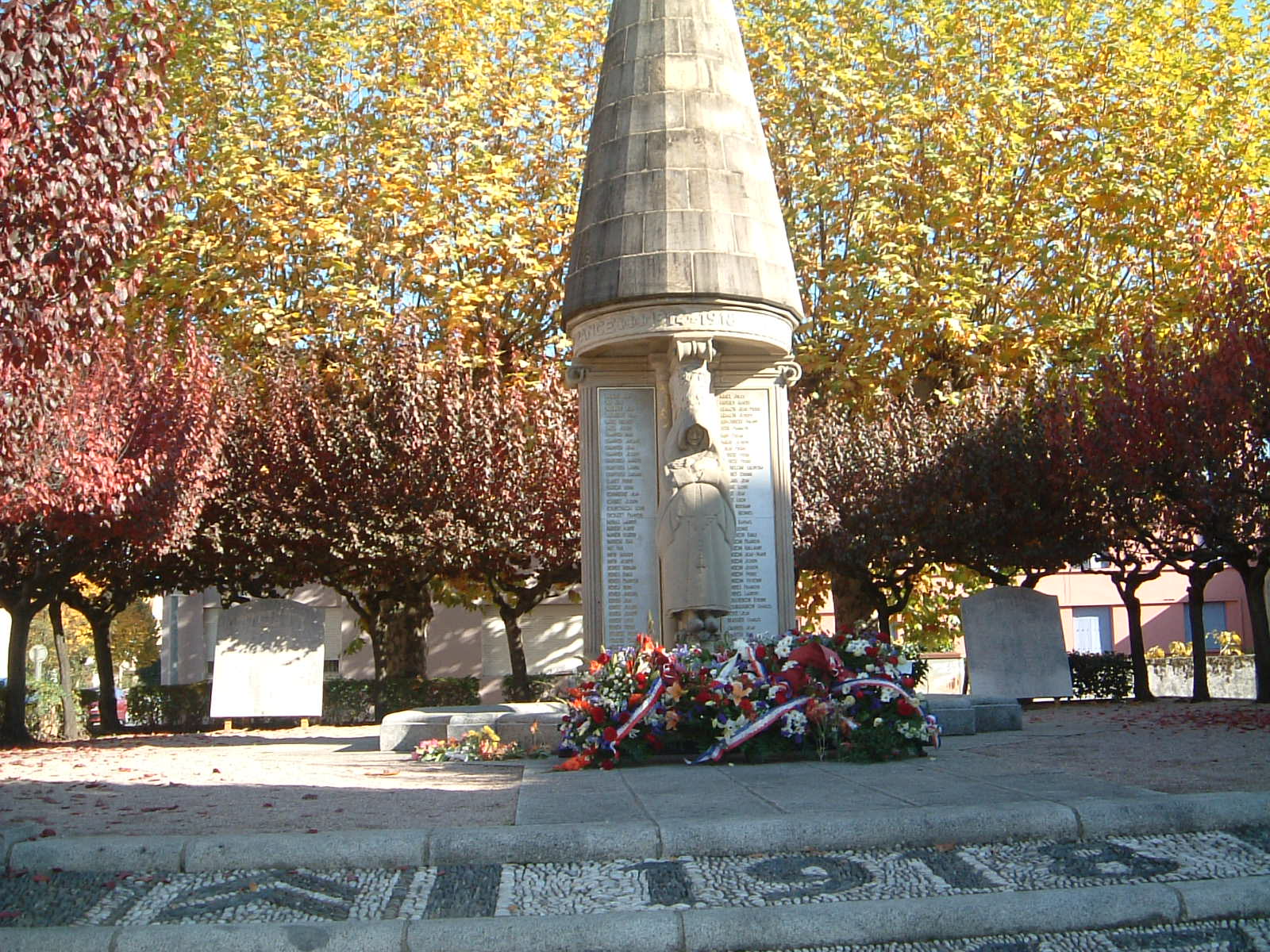
    Great War Memorial
    Great War Memorial St Girons

    Using trails through the forests, crossing rivers, scaling massive granite boulders, then higher and higher into the mountains, the walkers eventually go over the Pyrenees and into Spain, via Mount Valier.

    This group of people walk by day, usually sunny days. They carried essential equipment, had possession of compasses, survival food and sun tan lotion and all wore the very best of climbing gear. The relevant authorities; the mountain rescue teams, the Gendarmerie and the office of the Mayor were aware that the big commemoration walk was taking place,  should anyone had needed assistance. Even with all this backup, it is a gruelling, exhausting four-day affair.

    Consider then, the young men of the Second World War, fleeing from the enemy, who attempted this astonishing journey under cover of darkness. Most were exhausted, weak from lack of food. Some were injured, but had received little or no medical help. As to equipment, they only had the clothes they stood in. Without the luxury of compasses or climbing boots they faced one of the most treacherous parts of the Pyrenees; it was their only chance of freedom. That final climb to reach the border and over into Spain seems quite beyond belief now.

  • The Murdoch Issue: Resolution 1003 (1993) on the Ethics of Journalism

    The Council of Europe’s Assembly in 1993 “affirms the following ethical principles for journalism and believes that they should be applied by the profession throughout Europe.”

    We felt a closer look at the precepts of the resolution — at this time of increased examination of media ethics — would help remind us of what journalism’s rights and obligations to the (European) public still are:English newspapers

    News and opinions

    1. In addition to the legal rights and obligations set forth in the relevant legal norms, the media have an ethical responsibility towards citizens and society which must be underlined at the present time, when information and communication play a very important role in the formation of citizens’ personal attitudes and the development of society and democratic life.

    2. The basic principle of any ethical consideration of journalism is that a clear distinction must be drawn between news and opinions, making it impossible to confuse them. News is information about facts and data, while opinions convey thoughts, ideas, beliefs or value judgments on the part of media companies, publishers or journalists.

    3. News broadcasting should be based on truthfulness, ensured by the appropriate means of verification and proof, and impartiality in presentation, description and narration. Rumour must not be confused with news. News headlines and summaries must reflect as closely as possible the substance of the facts and data presented.

    4. Expression of opinions may entail thoughts or comments on general ideas or remarks on news relating to actual events. Although opinions are necessarily subjective and therefore cannot and should not be made subject to the criterion of truthfulness, we must ensure that opinions are expressed honestly and ethically.

    5. Opinions taking the form of comments on events or actions relating to individuals or institutions should not attempt to deny or conceal the reality of the facts or data.

    The right to information as a fundamental human right — Publishers, proprietors and journalists

    1. The media’s work is one of “mediation”, providing an information service, and the rights which they own in connection with freedom of information depends on its addressees, that is the citizens.

    2. Information is a fundamental right which has been highlighted by the case-law of the European Commission and Court of Human Rights relating to Article 10 of the European Convention on Human Rights and recognised under Article 9 of the European Convention on Transfrontier Television, as well as in all democratic constitutions. The owner of the right is the citizen, who also has the related right to demand that the information supplied by journalists be conveyed truthfully, in the case of news, and honestly, in the case of opinions, without outside interference by either the public authorities or the private sector.

    3. The public authorities must not consider that they own information. The representativeness of such authorities provides the legal basis for efforts to guarantee and extend pluralism in the media and to ensure that the necessary conditions are created for exercising freedom of expression and the right to information and precluding censorship. Moreover, the Committee of Ministers is aware of this fact, as demonstrated by its Declaration on the Freedom of Expression and Information adopted on 29 April 1982.

    4. When dealing with journalism it must be borne in mind that it relies on the media, which are part of a corporate structure within which a distinction must be made between publishers, proprietors and journalists. To that end, in addition to safeguarding the freedom of the media, freedom within the media must also be protected and internal pressures guarded against.

    5. News organisations must consider themselves as special socio-economic agencies whose entrepreneurial objectives have to be limited by the conditions for providing access to a fundamental right.

    6. News organisations must show transparency in matters of media ownership and management, enabling citizens to ascertain clearly the identity of proprietors and the extent of their economic interest in the media.

  • Grandparents Behind the Wheel: A Precious Cargo Driving Style

    UK sign

    In the event of a crash, the risk of injury to children is significantly lower when driven by a grandparent versus a parent, according to a recent study conducted by researchers at The Children’s Hospital of Philadelphia CHOP) and published in the journal Pediatrics. Unlike the English sign depicted on the right, grandparents crash data indicate a noticeable safer outcome.

    Although crashes with grandparent drivers comprised 9.5 percent of the crashes studied, only 6.6 percent of the injuries occurred with grandparents behind the wheel. The study was funded by the Center for Child Injury Prevention Studies (CChIPS) at CHOP, an Industry University Cooperative Research Center (I/UCRC) funded by the National Science Foundation (NSF) and 13 industry member companies.

    Researchers examined crash data on 11,859 children from 2003 to 2007 from the Partners for Child Passenger Safety (PCPS) study. In comparing grandparent drivers to parent drivers, nearly all child occupants were restrained at the time of the crash (98% versus 99%). However, 26 percent of grandparent drivers did not ensure that their child passengers were properly restrained in car seats or seat belts versus 19 percent of parent drivers, with 4 to 8-year-old passengers the most likely to be improperly restrained. After controlling for other factors, children involved in crashes with grandparents behind the wheel were half as likely to be injured as those driven by parents.

    These findings are important since older driver age, especially 65 and up, has long been associated with increased risk of motor vehicle crashes and older adults are often called upon to transport their grandchildren. “With more baby boomers becoming grandparents, we were concerned about children in crashes with grandparents,” says Fred Henretig, MD, lead author and an attending physician in CHOP’s Department of Emergency Medicine. “Although the children in crashes with grandparents could be better protected if they were following best practices for using child restraints, we were surprised to find that there is something about grandparents’ driving style with their ‘precious cargo’ in tow that provides a protective benefit for those children. If we can learn more about this style of driving, we can help drivers of all ages keep kids safe in cars.”

    While further research needs to be conducted to better clarify the protective effect of grandparent drivers, study authors believe they may drive more cautiously when transporting their grandchildren. Subsequent studies of grandparent driving practices while carrying grandchildren may help inform future child-occupant driving education guidelines for all drivers. “With grandparents taking on a greater role in transporting their grandchildren, less optimal use of child restraints concerns us,” says Flaura Koplin Winston, MD, PhD, coauthor of the study and co-director of CChIPS at CHOP. “It is vital that parents and grandparents continue to share child passenger safety knowledge and that grandparents have the same opportunity to receive the latest recommendations on how to properly restrain their grandchildren in cars as parents do.”

  • The Benefits of Marriage on Men’s Health: Does It Extend to Their Wives?

    Men who are married or in common-law relationships seek medical care sooner for heart attacks compared with single, divorced or widowed men, found a new study in CMAJ (Canadian Medical Association Journal).Wedding rings

    The benefits of marriage on health, particularly for men, have long been known. Fast, effective treatment for heart attacks is available and emergency department delays have been significantly reduced over the last few decades. However, patient delays in seeking treatment for chest pain have not improved.This study sought to assess the affect of marital status on time from first experiencing chest pain to arrival in an emergency department. Researchers looked at data on 4403 patients in Ontario, Canada, who had heart attacks (acute myocardial infarction). The mean age was 67.3 years and 33.7% were female. Almost half of patients (46.3%) went to hospital within 2 hours, with 73.6% arriving within 6 hours. In married people, 75.3% went to hospital within 6 hours of first chest pain, compared with 67.9% single, 68.5% divorced and 70.8% widowed patients presenting during the same period.

    “At the patient level, among patients with an exact time of onset of chest pain, the adjusted time saved was a remarkable half-hour. Among all the factors that had an effect in the primary outcome model, only calling an ambulance had a greater influence on the time to presentation,” writes Dr. Clare Atzema, Institute for Clinical Evaluative Sciences (ICES) with coauthors. “Because cardiovascular disease is the most frequent cause of death in Canada and the Western world, the benefit at the population level is substantial.”

    However, women who were married or in common-law relationships did not see the same benefit from marriage in seeking faster treatment. The researchers surmise it may be because women are more likely to take the role of caregiver and to urge their spouses to seek care sooner.

    “Earlier attainment of medical care may be one reason why married men have a lower risk of cardiovascular mortality than their single counterparts,” conclude the authors. “Awareness of the differences in reasons for delay by sex could facilitate the development of targeted public health campaigns as a way to reduce patient-caused delay among those at risk.”

  • Michele Bachmann: Inching Women and the US Presidency Forward

    By Nichola Gutgold

    In countries around the world women are prime ministers and presidents, and although women have made headway in corporations and at the highest levels of educational institutions, and in science and in engineering, no woman has ever been president of the United States.

    The 2008 election was a watershed with Hillary Clinton as the almost-Democratic nominee and Sarah Palin as the Republican vice-presidential nominee, but if women are to continue to compete at the highest level of American politics, women must continue to run for president.

    Michele Bachmann, Republican congresswoman from Minnesota, inched women and the US presidency forward with the announcement of her presidential campaign, just as Hillary Clinton did with her bid in 2008.  To level the political playing field for women it is an imperative to have women candidates in every presidential election.  Research shows that the more women who run for president the less that gender matters because women will not be seen as novelty candidates. Still, the barriers are more daunting for women candidates than they are for men.   When a reporter asked an Iowan if she preferred Palin or Bachmann she replied Bachmann because she “had already raised her family.”  This is not a criterion by which male politicians ever are measured.

    If a woman who is running for president asked me for advice, be a “FORCE” and employ this advice:Michele Bachmann

    1. Forcefully announce! That is, make a forceful announcement of your candidacy.  Don’t “test the waters” — hold your nose, jump in and declare you are running.  “I’m in to win” not “let’s see how this goes.”  Bachmann described herself as a “bold choice” — that’s a forceful start.

    2. Out-smart everyone.  Know your facts.  When women don’t know something, it is magnified by the press, public and pundits.  Women candidates will long have to guard against the “Palin-ization” of their candidacies.  Bachmann has to get her facts straight or she will be especially vulnerable to this.

    3. Revitalize.   You will need stamina.  By the time most women run for office, they are not young, so to take care of yourself.  Clinton is 15 years Obama’s senior, but she did not lack for energy on the presidential campaign trail and has been a global warrior as Secretary of State.  Bachmann appears youthful and energetic.  Good.  She’s going to need to be.

    4. Cut a predictable figure in your clothes.    Don’t go changing because your change will make the news before or instead of your ideas.  Women’s dress is more complicated than men’s, since there is an established male uniform for male politicians (dark suit and red or blue tie) but women have more options:  bright colors or subdued; skirt or slacks.  And typically, women’s hair is more complicated (long, short, to color or not to color). Pick easy and flattering clothing and hairstyles and commit.  Bachmann appears to have her wardrobe and hairstyle choices stabilized.

    5. Exhibit rhetorical elasticity.  This is the ability to move from a masculine to a feminine style of speaking with ease.  This is especially important for women candidates whose toughness is scrutinized.  Bachmann is able to move from the more tender narrative style, as she did when she remembered “standing in the kitchen of my grandma’s house on Lafayette Street in Waterloo listening to my dad, a Democrat debating the merits of the Great Society with my grandmother, a Republican” while also offering the reality check that she is not “pining for the past” with her tender recollections of a more innocent and economically stable Waterloo, Iowa.

    6. Slough off media criticism.  It will come.   It never pays to complain about the media in the midst of a campaign.   You may win over your base, but you may make an enemy of a cadre of powerful people.  Fox News Host Chris Wallace’s “Are you a flake?” in June was an uncivil question, but we live in an uncivil world and presidential candidate Bachmann will have plenty more flaky questions before the final footnote on her presidential bid is written.

    Bachmann has a long way to go, as do the other candidates for president in 2012.  For women and the US presidency, it is good that she is making the journey.

    ©2010 Nichola Gutgold for SeniorWomen.com

  • Waiting Room Poll Strikes a Nerve

    By Peggy Peck, Executive Editor, MedPage Today
    Published: July 15, 2011

    When MedPage Today asked if patients who are kept waiting for scheduled appointments should get a discounted bill, almost half of the more than 3,200 respondents said Yes.

    Another 16% said a discount wasn’t necessary, but patients who are kept cooling their heels in waiting rooms should get a gift card or some other token to acknowledge the value of their time.

    Only 38% of the responders nixed the idea of discounts or some other recognition of time as a valuable commodity for both patient and doctor.

    The genesis of this poll was an article about patients who bill their doctors for time spent waiting.

    In addition to garnering 3,238 votes, the MedPage Today poll also attracted a bumper crop of reader comments — 107 in all and those comments provide some insight into the thinking behind the votes.

    No Double Standard

    One of the people who sent in a comment was Pamela Wible, MD, who was featured in the original MedPage Today article and who wrote about this issue in a blog.

    Wible had this to say, “My real answer is Yes, if the doctor would charge for being late or missing appointments [patients should get discounts]. No double standard is acceptable in 2011.”

    In her office, patients who wait more than 10 minutes get an apology and are offered gifts. She said she keeps “… a large gift basket by the door. It’s quite fun. Plus, I am prepared for birthdays and anniversaries on the fly.”

    A doctor who admitted that her clinic “horribly overbooks me sometimes” sent this comment, “I take the time I need with each patient. And I always apologize if I am running late, letting the patient know that the patient ahead of them had more questions that needed attention. I get smiles for this, not anger.”

    A patient who said she hated to “wait in an office beyond appointment times,” added that, as annoying as the wait can be, what she really liked was having “the time to get my questions answered while I am seeing the care provider, and that may take extra time in the office for my needs.”

    A Spoonful of Sugar

    A nurse had some practical — and inexpensive advice — for busy offices: “A little common kindness can go a long way to soothe the upset waiting room. I’ve been in offices where the doc got tied up and the nurse came out and told the waiting patients the situation and gave them the option to re-schedule.”

  • Republican Political Mother

    A REVIEW

    Elly Peterson
    “Mother” of the Moderates
    by Sara Fitzgerald
    Published by University of Michigan Press;
    ©2011, 348 pp

    Elly Peterson

    by Jo Freeman

    Few students of women’s history or political history have ever heard of Elly Peterson, but she was important to both. In her long political life she went from an apolitical childhood to become the first woman to chair a state Republican party.  She later became the Republican co-chair of ERAmerica, and finally an independent who endorsed Democrats.

    Born in Illinois in 1914, Peterson remained a small-town girl when her life shifted to Michigan, which remained her home state as she worked in the nation’s capitol, traveled the world for her political causes and retired with her husband to Hawaii. 

    She dropped out of college because she didn’t like it, to take secretarial courses in a business school, which she did like. From this inauspicious beginning, she became the Republican candidate for Senator from Michigan in 1964, the top woman at the Republican National Committee in 1969, and a national spokeswoman for the ERA. She was inducted into the Michigan Women’s Hall of Fame in 1984.

    In those days even the most talented of women didn’t rise to positions of prominence in the political parties without sponsorship by a powerful man. Peterson’s sponsor was Michigan Governor George W. Romney* (father of Mitt). Impressed by her talent at organizing people and her loyalty, he drafted her to run for the Senate in 1964 against a popular Democratic incumbent so he would have a compatible team in his own race for re-election.

    Underfinanced, she lost, but still did better than Republican Presidential candidate Barry Goldwater. The Republican state party chairman was blamed for much of the party’s dismal showing even though Romney won. Peterson was chosen as his successor and served for four years. 

    Peterson got high marks as state chairman. People responded to her warmth and well-honed organizational skills. A mentor of many aspiring political professionals, she was called “mother” even though she had no children of her own. 

    Many thought she should be chairman of the RNC, but instead she got the second spot, which was reserved for a woman. The first and only female RNC chairman — Mary Louise Smith of Iowa would be chosen by President Ford in 1975. 

    Ford’s re-election campaign was Peterson’s last for the Republican Party and 1976 was the last time the Republican Platform endorsed the ERA. It was a discouraging campaign, poorly organized and permeated with Reagan people. With Ford’s defeat, Peterson shifted to organizing outside the Republican Party for feminist goals, even as these goals became identified with the Democratic Party.

    ______________
    *George Romney ran for President in 1964, getting 41 delegate votes at the Republican Convention. He was born in Mexico, where his American parents were doing their required Mormon missionary work. There was no public outcry that he was not a “natural born citizen” as required by Article II of the US Constitution to be President, though some newspapers pointed out that his birthplace might pose a problem if he were elected.

  • Jane Austen: “A large income is the best recipe for happiness I ever heard of”

    You’ve no doubt heard about the auction of Jane Austen’s manuscript for her unpublished 1804 novel, The Watsons, by Sotheby’s — for a rather large return, that of almost $1.6 million. A tasty recipe, indeed, Jane.

    The BBC produced an eight part film, The Real Jane Austen, with excerpts from their productions of Ms. Austen’s novels, narrated by Anna Chancellor. (You might track Ms. Chancellor’s career itself from the character she played in Four Weddings and A Funeral to various television roles.)

    A brief history of Jane Austen that accompanied an exhibit by the Morgan Library follows; the Library owns the first part of The Watson’s manuscript, numbering about 12 pages:

    JANE AUSTEN

    Jane Austen was born in 1775 into a rural middle-class family. Her father, George Austen, was the rector at Steventon, a small village in the southern English county of Hampshire. Her mother, Cassandra Austen, was a member of a prominent family. Austen’s immediate family included six brothers and one sister, also named Cassandra, who remained Jane’s closest friend and confidante throughout her life.

    At an early age, the two sisters were sent to Oxford for schooling. Both girls, however, caught typhus and returned home. Two years later, they were once again sent away to school. At the age of eleven, Jane Austen finished her formal education and returned home. It was in this environment, encouraged by her family — all enthusiastic readers themselves — that she began to write poems, stories, and plays for her family’s as well as her own amusement.

    As Austen grew into adulthood, she continued to work on her fiction while taking part in the everyday activities of young women of her time — she practiced the pianoforte, assisted in supervising servants, sewed, socialized frequently at dances and balls, traveled to visit family members, and detailed these activities in numerous witty and amusing letters, mostly to Cassandra.Jane Austen

    She continued to write short pieces and shared them with her family. Most likely first composed in 1794–95, Austen’s first surviving novel, Lady Susan, about a wicked yet enchanting widow who is determined to find a husband at any cost for herself and her retiring daughter, was written as a series of letters. It was a longer and more sophisticated story than were her previous efforts. Lady Susan was never published during her lifetime; it was not until 1811 that her first major novel, Sense and Sensibility, was printed. This was followed by Pride and Prejudice (initially entitled First Impressions; 1813), Mansfield Park (1814), Emma (1815), and the posthumous Northanger Abbey and Persuasion (1817).

    In 1816 Austen became ill but continued writing. She died in 1817, at the age of 41.

    “Vanity working on a weak head, produces every sort of mischief.” — Jane Austen

    Image: Anonymous, British School (nineteenth century) Miniature portrait of Jane Austen Watercolor on ivory [England], The Morgan Library & Museum. Photography by Schecter Lee, 2009. 

  • CultureWatch Reviews: Carthage Must Be Destroyed and The City of God

    In This Issue

    The author of Carthage Must Be Destroyed takes a close look at our preconceived notions of Carthage and Carthaginians, colored as they are by the accounts of Greek and Roman writers who had a vested interest in presenting Carthaginians as cruel and duplicitous. The City of God is as rich in lofty thinking, baroque writing, sympathetic characters, vivid settings, and suspense as anything you are likely to see more than once or twice in a lifetime. Take your time, but read it.

    Books

    CARTHAGE MUST BE DESTROYED

    The Rise and Fall of an Ancient Civilization

    by Richard Miles, ©2010

    Published by Viking Press; 544p

    The author of this book has extensive credentials that include teaching at the University of Sydney as well as being a Fellow-Commoner of Trinity Hall, University of Cambridge, and participating in seminars at the Universities of London, Illinois-Champaign-Urbana, and Wisconsin-Madison. His authoritative account of the rise and fall of Carthage covers a thousand years, and paints a fascinating picture of the peoples and cultures that surrounded the Mediterranean Sea between 1000 BC and the spring of 146 BC, when Carthage was indeed destroyed.

    He takes a close look at our preconceived notions of Carthage and Carthaginians, colored as they are by the accounts of Greek and Roman writers who had a vested interest in presenting Carthaginians as cruel and duplicitous. The three Punic Wars were ultimately won by Rome, which proceeded to present the world with its own take on history, hardly an unbiased account. Miles has gone a long way to question and disprove the common misperceptions foisted on us by the winners.

    Carthage had been founded several hundred years before its fall. Its founders were Phoenicians from the Levant, an area which consisted of a narrow strip of city states like Tyre and Sidon and Biblos along the eastern end of the Mediterranean Sea, an area that nowadays is mostly Lebanon.

    Early on, the Phoenicians developed sea-going ships with curved prows, as opposed to the squared-off, flat-bottomed boats of the era. It was these ships, along with the Phoenicians’ physical location on the edge of the sea, which allowed Phoenician traders to create trade routes all over the Mediterranean. Eventually, they were trading along both north and south coasts, all the way to Gades (Cadiz) on the southwestern tip of Spain, just beyond the Pillars of Hercules (Gibralter).

    Phoenician trading goods included all sorts of materials worked by their artisans: furniture inlaid with ivory and glass, bronze and silver jewelry holding precious stones, metal bowls and urns, all sorts of domestic items, and fabric and garments dyed an extraordinary shade of deep purple. The dye they used to create these came from crushed, salt-soaked shells, and the color gave the Phoenicians their name, after the Greek word for purple. The remnants of the mollusks, however, gave off such a foul odor that they were thrown well outside the city gates, in huge piles (one was found to be at least 40 meters high).

    Among the many peoples with whom Phoenicians traded were the Hebrews familiar to most of us from Biblical accounts, including Kings David and Solomon, as well as Ahab, whose wife, Jezebel, was the daughter of the King of Tyre.

    Between 814 and 750 BC, the outpost that was Carthage was founded and developed in North Africa, in what is now Tunisia, on the eastern tip of Cap Bon. Its location gave the Levantine traders a safe port far from home that also was convenient to many of its trading partners, especially those in Sardinia and Sicily.

    Carthage was a city governed by a Suffeture (i.e. two elected senior magistrates), a Tribunal of One Hundred and Four (the elites of the city), and a Popular Assembly which anyone could attend but which had very little power. The city was actually governed for many years by clans, most notably the Magids and the Barcids, the latter the clan that produced Carthage’s most famous General, Hannibal Barca.

  • Seniors, Smartphones and the Pew Report on Adoption and Usage

    Editor’s Note:

    As a birthday present we were just gifted by our daughters with our first smartphone.

    It was a choice we made after considering an e-Reader. We felt that there were many smartphone features that, at our age, would be helpful: Google Maps Navigation app, Camcorder, a slide-out,  five row keyboard for Internet use,  email backup and voice-related features.

    When in a city not our own, access to apps/the Internet would help us locate services and attractions without having to either carry a computer or having to find access to Internet service. (By the way, we’ve discovered apps called Elder 411 and Elder 911 authored by a doctor.) We’ve also noted that some family members now primaily use their smartphones to access the Internet rather than consulting their laptops or pcs.

    An article at Eldergadget offers tips and information for older users about smartphones titled SeniorFriendly Guide to Smartphones: http://www.eldergadget.com/senior-friendly-guide-to-smartphones/

    Here’s the Pew report:

    In its first standalone measure of smartphone ownership, the Pew Internet Project finds that one third of American adults – 35% – own smartphones. The Project’s May survey found that 83% of US adults have a cell phone of some kind, and that 42% of them own a smartphone. That translates into 35% of all adults. Our definition of a smartphone owner includes anyone who falls into either of the following two categories:

    • One-third of cell owners (33%) say that their phone is a smartphone.
    • Two in five cell owners (39%) say that their phone operates on a smartphone platform (these include iPhones and Blackberry devices, as well as phones running the Android, Windows or Palm operating systems).

    And here’s how they feel about their devices:

    How people feel about their smartphones (click for a larger version)

    Smartphone adoption is highest among the affluent and well-educated, the (relatively) young, and non-whites

    Several groups have higher than average levels of smartphone adoption, including: