Blog

  • Beyond Words: The Symbolic Language of Plants

    Delaware rose

    SYMBOLIC LANGUAGE OF PLANTS
    WILMINGTON, DE (January 11, 2012) – The Delaware Art Museum is pleased to present Beyond
    Words: The Symbolic Language of Plants, an exhibition of approximately 60 works in various media that
    emphasize the historic and symbolic meanings of plants. On view February 4 through April 8, 2012,
    Beyond Words – which was created by a group of D.C.-based artists known as Studio 155 – is part of the
    Museum’s Outlooks Exhibition Series.
    Members of the press are invited to a special breakfast reception and artist tour of Beyond Words on
    Saturday, February 4 at 10:00 a.m. Please RSVP to Molly Keresztury at mkeresztury@delart.org by
    Thursday, February 2.
    About Beyond Words
    Beyond Words is inspired by artists’ use of plants as symbols across cultures and throughout history. In
    the ancient world, Roman artists used roses to represent Venus, the goddess of love; Egyptian art
    connected the lily to Isis, the goddess of fertility; and Asian art included lotus flowers to convey beauty.
    Plant symbolism reached a high point in Medieval Christian art when religious craftsmen and artists used
    plants to explain the meaning of church parables and doctrine to a largely illiterate population. The lily
    and rose, for example, were used to denote perfect purity and love. Inspired by Medieval artistic quality,
    the Victorian Pre-Raphaelite artists revived the use of this ancient plant language to provide additional
    layers of meaning in their paintings.
    This exhibition, which includes over 60 works in watercolor, oil, tempera, and colored pencil, features a
    variety of symbolic natural subjects – flowers and trees, fruits and vegetables, and herbs and vines. For
    example, Wendy Cortesi’s whimsical watercolor Pumpkin recalls Dia de los Muertos, the Hispanic tradition of Day of the Dead and the autumn season; Neena Birch’s painting Rose symbolizes ancient
    spiritual contemplation and centering; and White Oak by Michael Rawson stands for strength and
    endurance.
    About Studio 155
    The 17 artists of Studio 155 all reside and work in the Washington D.C. area. Their collaboration began
    during the 2006 Corcoran Gallery of Art exhibition Botanical Treasures of Lewis and Clark. Since then,
    they have continued to paint as a group in a shared studio and show their work together in Washingtonarea galleries. Their mission is to realistically capture the natural world while expanding the boundaries of
    botanical art.
    Studio 155 members have participated in numerous widely-celebrated projects and exhibitions. Wendy
    Cortesi created a series of watercolors depicting Camp David’s native plants for First Lady Laura Bush;
    Roberta Bernstein, Vicki Malone, Kappy Prosch, and Eva-Maria Ruhl joined Cortesi to illustrate the 2010
    White House Holiday Tour Book; Cortesi, Malone, Debbie Bankert, and Eileen Malone-Brown
    contributed plant portraits for Monticello’s 2009 Lucy Meriwether Lewis Marks exhibition; and Debbie
    Bankert is currently working on a series of projects in the Columbian rainforest.
    Learn more about Studio 155 at www.studioonefiftyfive.blogspot.com.
    About the Outlooks Exhibition Series
    Beyond Words: The Symbolic Language of Plants is part of the Delaware Art Museum’s Outlooks
    Exhibition Series, which encourages community involvement in the creation of exhibitions that will be
    hosted by the Museum. The Delaware Art Museum accepts proposals for Outlooks exhibitions from
    organizations, community groups, and residents of the surrounding area, contributing to the Museum’s
    mission of providing an inclusive and essential community resource. All Outlooks exhibitions are
    displayed in the Ammon Galleries on the Museum’s second floor.  For more information, please visit
    www.delart.org/exhibitions/outlooks/index.html.
    About the Delaware Art Museum
    The Delaware Art Museum, located at 2301 Kentmere Parkway, Wilmington, DE 19806, is open
    Wednesday through Saturday 10:00 a.m. – 4:00 p.m. and Sunday noon – 4:00 p.m. Admission fees are
    charged as follows:  Adults (19 – 59) $12, Seniors (60+) $10, Students (with valid ID) $6, Youth (7 – 18)
    $6, and Children (6 and under) free. Admission fees are waived every Sunday. For more information, call
    302-571-9590 or 866-232-3714 (toll free), or visit the website at www.delart.org  Founded in 1912, the Delaware Art Museum is best known for its large collection of British
    Pre-Raphaelite art, works by Wilmington-native Howard Pyle and fellow American illustrators, and urban
    landscapes by John Sloan and his circle.Visitors can also enjoy the outdoor Copeland Sculpture Garden
    and a number of exhibitions throughout the year.
    # # #The Delaware Art Museum is presening an exhibition of approximately 60 works in various media that emphasize the historic and symbolic meanings of plants.

    On view through April 8, 2012, Beyond Words: The Symbolic Language of Plants – which was created by a group of DC — based artists known as Studio 155 — is part of the Museum’s Outlooks Exhibition Series.

    Beyond Words is inspired by artists’ use of plants as symbols across cultures and throughout history. In the ancient world, Roman artists used roses to represent Venus, the goddess of love; Egyptian art connected the lily to Isis, the goddess of fertility; and Asian art included lotus flowers to convey beauty.

    Plant symbolism reached a high point in Medieval Christian art when religious craftsmen and artists used plants to explain the meaning of church parables and doctrine to a largely illiterate population. The lily and rose, for example, were used to denote perfect purity and love.

    Inspired by Medieval artistic quality, the Victorian Pre-Raphaelite artists revived the use of this ancient plant language to provide additional layers of meaning in their paintings.  This exhibition, which includes over 60 works in watercolor, oil, tempera, and colored pencil, features a variety of symbolic natural subjects – flowers and trees, fruits and vegetables, and herbs and vines.

    For example, Wendy Cortesi’s whimsical watercolor Pumpkin recalls Dia de los Muertos, the Hispanic tradition of Day of the Dead and the autumn season; Neena Birch’s painting Rose symbolizes ancient spiritual contemplation and centering; and White Oak by Michael Rawson stands for strength and endurance.Camellia

    About Studio 155: The 17 artists of Studio 155 all reside and work in the Washington D.C. area. Their collaboration began during the 2006 Corcoran Gallery of Art exhibition Botanical Treasures of Lewis and Clark. Since then, they have continued to paint as a group in a shared studio and show their work together in Washingtonarea galleries. Their mission is to realistically capture the natural world while expanding the boundaries of botanical art.

    Editor’s Note: The Oxford Journals’ Journal of Experimental Botany published a series, Symbolism of plants: examples of European-Mediterranean culture presented with biology and history of art. The journal addressing the month of March and the plants Silphion and Narthex can be read online:

    There are two conspicuous herbaceous perennials of the Mediterranean and western Asia that impress with their enormous resurgence each year from dormant rootstocks and thus function as symbols of reactivation and perseverance. Silphion and narthex develop with tall inflorescences over large tufts of finely divided leaves. Little wonder they became symbols of the Goddess Aphrodite.”

    Images:

    1. Centering, 2010. Neena Birch. Oil on canvas, Triptych, 48 x 24 inches each panel. Lent by the artist.

    2. Camellia: Luck, Perfection and Loveliness, 2011. Betsy Kelly. Oil on canvas, painted wood frame in oil, 22 x 16 inches. Lent by the artist.
  • Elaine’s Caregiving Series: Tommy Sleeps Through the Night

    by Elaine Soloway

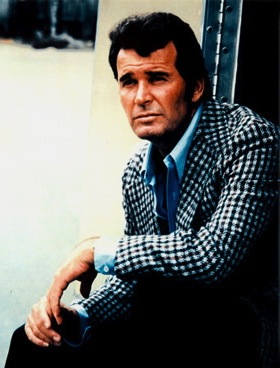
    Jim Rockford aka James Garner, actor
    I’m on the living room couch watching the numbers on the DVR’s digital clock. It’s 3:30 in the morning, and I’m praying Tommy doesn’t wake up before his alarm, like he did yesterday.

    It was 3:45 a.m. when he hustled out of bed and started pulling on his jeans. (This is a typical wake up time for me, so I wasn’t angry, just scared.)

    “Honey, it’s 3:45 in the morning,” I told my husband. I pulled his elbow and tried to stop him from putting his belt through the loop.

    Tommy pulled away and moved to lace his tennis shoes. He didn’t rebut because he can’t speak. Frontotemporal Dementia (FTD) and Primary Progressive Aphasia (PPA)— disorders affecting the brain’s language center — started robbing him of his speech in 2009, and like one of the “Ps” says, it’s Progressive. So, over the years, there’s been less and less talk, and now we’re left with bits of common language from our 14 year marriage. And if we’re lucky, a written note.

    At least he’s safe in bed, I tell myself.

    At least he’s no longer driving.

    It was my neighbor across the street who called to tell me Tommy had sideswiped another car and drove off. I was waiting for this kind of call for I worried every time he got in his car. If he was late coming home from the Y, or from his golf date, I’d pace in front of the window until I saw his Honda Accord pull into the driveway.

    “You have to take away the keys before he kills someone,” my daughter said when I told her of the latest incident. “You’ll never forgive yourself.”

    So, neighbors Holly and John sat on the couch with me to tell Tommy it was no longer safe for him to drive. When he refused to give me his car keys, I said, “John will remove the battery.” I got that line from one of his neurologists.

    “We’ve got lots of kids in the neighborhood,” Holly said. “You can’t be driving.”

    “No,” Tommy said. “Golf, the Y.” He could get those words out.

    “I’ll take you,” I said. “Anywhere you want to go.” I do.

    Yesterday, when Tommy woke at 3:45 a.m., I followed him downstairs to the living room. He settled on the couch and turned on the remote. He wrote on a Post-it, “Rock.”

    Aha! Tommy thought he had been taking his afternoon nap and it was time to get up and watch one of his favorite TV shows, “The Rockford Files.” When I opened the curtains to show him it was still dark outside, when I went through the MeTV listings to show him there was no Rockford, when I pointed to the a.m. on the TV screen’s time, he clicked the remote and went back upstairs to bed.

    This morning it appears he is sleeping through.

    ©2012 Elaine Soloway for SeniorWomen.com

  • A Statement from Olympia Snowe on Re-Election Campaign

    Three-term Senator Olympia J. Snowe (R-Maine) issued the following statement  withSenator Olympia Snowe regard to her re-election campaign:

    “After an extraordinary amount of reflection and consideration, I am announcing today that I will not be a candidate for re-election to the United States Senate.

    “After 33 years in the Congress this was not an easy decision. My husband and I are in good health. We have laid an exceptionally strong foundation for the campaign, and I have no doubt I would have won re-election. It has been an indescribable honor and immeasurable privilege to serve the people of Maine, first in both houses of Maine’s legislature and later in both houses of Congress. To this day, I remain deeply passionate about public service, and I cherish the opportunity I have been given for nearly four decades to help improve the lives of my fellow Mainers.

    “As I have long said, what motivates me is producing results for those who have entrusted me to be their voice and their champion, and I am filled with that same sense of responsibility today as I was on my first day in the Maine House of Representatives. I do find it frustrating, however, that an atmosphere of polarization and “my way or the highway” ideologies has become pervasive in campaigns and in our governing institutions.

    “With my Spartan ancestry I am a fighter at heart; and I am well prepared for the electoral battle, so that is not the issue. However, what I have had to consider is how productive an additional term would be. Unfortunately, I do not realistically expect the partisanship of recent years in the Senate to change over the short term. So at this stage of my tenure in public service, I have concluded that I am not prepared to commit myself to an additional six years in the Senate, which is what a fourth term would entail.

    “As I enter a new chapter, I see a vital need for the political center in order for our democracy to flourish and to find solutions that unite rather than divide us. It is time for change in the way we govern, and I believe there are unique opportunities to build support for that change from outside the United States Senate. I intend to help give voice to my fellow citizens who believe, as I do, that we must return to an era of civility in government driven by a common purpose to fulfill the promise that is unique to America.

    “In the meantime, as I complete my third term, I look forward to continuing to fight for the people of Maine and the future of our nation. And I will be forever and unyieldingly grateful for the trust that the people of Maine have placed in me, and for the phenomenal friendship and assistance I have received over the years from my colleagues, my supporters, and my staff, both in Maine and in Washington.”

    Editor’s Note: Some highlights of Senator Snowe’s career in the Senate

    1978 – Elected to Congress as the youngest Republican woman, and the first Greek-American woman, ever elected to Congress.

    1994 – Elected to the U.S. Senate, becoming the first woman in American history to serve in both houses of a state legislature and both houses of Congress.

    1997 – Appointed to the position of Counsel to the Assistant Majority Leader.

    2001 – Becomes the first Republican woman ever to secure a full-term seat on the Senate Finance Committee.

  • Aside from the Yoga Expose: An NIH View, History and Guidelines

    It’s possible that you’ve heard about the current Yoga ‘flap’ which involves sex.

    We decided to include a link to the California Code of Professional Ethics which was created to answer questions that had arisen previously, for example:  “All forms of sexual behavior or harassment with students are unethical, even when a student invites or consents to such behavior involvement. Sexual behavior is defined as, but not limited to, all forms of overt and covert seductive speech, gestures, and behavior as well as physical contact of a sexual nature; harassment is defined as, but not limited to, repeated comments, gestures, or physical contacts of a sexual nature.”Hatha Yoga

    The New York Times article, Yoga and Sex Scandals, has covered the current controversy. But the NIH (National Institutes of Health backgrounder will provide a basis for the activity, one that is immensely popular and, presumably, very profitable.

    Yoga for Health: An Introduction

    Introduction

    Yoga is a mind-body practice in complementary and alternative medicine (CAM) with origins in ancient Indian philosophy. The various styles of yoga that people use for health purposes typically combine physical postures, breathing techniques, and meditation or relaxation. This Backgrounder provides a general overview of yoga and suggests sources for more information.

    Key Points

    • People use yoga for a variety of health conditions and to achieve fitness and relaxation.
    • It is not fully known what changes occur in the body during yoga; whether they influence health; and if so, how. There is, however, growing evidence to suggest that yoga works to enhance stress-coping mechanisms and mind-body awareness. Research is under way to find out more about yoga’s effects, and the diseases and conditions for which it may be most helpful.
    • Tell your health care providers about any complementary and alternative practices you use. Give them a full picture of what you do to manage your health. This will help ensure coordinated and safe care.

    Overview

    Yoga in its full form combines physical postures, breathing exercises, meditation, and a distinct philosophy. Yoga is intended to increase relaxation and balance the mind, body, and the spirit.

    Early written descriptions of yoga are in Sanskrit, the classical language of India. The word “yoga” comes from the Sanskrit word yuj, which means “yoke or union.” It is believed that this describes the union between the mind and the body. The first known text, The Yoga Sutras, was written more than 2,000 years ago, although yoga may have been practiced as early as 5,000 years ago. Yoga was originally developed as a method of discipline and attitudes to help people reach spiritual enlightenment. The Sutrasoutline eight limbs or foundations of yoga practice that serve as spiritual guidelines:

    1. yama (moral behavior)
    2. niyama (healthy habits)
    3. asana (physical postures)
    4. pranayama (breathing exercises)
    5. pratyahara (sense withdrawal)
    6. dharana (concentration)
    7. dhyana (contemplation)
    8. samadhi (higher consciousness)

    The numerous schools of yoga incorporate these eight limbs in varying proportions. Hatha yoga, the most commonly practiced in the United States and Europe, emphasizes two of the eight limbs: postures (asanas) and breathing exercises (pranayama). Some of the major styles of hatha yoga include Ananda, Anusara, Ashtanga, Bikram, Iyengar, Kripalu, Kundalini, and Viniyoga.

    Use of Yoga for Health in the United States

    According to the 2007 National Health Interview Survey (NHIS), which included a comprehensive survey ofCAM use by Americans, yoga is one of the top 10 CAM modalities used. More than 13 million adults had used yoga in the previous year, and between the 2002 and 2007 NHIS, use of yoga among adults increased by 1 percent (or approximately 3 million people). The 2007 survey also found that more than 1.5 million children used yoga in the previous year.

  • Tips About Finding the Cheapest Gas; Do You Really Need High Octane?

    We decided to revisit the issue of finding the cheapest gas prices using our area’s zip code. A different route to locate all stations in our area was through MapQuest’s gas pricing tool. And we updated the government’s Fuel Economy site  cited previously.1935 Arne Jacobsen gas station

    Perhaps one of the most information sites was not the usual that consumers might consult:  The Federal Trade Commission answered a question many older women might ask.  Are you tempted to buy a high octane gasoline for your car because you want to improve its performance?

    First, the FTC’s take followed by the opinion of our NPR Car Talk favorites, the brothers Magliozzi:

    If so, take note: the recommended gasoline for most cars is regular octane. In fact, in most cases, using a higher octane gasoline than your owner’s manual recommends offers absolutely no benefit. It won’t make your car perform better, go faster, get better mileage or run cleaner. Your best bet: listen to your owner’s manual.

    The only time you might need to switch to a higher octane level is if your car engine knocks when you use the recommended fuel. This happens to a small percentage of cars.

    Unless your engine is knocking, buying higher octane gasoline is a waste of money, too. Premium gas costs 15 to 20 cents per gallon more than regular. That can add up to $100 or more a year in extra costs. Studies indicate that altogether, drivers may be spending hundreds of millions of dollars each year for higher octane gas than they need.

    And now, to Ray and Tom’s unvarnished response:

    QqQ: My owner’s manual says my car will run just fine on regular, unleaded gas. Will “treating” it to premium gas provide any benefit?


    A. Let’s be perfectly clear about this:

    NO!

    A. The only thing you’ll be benefiting are the portfolios of impoverished oil company executives.

    Finding the Lowest Prices on Gas

    At gasprices.mapquest.com, simply select a city and state or type in a zip code to find the lowest-priced gas in that area. Additional specifications can be made such as alternative fuel stations or different fuel grades, as well as sorting stations by distance or price.

    If you want to use the gas consumption calculator at the top of the map, drivers must enter their total trip distance, miles per gallon, and the cost per gallon.

    Tools on MapQuest.com may help consumers plan more effectively with replacement options, including:

    (Photo from Wikipedia:  Arne Jacobsen, Tankstation, Belysning)

  • Social Sites: Have You Pared Down Your Friends? And Did You Regret Your Choices?

    Privacy management on social media sites

    by Mary Madden, Pew Internet and American Life Project

    social networking network

    OVERVIEW

    Social network users are becoming more active in pruning and managing their accounts. Women and younger users tend to unfriend more than others.

    About two-thirds of internet users use social networking sites (SNS) and all the major metrics for profile management are up, compared to 2009: 63% of them have deleted people from their “friends” lists, up from 56% in 2009; 44% have deleted comments made by others on their profile; and 37% have removed their names from photos that were tagged to identify them.

    Some 67% of women who maintain a profile say they have deleted people from their network, compared with 58% of men. Likewise, young adults are more active unfrienders when compared with older users.

    Read the full report for more details on these findings:

    • Gender differences in setting privacy profiles and managing information
    • Young adults and their efforts at “reputation management”
    • Levels of difficulty in managing privacy controls on social networking sites
    • Profile owners who regret their own posts

    ABOUT THE SURVEY

    This report is based on the findings of a survey on Americans’ use of the Internet. The results in this report are based on data from telephone interviews conducted by Princeton Survey Research Associates International from April 26 to May 22, 2011, among a sample of 2,277 adults, age 18 and older.  Telephone interviews were conducted in English and Spanish by landline (1,522) and cell phone (755, including 346 without a landline phone). For results based on the total sample, one can say with 95% confidence that the error attributable to sampling is plus or minus 2.4 percentage points.  For results based Internet users (n=1,701), the margin of sampling error is plus or minus 2.7 percentage points.

    About how often do you visit social networking sites?…Several times a day, about once a day, 3 to 5 days a week, 1 to 2 days a week, every few weeks, less often

    Feb 24, 2012, Pew Internet & American Life Project

    How many social networking sites do you currently have a profile on?

    Feb 24, 2012, Pew Internet & American Life Project
  • CultureWatch Reviews: Sybil Exposed

    In this Review: Women, who bought the book [Sybil] far more than men, resonated to the idea that stress could fracture the mind. All this made it possible for Mason, Wilbur, and Schreiber to pull off one of the largest, most shocking cases of publishing deceit in the twentieth century.

    Books

    Sybil Exposed: The Extraordinary Story Behind the Famous Multiple Personality Case
    By Debbie Nathan; © 2011
    Published by Free Press; Hardback; e-book; paper (June 2012); 297pp.

    Reviewed by Jill Norgren

    The relationship between the author of non-fiction and her reader demands trust. Flora Rheta Schreiber apparently achieved this rapport with more than six million people in the United States after the 1973 publication of her biography of Sybil,  an American woman with sixteen personalities.Shirley Mason

    Thanks in large measure to Sybil’s psychiatrist,  multiple-personality disorder (MPD) became an official diagnosis, and was added to the Diagnostic and Statistical Manual of Mental Disorders (DSM)) with important consequences for the medical profession, the insurance industry, and patients.  Sybil remains in print forty years after its publication. It is extraordinary, then, that in Sybil Exposed journalist Debbie Nathan is able to argue persuasively that the book was the product of conspiracy and deceit.

    Shirley Mason aka “Sybil,” grew up in a small Minnesota town, the only child of Seventh-Day Adventists. She suffered from physical and emotional illnesses until, as a young adult, she met psychiatrist Cornelia (Connie) Wilbur. Doctor Wilbur, smart and charismatic but bruised by her father’s misogynistic pronouncement that she was not sufficiently intelligent to be a scientist or physician, yearned to make her mark. She found it in Shirley, a patient eager to please her psychiatrist. Shirley began treatment in 1954 with Wilbur who, for years, had been intrigued by multiple personality disorder. Wilbur had treated Shirley for five sessions in 1945 but the therapy was discontinued when Wilbur looked for a new job.

    Shirley actually did well in the nine years she was on her own. However, in the early 1950s, a move to New York City, and admission to Columbia’s Teacher’s College, brought on old symptoms of unease. Somehow she discovered that Wilbur, now a psychoanalyst, had an office in Manhattan. Shirley booked a few appointments, hoping for the same positive help as in 1945.

    In Sybil Exposed Nathan narrates the compelling and well-argued story of how completely Wilbur failed her patient, and how Wilbur and Flora Rheta Schreiber carried out professional fraud and negligence.

    Nathan says that when Shirley resumed therapy with Connie Wilbur “her sessions … immediately veered in odd directions.” Wilbur talked about her life and violated established psychiatric ethical norms. Shirley wanted to emulate Connie by becoming a psychiatrist. Connie encouraged her but when her patient’s stress increased under the pressure of these ambitions, Connie prescribed powerful, habit-forming drugs. Shirley spent her days “half zonked,” but the fact was, to Wilbur, she was just a “garden-variety neurotic” who would not require many more sessions. Sensing that her idol’s interest was slipping away, Shirley surprised Wilbur one day with new stories of fugue states. Such behavior was caused by dissociation, the splitting of consciousness, a rare form of hysteria that greatly interested Wilbur. Connie’s commitment was re-established. Ten days later Shirley arrived for a session with her alter “Peggy Ann” speaking for her. “Vicky” followed a week later, and then “Peggy Lou.” Connie Wilbur decided to psychoanalyze Shirley and all of her alters. This would be her ground breaking experiment. Understanding the disorder would establish her as one of the greatest professionals in her field.

  • Yosemite’s Alpine Chipmunks Take Genetic Hit From Climate Change

    By Sarah Yang

    Global warming has forced alpine chipmunks in Yosemite to higher ground, prompting a startling decline in the species’ genetic diversity, according to a new study by researchers at the University of California, Berkeley.

    Alpine chipmunkThe study in the advance online publication of the journal Nature Climate Change, is one of the first to show a hit to the genetic diversity of a species because of a recent climate-induced change in the animals’ geographic range. What’s more, the genetic erosion occurred in the relatively short span of 90 years, highlighting the rapid threat changing climate can pose to a species.

    With low genetic diversity a species can be more vulnerable to the effects of inbreeding, disease and other problems that threaten species survival, the researchers said.

    “Climate change is implicated as the cause of geographic shifts observed among birds, small mammals and plants, but this new work shows that, particularly for mountain species like the alpine chipmunk, such shifts can result in increasingly fragmented and genetically impoverished populations,” said study lead author Emily Rubidge, who conducted the research while a Ph.D. student at UC Berkeley’s Museum of Vertebrate Zoology and the Department of Environmental Science, Policy and Management. “Under continued warming, the alpine chipmunk could be on the trajectory towards becoming threatened or even extinct.”

    Rubidge worked with Craig Moritz, professor of integrative biology and director of the Museum of Vertebrate Zoology; James Patton, professor emeritus of integrative biology and curator of the Museum of Vertebrate Zoology; and Justin Brashares, associate professor in the Department of Environmental Science, Policy and Management.

    The new findings build upon previous research that found major shifts in the range of small mammals in Yosemite National Park since the early 1900s. In 2003, biologists at UC Berkeley began an ambitious resurvey of Yosemite’s birds, mammals, reptiles and amphibians, retracing the steps originally taken between 1914 and 1920 by Joseph Grinnell, founder and former director of the Museum of Vertebrate Zoology.

    The Grinnell Resurvey Project, led by Moritz and museum colleagues, found that many small mammals in Yosemite moved or retracted their ranges to higher, cooler elevations over the past century, a period when the average temperature in the park increased by 3 degrees Celsius, or about 5.4 degrees Fahrenheit.

    Rubidge in Yosemite

    Emily Rubidge shown at a rocky slope above Tuolumne Meadows at Yosemite National Park. This is an area where alpine chipmunks were abundant in the past, but have now disappeared. (Cole Burton photo) It is no surprise that the alpine chipmunk (Tamias alpinus) would be more sensitive to the temperature change, since it is a high-elevation species endemic to California’s Sierra Nevada, the researchers said. In the early 1900s, Grinnell and colleagues sighted alpine chipmunks at elevations of 7,800 feet. Now, the alpine chipmunk appears to be sticking to even higher elevations, retracting its range by about 1,640 feet upslope.

    To test the genetic impact from that loss of geographic range, researchers compared genetic markers from 146 modern-day alpine chipmunks with those from 88 of their historical counterparts. Samples were collected from seven paired sites throughout Yosemite.

    As a control, the researchers also looked at the genetics – both historic and modern – of lodgepole chipmunks (Tamias speciosus), a lower elevation species that had not changed its range over the past century.

    The analysis of genetic markers revealed a significant decline in “allele richness” among the recently sampled alpine chipmunk populations compared with their historic counterparts. Moreover, the researchers noted that the modern chipmunks were more genetically differentiated across sites than in the past, a sign of increased fragmentation in the alpine chipmunk population.

    Photo: An alpine chipmunk (Tamias alpinus) is shown at Yosemite’s Ten Lakes Pass at an elevation of 9,631 feet. (Risa Sargent photo)

  • Chronic Pain Fuels Boom in Opioids

    By John Fauber, Reporter, Milwaukee Journal Sentinel/MedPage Today

    Prescriptions for narcotic painkillers soared so much over the last decade that by 2010 enough were being dispensed to medicate every adult in the US around-the-clock for a month.

    Fueling that surge was a network of pain organizations, doctors and researchers that pushed for expanded use of the drugs while taking in millions of dollars from the very companies that made them, a Journal Sentinel/MedPage Today investigation found.

    Last year, the Journal Sentinel/MedPage Today found that a University of Wisconsin-Madison based organization had been a national force in helping liberalize the way opioids are prescribed and viewed. During a decade-long campaign that promoted expanded use of opioids — an agenda that critics say was not supported by rigorous science — the UW Pain & Policy Studies Group received $2.5 million from makers of opioid analgesics.

    After that article was published last April, the UW Pain group said it had decided to stop taking money from the drug industry.

    But the UW Pain group is just one link in a network of national organizations and researchers with financial connections to the makers of narcotic painkillers.

    Beginning 15 years ago, that network helped create a body of “information” that today is found in prescribing guidelines, patient literature, position statements, books and doctor education courses, all which favored drugs known as opioid analgesics.

    Without rigorous scientific evidence to prove that their benefits out weigh potential harm, drugs like OxyContin and Vicodin increasingly have been used to treat a wide array of chronic pain syndromes including low back pain and fibromyalgia.

    Current practices reflect a gradual shift from the use of these drugs to treat short-term acute pain such as post-surgical pain, as well as severe pain associated with metastatic cancer or end-of-life pain — uses that were based on solid evidence that such use was safe and effective.

    But the benefit seen for those conditions was extended to treatment of chronic pain syndromes, an extrapolation that had no evidence to back it up.

    Caught in the middle are millions of Americans with real pain that can last for years and thousands of doctors who want to help them.

    It’s a situation that was ripe for the influence of the pharmaceutical industry, said Mark Sullivan, MD, a professor of psychiatry and behavioral sciences at the University of Washington.

    By 2010, those firms were selling four times as many prescription painkillers to pharmacies, doctors’ offices and hospitals as in 1999.

  • Mary Leiter, A Downton Abbey Historical Inspiration

    Recovering from the last episode of Downton Abbey’s Season Two, leads us to thank Julian Fellowes for his generosity in sharing  an inspiration for his series: Image from Amazon
    To Marry an English Lord: Victorian and Edwardian Experience by Gail MacColl, Carol Wallace
    .

    Fellowes mentioned in a previous interview that he was reading this book when approached about writing a new series for British television.

    We pursued this ‘entertaining’ book, finding it had reached astronomical pricing proportions in some examples on an online reading source.  We note that the book is being reissued, so less dear prices will be requested and signing up for the reissue is possible from the publisher. I then turned to my favorite source, the Berkeley (California, not England) Public Library. Rarely disappointed in this large city’s libraries (with its numerous branches, several of which are undergoing needed renovations for its expanding and grateful populace), it was in my hands in a few days, delivered by a traveling van that replaced my closed branch’s overflowing shelves.

    This morning my husband turned from The New York Times’s Arts section, and the article, A Good Bet: More Turmoil For ‘Downtown, with yet another tidbit from Fellowes, asking me “Who is Mary Leiter”? Fellowes in The New York Times interview is quoted saying, “I’ve read all these things, like Cora is supposed to be Mary Leiter … She isn’t really; she’s one of that genus, of which Mary Leiter is a famous example.”Lady Mary Curzon

    I turned to the well-worn library’s paperback copy of To Marry … and looked up the tens of references to Lady Mary Curzon (née Leiter) in the index, only to find that there’s even an index for the numerous illustrations and photographs in To Marry.

    The Wikipedia entry for Lady Mary includes the following:

    Lady Curzon was never able to give Curzon the son and heir he desperately desired. Her demanding social responsibilities, tropical climate, a prolonged near fatal infection following miscarriage, and fertility-related surgery eroded her health. Convalescent trips to England failed to heal her. When they returned to England after Curzon’s resignation in August 1905, her health was failing. She died on 18 July 1906 at home at 1 Carlton House Terrace, Westminster,London, at age thirty-six.

    It is said that Lady Curzon, after having seen the Taj Mahal on a moonlit night, exclaimed in her bewilderment that she was ready to embrace an immediate death if someone promised to erect such a memorial on her grave.

    Following Lady Curzon’s death, in 1906, Lord Curzon had a memorial chapel built in his late wife’s honour, attached to the parish church at Kedleston Hall. Lady Curzon is buried, with her husband, in the family vault beneath it. The design of the chapel, by G. F. Bodley, does not resemble the Taj Mahal, but is in the decorated Gothic style. It was completed in 1913.

    In the chapel Curzon expressed his grief at his wife’s premature death by charging the sculptor, Sir Bertram Mackennal, to create a marble effigy for her tomb which: “expressed as might be possible in marble, the pathos of his wife’s premature death and to make the sculpture emblematic of the deepest emotion.”  Later, Curzon’s own effigy was added to lie beside that of his wife’s, as his remains do in the vault beneath. Curzon’s second wife chose to be buried in the churchyard outside.

    One of those photographs in the To Marry An English Lord is of their London home, (No 1 Carleton House Terrace) which still stands today,  housing The Royal Society. Lady Mary Curzon's London home


    Credits:

    1. Portrait of Mary Leiter Curzon 1870-1906 . Franz von Lenbach (1836-1904) Oil on board, 1901 National Portrait Gallery, Smithsonian Institution, Washington, DC. Bequest of Lady Alexandra Metcalfe

    2.  Photograph of Curzon house: ©2004 Kaihsu Tai, Wikimedia Commons