Blog

  • Jo Freeman Reviews The Everyday Feminist: The Key to Sustainable Social Impact – Driving Movements We Need Now More Than Ever

    Jo Freeman Reviews: 

    The Everyday Feminist: The Key to Sustainable Social Impact – Driving Movements We Need Now More than Ever
    By Latanya Mapp Frett, forward by Cecile Richards 
    Hoboken, N.J.: John Wiley and Sons, 2023, xvi + 208 pages          The Everyday Feminist
    Hardcover $28; e-book $27
     
    This is a complex book.  It combines social theory, several personal stories, and a little bit of memoir into a very readable text.
     
    The title certainly catches your attention, as you ask what is an everyday feminist.  The author offers an answer in the first chapter – several answers.
     
    She’s an activist. She works for her community, not just herself.  She leads but doesn’t think of herself as a leader.  She is an ordinary woman with a passion for transformational change.  She mostly comes from marginalized communities.  She is politically astute.  She takes risks to do the right thing.  She is transparent and accountable, caring and generous.
     
    The author has met a lot of everyday feminists, some of whom she describes in the book and some of whom speak in their own voice.  You may have heard about a few of them, but only a few.  Indeed,  most live in Africa or Asia.
     
    That’s largely because the author has lived all over the world, often in charge of philanthropic programs to aid women and girls, a career not predicted by her law degree.  She currently heads the Global Fund for Women.  Her book often addresses “funders,” urging them to do more for girls and women.  
     
    She frequently discusses social movements, which she sees has having a natural life cycle.  What funders should do depends in part of where in that life cycle everyday feminists are operating.
     
    She describes that life cycle in Chapter 2, as well as the dimensions of movement capacity.
     
    Several chapters describe the work of Everyday Feminists, including their work for men and boys.  She makes it clear that these women need more support, and more money, to achieve their goals.
     
    The turning point in the author’s own life was the Fourth World Conference on Women, held near Beijing in 1995.  That’s where she was introduced to the concept of the everyday feminist and the work they do.  She’s been looking for ways to support them ever since.
     
    Copyright © 2023 Jo Freeman
     
    Jo has finished her book The Second Freedom Summer: Expanding the Southern Electorate before and after the 1965 Voting Rights Act and is looking for a publisher.
     
     
  • jigsaw puzzle of a garden

    Ferida Wolff’s Backyard: Nature’s Jigsaw Puzzles

    jigsaw puzzle of a garden


    1000 Piece Panoramic Jigsaw Puzzle – Garden Birds; Eurographics

    By Ferida Wolff

    As our communities become more urbanized, the natural features around us tend to get pushed into the background and often go unnoticed. In “Ferida’s Backyard,” I look at the details of nature locally, from a neighborhood perspective, frequently from a backyard vantage point. It excites me to share what I see. An awareness of the natural connection can beautifully enhance our lives.

    Nature’s Jigsaw Puzzles

    I love doing jigsaw puzzles.

    Recently, I was given a thousand-piece puzzle that showed lots of birds, which I also love. There were robins, cardinals, hummingbirds, bluejays, and sparrows all enjoying the field of wildflowers that was the puzzle’s background. So colorful.

    I sat down and got to work. The puzzle wasn’t easy. It took me lots of days to finish but while I was working on it, my backyard seemed to have its own bird puzzle.

    There were robins flocking on the birdbath out back looking for a drink.

    A bluejay flapped them away so it could take a bath. Crows piled onto the grass, cawing as they searched for seeds. I heard chirping as I put the pieces into their right places, which felt like the real birds were encouraging me to work on the puzzle.

    I am letting the finished puzzle stay on my dining room table for a while where I can see it when I walk through the house.

    I appreciate getting the bird puzzle as well as Mother Nature’s actual variety of birds. Both are gifts that I value and enjoy.

    Copyright: Ferida Wolff

    A Puzzling History of Jigsaw Puzzles

    Tina LernoLibrarianDigital Content Team
    4 vintage jigsaw puzzles
    John Spilsbury, a London cartographer and engraver, is believed to have produced the first “jigsaw” puzzle around 1760

    I have been an avid puzzler all my life, but because of Covid, I have rekindled my love of doing puzzles. 1000 pieces are my jam, and I can usually finish one in the course of 2 to 3 evenings or a marathon weekend. You can find me on any given evening listening to an audiobook (downloaded from Overdrive or hoopla) and saying just one more piece…ooh one more…okay, last one…and then it’s 3 a.m., and I’m yelling jigsaw! Seemingly lots of people did the same, as puzzle sales have reached levels that haven’t been seen since the Great Depression. As one company owner put it, “The puzzle people are still puzzle people, only now they have more time to do puzzles. And people who had not done puzzles since they were kids…were digging puzzles out of their grandma’s attic to have something to do and were liking it.”

    This got me thinking about the history of jigsaw puzzles; when were they invented, what is a jigsaw, and any other nerdy things I could research. Here are some fun facts I discovered.

  • Women’s Congressional Policy Institute Weekly Legislative Update May 30, 2023: Bringing Women Policymakers Together Across Party Lines to Advance Issues of Importance to Women and Their Families

    Bringing women policymakers together across party lines to advance issues of importance to women and their families.

    Bills Introduced: May 22-26, 2023                   Hinson image          

    Employment

    H.R. 3576 — Rep. Val Hoyle (D-OR)/Transportation and Infrastructure; Education and the Workforce (5/22/23) — A bill to expand access to breastfeeding accommodations in the workplace for certain employees of air carrier employers.

    H.R. 3585 — Rep. Joseph Morelle (D-NY)/Administration; Education and the Workforce (5/22/23) – A bill to expand access to breastfeeding accommodations in the workplace.

    Rep. Ashley Hinson (R-IA)/right

    H.R. 3639 — Rep. Ashley Hinson (R-IA)/Education and the Workforce (5/24/23) — A bill to expand child care programs for parents who work nontraditional hours.

    Health

    H.R. 3646 — Rep. Grace Meng (D-NY)/Education and the Workforce; Judiciary; Financial Services; Energy and Commerce; Transportation and Infrastructure; Ways and Means; Budget (5/24/23)––A bill to increase the availability and affordability of menstrual products for individuals with limited access.

    H.R. 3619 — Rep. Jan Schakowsky (D-IL)/Energy and Commerce (5/24/23) — A bill to ban certain substances in cosmetic products.

    H.R. 3620 — Rep. Jan Schakowsky (D-IL)/Energy and Commerce (5/24/23) — A bill to amend the cosmetic safety section of the Public Health Service Act, with an emphasis on communities of color and professional salon workers.

    H.R. 3621 — Rep. Jan Schakowsky (D-IL)/Energy and Commerce (5/24/23) — A bill to increase transparency with respect to fragrance and flavor ingredients in cosmetics.

    H.R. 3622 — Rep. Jan Schakowsky (D-IL)/Energy and Commerce (5/24/23) — A bill to ensure the supply chain transparency needed for companies to make safe cosmetics.

    International

    H.Res. 445 – Rep. Eleanor Holmes Norton (D-DC)/Foreign Affairs (5/25/23) –– A bill to ratify the convention on the Elimination of All Forms of Discrimination Against Women. Military

    H.R. 3617––Rep. Bonnie Coleman Watson (D-NJ)/Armed Services (5/23/23) –– A bill to expand the authority to provide a wig and treat traction alopecia under the TRICARE program.

    Miscellaneous

    H.R. 3575 — Rep. Robert Garcia (D-CA)/Oversight and Accountability (5/22/23) — A bill to designate the facility of the United States Postal Service located at 7911 Imperial Highway in Downey, California, as the “Lucille Roybal-Allard Post Office Building.”

    H.R. 3728 — Rep. Ayanna Pressley (D-MA)/Oversight and Accountability (5/25/23) — A bill to designate the facility of the United States Postal Service located at 25 Dorchester Avenue, Room 1, in Boston, Massachusetts, as the “Caroline Chang Post Office.”

    Reproductive Health

    H.R. 3589—Rep. Ayanna Pressley (D-MA)/Energy and Commerce; Education and the Workforce; Ways and Means (5/22/23) — A bill to require group health plans and group or individual health insurance coverage to provide coverage for over-the-counter contraceptives.

    H.R. 3710 — Rep. Lisa McClain (R-MI)/Judiciary (5/22/23) — A bill to prohibit health professionals from providing false or misleading information with respect to assisted reproduction.

    H.R. 3633 — Rep. Kathy Castor (D-FL)/Energy and Commerce (5/24/23) — A bill to include a public awareness campaign about human papillomavirus.

    H.R. 3659 — Rep. Suzanne Bonamici (D-OR)/Energy and Commerce (5/25/23) — A bill to adopt pregnancy intention screening initiatives by health care and social service providers.

    Veterans

    H.R. 3592 –– Rep. Mikie Sherrill (D-NJ)/Financial Services; Administration (5/22/23) –– A bill to award a Congressional Gold Medal to members of the Red Cross Supplemental Recreational Activities Overseas program, also known as the “Donut Dollies,” who served during the Vietnam conflict.

    Women’s History

    H.R. 3608 –– Rep. Young Kim (R-CA)/Oversight and Accountability (5/23/23) –– A bill to designate the facility of the United States Postal Services located at 28081 Marguerite Parkway in Mission Viejo, California, as the “Major Megan McClung Post Office Building.”

    This Week: May 30 –– June 2, 2023

    Floor Action: The House and Senate (were)  in session (last) week, and are scheduled to consider the Fiscal Responsibility Act of 2023 (as yet unnumbered), legislation to raise the debt ceiling and limit discretionary spending over two years.

    Mark-Ups: Child Protection – The Senate Judiciary Committee is scheduled to consider several bills, including S. 474, legislation to strengthen reporting to the Cyber Tipline related to online sexual exploitation of children.

    Hearings: Last Wednesday, the Senate Health, Education, Labor, and Pensions Committee will hold a hearing, “Solving the Child Care Crisis: Meeting the Needs of Working Families and Child Care Workers.”    

    Child Protection – The Senate Judiciary Committee is scheduled to consider several bills, including S. 474, legislation to strengthen reporting to the Cyber Tipline related to online sexual exploitation of children.
  • https://www.justice.gov/storage/US_v_Trump-Nauta_23-80101.pdf, 49 pages

    https://www.justice.gov/storage/US_v_Trump-Nauta_23-80101.pdf

     Colorado Public Radio

    Colorado Public Radio image


    The 38 Federal Charges in the Donald Trump Documents Indictment

    31 counts
    Related to withholding national defense information

    One count against Mr. Trump for each document he was alleged to have kept in his possession.

    5 counts
    Related to concealing possession of classified documents

    Among them are counts of conspiracy to obstruct justice and withholding documents and records, levied against both Mr. Trump and an aide, Walt Nauta.

    2 counts
    False statements

    Related to statements to the F.B.I. by Mr. Trump and an aide, Walt Nauta.

    The Donald Trump Classified Documents Indictment, Annotated ›

    49 pages

    https://www.justice.gov/storage/US_v_Trump-Nauta_23-80101.pdf

    Glenn ThrushMaggie Haberman and 

    Reporting from Washington

    June 9, 2023

    Federal prosecutors laid out an evidence-packed case in an indictment unsealed on Friday that former President Donald J. Trump had put national security secrets at risk by mishandling classified documents he took from the White House and then schemed to block the government from reclaiming the material.

    The 49-page, 38-count indictment said the documents held onto by Mr. Trump included some involving sensitive nuclear programs and others that detailed the country’s potential vulnerabilities to military attack.

    In some cases, prosecutors said, he displayed them to people without security clearances and stored them in a haphazard manner at Mar-a-Lago, even stacking a pile of boxes in a bathroom at his private club and residence in Florida.

    The indictment included evidence vividly illustrating what prosecutors said was Mr. Trump’s willingness to hide the material from investigators.


  • Sheila Pepe, Textile Artist: My Neighbor’s Garden …. In Madison Square Park, NYC

    Sheila Pepe: My neighbor's Garden


    June 26 – December 10, 2023, Exhibition

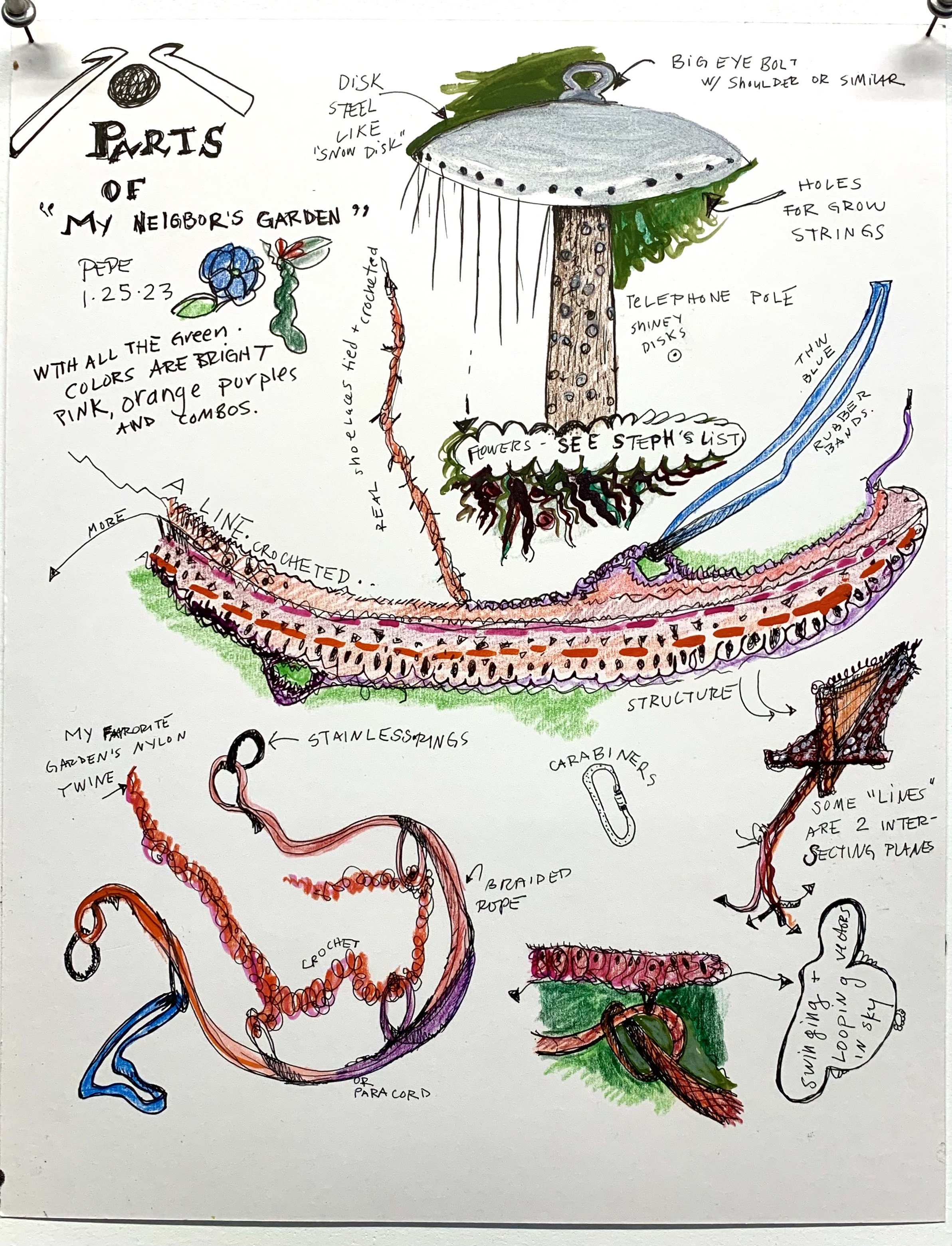
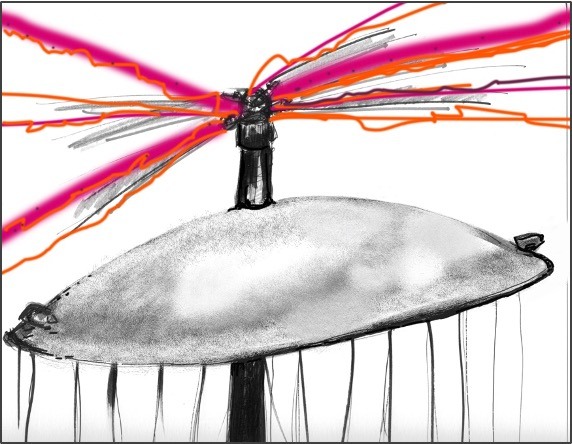
    Sheila Pepe will create her first outdoor exhibition, My Neighbor’s Garden, in Madison Square Park, opening on June 26. Through her crochet practice, Pepe brings color, unexpected materials, and optimism to the site. Pepe, a feminist and queer artist whose elaborate web-like structures summon and critique conventional women’s craft practice, uses crochet to transform contemporary sculpture. She has inserted work into galleries and museums and will now bring her vision to Madison Square Park for a project that is accessible to all to experience in civic space. Pepe’s canopies and webs made of string and ties, paracord, shoelaces, outsize sustainable rubber bands and climbing plant materials will rely on the park’s extant physical structures including light poles and will span over several pathways. As the uncommon heirloom vegetables and flowering vines grow across the seasons, they will intermingle with Pepe’s crochet. The artist’s work has long questioned indoor space as literally and symbolically closing the door of potential to women. Here, Pepe considers publicness to create physical positions that welcome all parkgoers through a fabricated city garden. My Neighbor’s Garden will be on view through December 10.

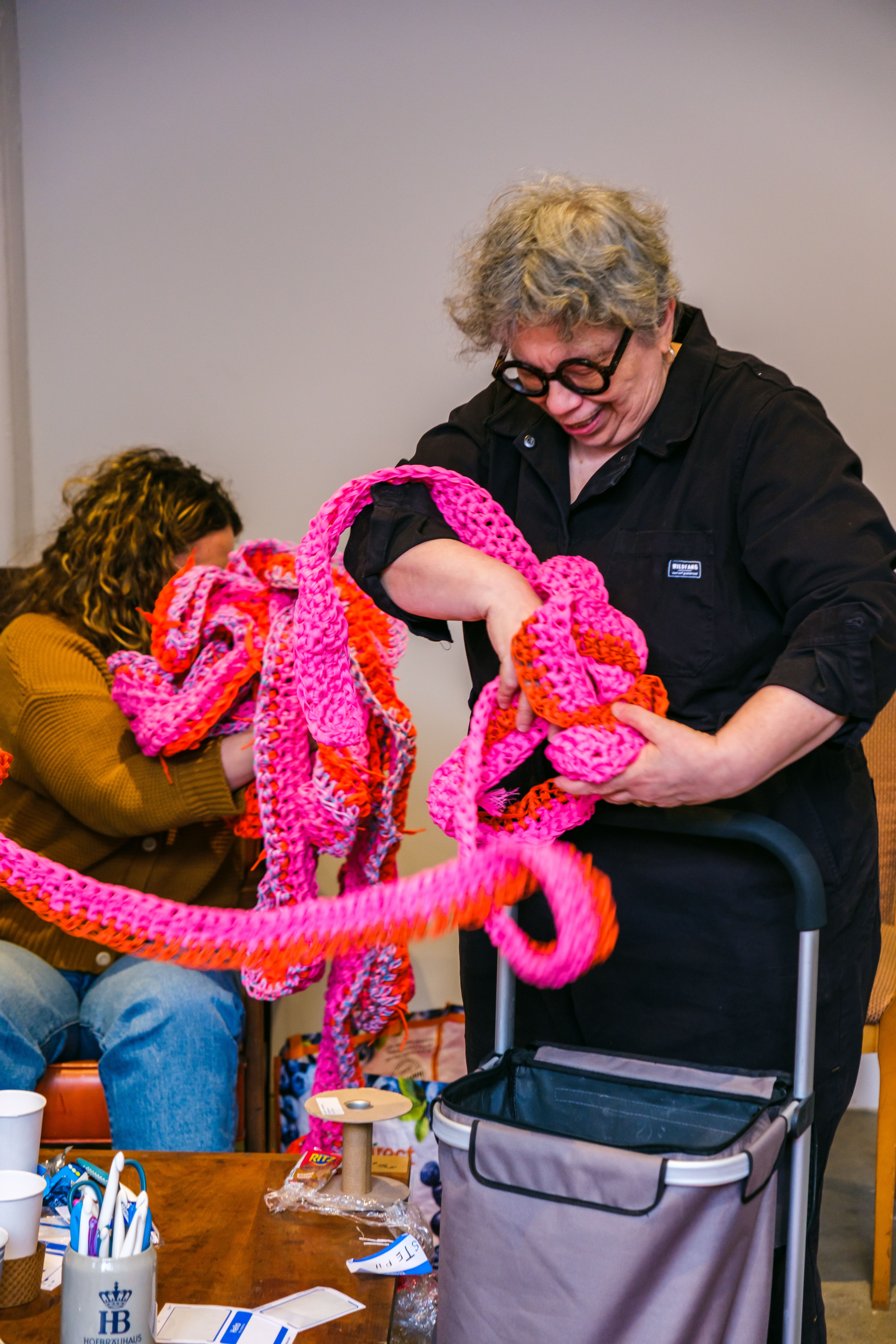
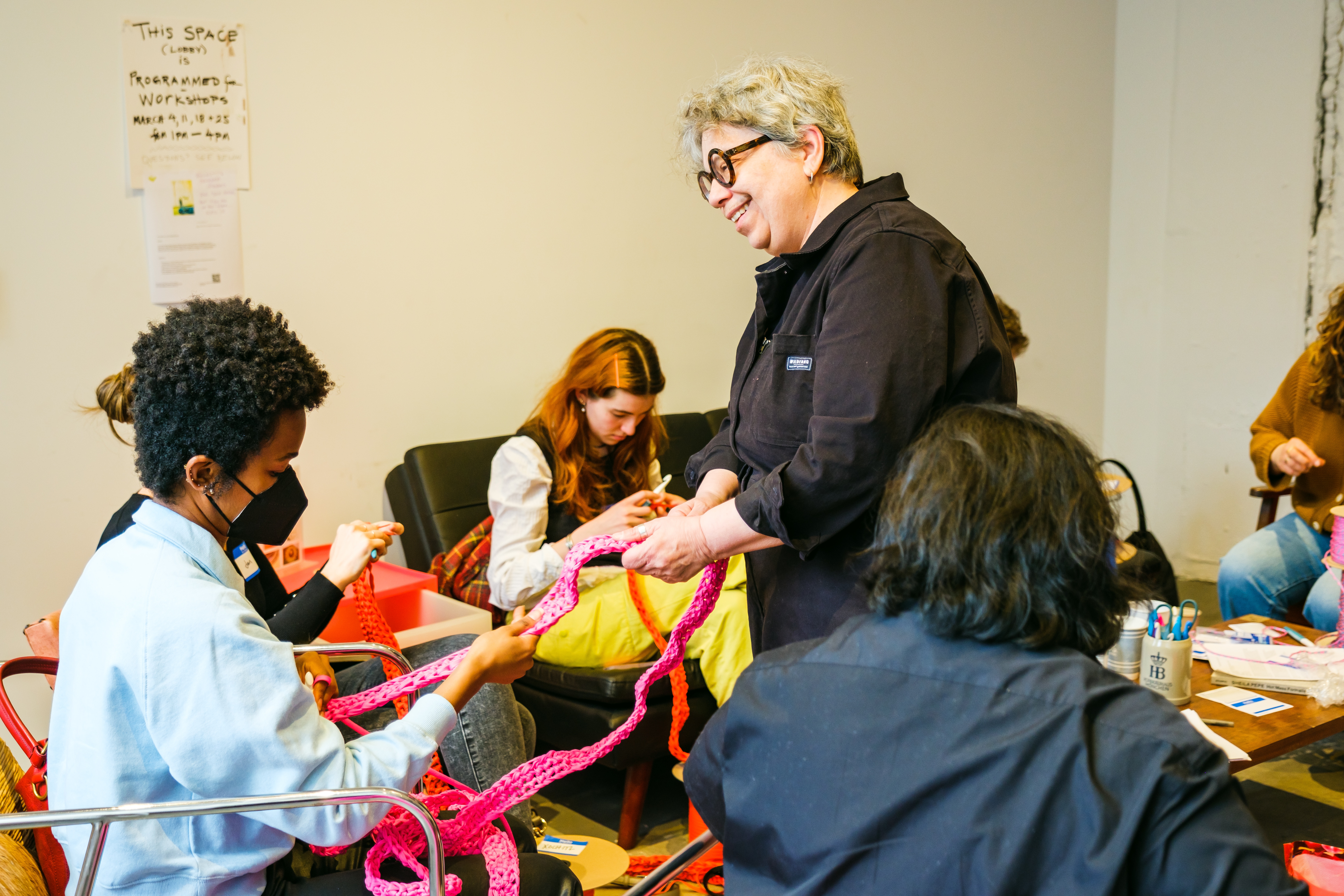
    The project is rooted in the city as neighborhood gardens became the initial inspiration for the project. In preparation for the project and as part of the conceptual warp and weft of the work, Pepe convened local novice and expert crocheters in her Brooklyn studio, gathering a community of makers. By the time the work is installed, the artist will incorporate over 15,000 yards of crocheted materials made of nylon and cotton string, shoelaces, paracord, and rubber bands. Working closely with MSPC’s horticulture team, vining plants such as bitter melon, sour gherkin, long bean and morning glory will weave around and through the crocheted constructions. Crochet sessions with the artist will continue across the summer months in the park as part of a range of public programs. This methodology of learning through and disseminating expertise is central to Pepe’s practice.

    The artist’s mother taught her to crochet in the 1960s. Pepe discovered women artists working in America who were a generation or two older and associated with the feminist art movement — Lynda Benglis, Eva Hesse, and Nancy Spero — as a crucible to launch her sculptural investigations. Those women responded to the fury of the Vietnam War and became agents of activism for Pepe who overturned hoary assumptions by responding to gender, identity, and civil rights. She also questioned the materiality in sculpture, so closely linked to gender. Pepe radicalized the grandmotherly constitution of crochet into a paradigm of feminist action.

    Image (1)
  • The President’s Budget for Fiscal Year 2024 – Budget Details Plan to Invest in America, Lower Costs and Cut Taxes for Working Families, and Protect and Strengthen Medicare and Social Security

    • Shalanda Young

      By Shalanda Young, Director of the United States Office of Management and Budget

       Budget Details Plan to Invest in America, Lower Costs and Cut Taxes for Working Families, and Protect and Strengthen Medicare and Social Security

    President Biden has long believed that we need to grow the economy from the bottom up and middle out, not the top down. Over the past two years, in the face of significant challenges, that economic strategy has produced historic progress for the American people.

    Under the President’s leadership, the economy has added more than 12 million jobs—more jobs in two years than any president has created in a four-year term—including 800,000 manufacturing jobs. The unemployment rate has fallen to 3.4 percent, the lowest in 54 years. The Black and Hispanic unemployment rates are near record lows. The past two years were the best two years for new small business applications on record. The President has taken action to lower costs and give families more breathing room, including cutting prescription drug costs, health insurance premiums, and energy bills, while driving the uninsured rate to historic lows. And the President’s plan is rebuilding America’s infrastructure, making the economy more competitive, investing in American innovation and industries that will define the future, and fueling a manufacturing boom that is strengthening parts of the country that have long been left behind while creating good jobs for workers, including those without college degrees.

    The President has done all of this while delivering on his commitment to fiscal responsibility. While the previous Administration passed a nearly $2 trillion unpaid-for tax cut with benefits skewed to the wealthy and big corporations while dramatically increasing the deficit, President Biden cut the deficit by more than $1.7 trillion during his first two years in office—the largest decline in American history. And the reforms he signed into law to take on Big Pharma, lower prescription drug costs, and make the wealthy and large corporations pay their fair share will reduce the deficit by hundreds of billions of dollars more over the coming decade.

    The President’s Budget details a blueprint to build on this progress, deliver on the agenda he laid out in his State of the Union, and finish the job: continuing to grow the economy from the bottom up and middle out by investing in America, lowering costs for families, protecting and strengthening Medicare and Social Security, and reducing the deficit by nearly $3 trillion over the next decade by making the wealthy and big corporations pay their fair share and cutting wasteful spending on Big Pharma, Big Oil, and other special interests. No one earning less than $400,000 per year will pay a penny in new taxes.

    Congressional Republicans have taken a very different approach. While they have consistently said that reducing the deficit is a top priority, Congressional Republicans have already proposed policies that would add an additional $3 trillion to the debt over the next decade—all while raising costs for working families and handing out tax giveaways to the wealthy and big corporations. As the President has made clear, they owe the American people a detailed accounting of exactly what they plan to cut in order to cover the costs of their proposals, while also achieving the kinds of fiscal targets that they claim to support. Until they produce a plan, we’re left to rely on a wide array of Republican budgets, statements, and proposals—past and present—which provide clear and consistent evidence that many critical programs the American people count on will be on the chopping block.

    Lowering Costs and Giving Families More Breathing Room

    As our economy transitions from a historically strong recovery to stable and steady growth, the President has remained laser-focused on continuing to lower costs for families and giving them more breathing room, without giving up the historic economic gains we’ve made. While more work remains, there are clear signs that the President’s strategy is working. Annual inflation is lower than it was seven months ago, gas prices are down $1.60 per gallon since their peak last summer, and unemployment remains at its lowest level in 54 years, while take home pay has gone up. And the Biden-Harris Administration has taken historic action to lower the costs of health care, clean energy, and prescription drugs, eliminate junk fees that make it harder for families to make ends meet, promote greater competition to lower costs, and address pandemic-driven supply chain bottlenecks. While some Congressional Republicans have proposed repealing the Inflation Reduction Act and taken other actions that would raise costs for working families, the President’s Budget takes a very different approach—proposing a package of policies to continue lowering everyday costs for the American people.

  • Director Allison Randall of the Office on Violence Against Women Delivers Remarks at the Launch of the National Plan to End Gender-Based Violence

    JUSTICE NEWS

    Director Allison Randall ~ 

    Tuesday, May 30, 2023

    Remarks as Prepared for Delivery

    Thank you, Rosie, and good morning, everyone. As a lifelong advocate and a survivor, I’m honored to be here with all of you and to represent the Department of Justice at the release of the National Plan to End Gender-Based Violence: Strategies for Action.

    At the Department of Justice, we know that sexual assault, domestic violence, stalking and human trafficking are serious violent crimes that make our nation less equal and less just. Only a comprehensive response that is deeply informed by survivors and historically marginalized communities can end gender-based violence.

    I travel all over the country meeting with advocates, law enforcement, prosecutors and clinicians. They are doing whatever it takes to meet survivors where they are – both figuratively and literally. Just as laid out in this national plan, they are responding to the whole person, the whole community.

    A family justice center in Louisiana is offering onsite forensic exams and primary health care and holistic wellness. But also housing and connections to jobs and options for survivors who aren’t sure about working with law enforcement yet.

    A tribal program in California is waiting with kids every morning before they get on the school bus, to stop traffickers from approaching them and to build relationships that help prevent dating violence.

    Federal prosecutors in Texas, Alabama, Oklahoma and more are reducing violent crime by partnering with service providers and prosecuting federal gun crimes committed by domestic violence perpetrators.

    The Department of Justice is committed to making our communities safer by increasing access to justice, in all its forms. The Office on Violence Against Women alone has awarded over $9.5 billion under the Violence Against Women Act since it was first authorized. And that’s to say nothing of our colleagues at the Office for Victims of Crime, who award billions every year.

  • Pediatric Trauma Surgeon Says Most Firearm Incidents Don’t Happen at School, but in the Home

    May 24, 2023 | 

    As we have all heard this year, gun violence is the leading cause of death among children in the United States. According to the Centers for Disease Control and Prevention, firearms accounted for nearly 19% of deaths in children ages 1 to 18 in 2021 — that’s about five children lost for every 100,000 children in the U.S. The American Academy of Pediatrics warns that gun violence also carries long-term physical and mental health consequences.

    According to the CDC, gun violence is the leading cause of death among children in the United States


    The data does not surprise Stephanie Chao, MD, pediatric surgeon and trauma medical director at Lucile Packard Children’s Hospital Stanford and assistant professor of the Surgery Division of Pediatric Surgery at Stanford Medicine. She recently appeared on A Little More Conversation with news podcaster Ben O’Hara-Byrne to discuss what it’s like for pediatric surgeons to treat young victims of gun violence.

    In the podcast, Dr. Chao says that firearm injuries in young patients are not generally from school or gang-related shootings, but from incidents in the home. In a 2021 Stanford study, she found that the most common cause of pediatric gun injuries is when children “accidentally” discharge firearms they find and handle without their parents’ knowledge, followed by being intentionally shot due to domestic violence incidents in the home. But it is the rise of suicide by firearms that also has physicians worried.

    “Suicide is the most common mechanism of death by firearms [in kids and teens]. It’s incredibly deadly. Some patients make it to our hospital, but a lot of times they don’t.”

    Dr. Chao, who specializes in trauma and pediatric general surgery, adds that the children who show up in emergency rooms with gunshot wounds have a better chance for survival. “Firearms compared to any other weapons are so incredibly deadly. And so many young patients never make it to the ER.”

    Many emergency room and trauma physicians, like Dr. Chao, who are treating a young patient with a gunshot wound are forced to compartmentalize their emotions to focus solely on aiding the patient. “Then we go home, and you reflect on what just happened. That is why a lot of us feel so passionate about gun education and safety polices, because so few people have seen a firearm injury up close. We see firsthand the devastation that it causes.”

    The mother of two says it’s never easy to talk to kids and teens about the violence they see and hear about on TV or online, but it’s important to acknowledge that it happens and to focus on the reassurance of safety.

    “That is why a lot of us feel so passionate about gun education and safety polices, because so few people have seen a firearm injury up close. We see firsthand the devastation that it causes.”

    While Dr. Chao acknowledges that there is no single cure-all in protecting kids from gun violence, she points to research showing that the more states that have gun policy laws and strategies for harm reduction for pediatric firearm injuries, like safer firearm storage, counseling for at-risk youth, and having hospital-and community-based violence intervention programs, the fewer pediatric gun injuries and deaths.

    “All of us want to protect our kids. All of us want to see our kids grow up, and anything that we can do to protect our children, I can’t imagine anyone trying to prevent that from happening.”

    You can listen to the full interview with Dr. Chao here.

  • Medical Billing and Collections Among Older Americans

    Contact the Office for Older Americans: olderamericans@cfpb.gov

    Executive Summaryno surprises act

    Older adults, most of whom have health insurance coverage, are among the millions of Americans who experience problems with reporting and collection of inaccurate medical bills. This spotlight describes how medical billing practices can lead to inaccurate bills and attempts to collect amounts that are not owed from people 65 and older.1 It also describes the impact of inaccurate medical bills, including coercive credit reporting on older adults. The spotlight uses the most recent data from the Census Bureau’s Survey of Income and Program Participation (SIPP),2 and consumer complaints submitted to the CFPB between January 2020 and December 2022.3

    Key findings:

    • In 2020, nearly four million adults ages 65 and older reported having unpaid medical bills, even though 98 percent of them had health insurance coverage. Nearly 70 percent of these older adults with unpaid medical bills also reported having medical insurance coverage from two or more sources.
    • The reported amount of unpaid medical bills among older adults increased by 20 percent between 2019 and 2020, from $44.8 billion to $53.8 billion. Yet older adults reported fewer doctor visits and lower out-of-pocket expenses in 2020 than in 2019.
    • Older adults face a complex billing system with a high likelihood of errors and inaccurate bills. Complaints submitted to the CFPB involving Medicare commonly cite inaccurate billing as a source of unpaid medical bills in collections. Consumers who reported having multiple sources of insurance were especially likely to note problems with inaccurate billing.
    • Millions of older adults ages 65 and older are covered by Medicare and Medicaid. These individuals are known as dually eligible beneficiaries. Most dually eligible beneficiaries should have little or no out-of-pocket costs for Medicare-covered care. Federal and state laws prohibit providers from billing certain dually eligible beneficiaries for payment beyond a nominal copay set by the state, if any. Despite these protections, older adults with both Medicare and Medicaid are more likely to report unpaid medical bills than the general older population. CFPB findings suggest that providers are billing older dual beneficiaries for amounts they don’t owe.
    • Providers and billers refer inaccurate medical bills to collectors and credit reporting companies with significant consequences for the health and financial security of older adults. In CFPB credit reporting complaints, for example, older adults describe how inaccurate medical tradelines on their credit reports have affected their access to affordable credit. Older adults also report that trying to address inaccurate bills that are now in collection and appearing in their credit reports takes a significant emotional and physical toll.
    • The medical billing and collection system devotes insufficient resources to preventing, identifying, and correcting errors. Older adults may find it especially challenging to navigate the medical billing system and resolve errors because they are more likely than other consumers to experience functional limitations that reduce their ability to detect and correct inaccurate bills.

    Introduction

    Older adults, most of whom have health insurance coverage, are among the millions of Americans who experience problems with reporting and collection of inaccurate medical bills. In 2020, nearly four million adults ages 65 and older reported having $53.8 billion in medical bills that they were unable to pay in full, even though 98 percent of them had health insurance coverage.4 Nearly 70 percent of these older adults with unpaid medical bills also reported having medical insurance coverage from two or more sources such as Medicare, Medicare Advantage, Medicaid, Medigap, employer-based coverage, or Tricare.5 Additional sources help protect older adults from medical expenses by covering services Medicare does not broadly cover, such as hearing, vision, or dental care, and/or reducing eliminating out-of-pocket costs.6

  • Women’s Congressional Policy Institute: Special Supplemental Nutrition Program for Women, Infants, and Children, Health Coverage of Newborns

    CONGRESSIONAL SCHEDULE: MAY 22-26, 2023 

    Floor Action: 

    The House was in session this past week. The Senate is in recess until May 30.             

    BILLS INTRODUCED: MAY 15-19, 2023                                         Lucy Mcbath

    Employment       

    S. 1714—Sen. Kirsten Gillibrand (D-NY)/Finance (5/18/23) — A bill to provide paid family leave benefits to certain individuals, and for other purposes.                                                                              

    S. 1722—Sen. Jeff Merkley (D-OR)/Health, Education, Labor, and Pensions (5/18/23) — A bill to expand access to breastfeeding accommodations in the workplace for certain employees of air carrier employers.

    H.R. 3481—Rep. Rosa DeLauro (D-CT)/Ways and Means (5/18/23) — A bill to provide paid family and medical leave benefits to certain individuals, and for other purposes.

    Right, Rep. Lucy McBath, Georgia’s 7th District

    Family Support/

    S. 1593—Sen. Richard Blumenthal (D-CT)/Agriculture, Nutrition, and Forestry (5/15/23) — A bill to extend eligibility of new moms for the Special Supplemental Nutrition Program for Women, Infants, and Children.

    S. 1604—Sen. Robert Casey (D-PA)/Agriculture, Nutrition, and Forestry (5/15/23) — A bill to increase the age of eligibility for children to receive benefits under the Special Supplemental Nutrition Program for Women, Infants, and Children, and for other purposes.

    H.R. 3332—Rep. Lucy McBath (D-GA)/Education and the Workforce Committee (5/15/23) — A bill to extend eligibility for the Special Supplemental Nutrition Program for Women, Infants, and Children (WIC) for new moms, and for other purposes. 

    H.R. 3364—Rep. Rosa DeLauro (D-CT)/Education and the Workforce (5/16/23) — A bill to increase the age of eligibility for children to receive benefits under the Special Supplemental Nutrition Program for Women, Infants, and Children, and for other purposes.  

    S. 1738—Sen. Ron Wyden (D-OR)/Banking, Housing, and Urban Affairs (5/18/23) — A bill to establish a grant program to address the crises in accessing affordable housing and child care through the co-location of housing and child care, and for other purposes.

    H.R. 3540—Rep. Elise Stefanik (R-NY)/Education and the Workforce (5/18/23) — A bill to change the competitive bidding process for infant formula manufacturers under the Special Supplemental Nutrition Program for Women, Infants, and Children, and for other purposes.

    Health

    S. 1601—Sen. Edward Markey (D-MA)/Health, Education, Labor, and Pensions (5/15/23) — A bill to protect moms and babies against climate change, and for other purposes.

    H.R. 3302—Rep. Lauren Underwood (D-IL)/Energy and Commerce (5/15/23) — A bill to protect moms and babies against climate change, and for other purposes. 

    H.R. 3386—Rep. Katie Porter (D-CA)/Homeland Security (5/16/23) — A bill to require hygienic handling of breast milk and baby formula by security screening personnel of the Transportation Security Administration and personnel of private security companies providing security screening, and for other purposes. 

    H.R. 3387—Rep. Katie Porter (D-CA)/Energy and Commerce; Education and the Workforce; Ways and Means (5/16/23) — A bill to provide for certain health coverage of newborns.

    Human Trafficking