Blog

  • Silvia Weidenbach’s Jewelry on Display at the Victoria and Albert In an Exhibit Titled Visual Feast

    Melding digital design, 3D printing, and traditional silversmithing techniques, Silvia Weidenbach creates exuberant jewelry that demands attention. Weidenbach is the first Victoria & Albert Gilbert Collection artist in residence, and the display Visual Feast, alongside a commission, is the culmination of her residency. 

    Housed in a suite of galleries in the Victoria and Albert Museum in London, the Rosalinde and Arthur Gilbert Collection includes masterpieces from four areas of European and British decorative arts: silver and gold, enamel portrait miniatures, micromosaics and gold boxes. The collection was formed by two Londoners, Rosalinde and Arthur Gilbert, who moved to Los Angeles in 1949. It was there that they also moved from designing bespoke ball gowns, to property development, and started collecting decorative arts. Their motto was “not for us, but for everyone”.  In this spirit, since the collection arrived at the V&A in 2008, the curatorial brief has been to show the collection in new ways in the Museum and online, ensuring it remains relevant and exciting for the broadest possible audience. It was with this is mind that internationally renowned jeweller Silvia Weidenbach was appointed as the first artist in residence for the Gilbert Collection (April 2017 – April 2018).

    Silvia Weidenbach

    Silvia Weidenbach. Photograph by Laura Falconer

    Weidenbach sees the Gilbert Collection as a feast for the eyes. The intricacy and opulence of the historic objects exhibited in the galleries feeds her creativity. Her innovative work combines traditional goldsmithing and silversmithing techniques with digital technologies. Her jewellery is sculpted digitally, 3D printed and then hand-finished and set with precious materials.

    Using these processes Weidenbach created the Visual Feast box, commissioned in response to the Gilbert Collection. In its materiality, this 21st-century gold box embodies the push and pull between the historic and the contemporary that defines the Gilbert Collection. The collection’s 18th-century porcelain boxes, for example, are objects that were at the cutting edge of European technology when they were made. Porcelain, or ‘white gold’, had remained an Eastern secret for centuries, the subject of industrial espionage, as competing Western countries sought to discover its composition. Weidenbach’s works, made of her secret material ‘Moon Dust’, embody narratives of wondrous making and the wow-factor of miraculously crafted objects.Weidenbach jewelry

     Visual Feast ‘BOX’ (box), 3D printed Moondust, gold, diamonds, mother of pearl, Silvia Weidenbach, 2018, London and Glasgow

  • Update Before Thanksgiving: FDA Investigating Multistate Outbreak of E. coli Infections Likely Linked to Romaine Lettuce and A Warning From the CDC About Raw Turkey Products

    Update Before Thanksgiving: 

    FDA Investigating Multistate Outbreak of E. coli O157:H7 Infections Likely Linked to Romaine Lettuce

    The FDA, along with CDC, state and local agencies, is investigating a multistate outbreak of E. coli O157:H7 illnesses likely linked to romaine lettuce. The Public Health Agency of Canada (PHAC) and Canadian Food Inspection Agency, are also coordinating with U.S. agencies as they investigate a similar outbreak in Canada.

    Genetic analysis of the E. coli O157:H7 strains tested to date from patients in this current outbreak are similar to strains of E. coli O157:H7 associated with a previous outbreak from the Fall of 2017 that also affected consumers in both Canada and the U.S.  The 2017 outbreak of E. coli O157:H7 was associated with leafy greens in the U.S. and romaine in Canada. This year, romaine lettuce is the suspected vehicle for both the U.S. and Canadian outbreaks.  There is no genetic link between the current outbreak and the E.coli O157:H7 outbreak linked to romaine that occurred in the Spring of 2018.

    The FDA is conducting a traceback investigation to determine the source of the romaine lettuce eaten by people who became sick.  Additionally, FDA and states are conducting laboratory analysis of romaine lettuce samples potentially linked to the current outbreak.

    The most recent illness onset in the U.S. in the current outbreak was October 31, 2018.  For this outbreak investigation, the average interval between when a person becomes ill and when the illness is reported to CDC is 20 days.

    Recommendation:

    People should not eat romaine lettuce until more is known about the source of the contaminated lettuce and the status of the outbreak.


    Salmonella outbreak

    Outbreak of Multidrug-Resistant Salmonella Infections Linked to Raw Turkey Products

    Posted November 8, 2018 at 11:45 AM EDT

    CDC and public health and regulatory officials in several states are investigating a multistate outbreak of multidrug-resistant Salmonella infections linked to raw turkey products. The U.S. Department of Agriculture’s Food Safety and Inspection Service (USDA-FSIS) is monitoring the outbreak.

    At A Glance
    • Seventy-four more ill people from 26 states were added to this investigation since the last update on July 19, 2018.
    • As of November 5, 2018, 164 people infected with the outbreak strain of Salmonella Reading have been reported from 35 states.
      • 63 people have been hospitalized, and one death has been reported from California.
    • Epidemiologic and laboratory evidence indicates that raw turkey products from a variety of sources are contaminated with Salmonella Reading and are making people sick.
    • In interviews, ill people report eating different types and brands of turkey products purchased from many different locations. Three ill people lived in households where raw turkey pet food was fed to pets.
    • The outbreak strain has been identified in samples taken from raw turkey pet food, raw turkey products, and live turkeys.
    • A single, common supplier of raw turkey products or of live turkeys has not been identified.
    • The outbreak strain of Salmonella Reading is present in live turkeys and in many types of raw turkey products, indicating it might be widespread in the turkey industry. CDC and USDA-FSIS have shared this information with representatives from the turkey industry and asked about steps that they may be taking to reduce Salmonella contamination

     Advice to Consumers and Retailers

    Always handle raw turkey carefully and cook it thoroughly to prevent food poisoning. This outbreak is a reminder that raw turkey products can have germs that spread around food preparation areas and can make you sick.

    CDC is not advising that consumers avoid eating properly cooked turkey products, or that retailers stop selling raw turkey products.

    CDC advises consumers to follow these steps to help prevent Salmonella infection from raw turkey:

    • Wash your hands. Salmonella infections can spread from one person to another. Wash hands before and after preparing or eating food, after contact with animals, and after using the restroom or changing diapers.
    • Cook raw turkey thoroughly to kill harmful germs. Turkey breasts, whole turkeys, and ground poultry, including turkey burgers, casseroles, and sausage, should always be cooked to an internal temperature of 165°F to kill harmful germs. Leftovers should be reheated to 165°F. Use a food thermometer to check, and place it in the thickest part of the food.
    • Don’t spread germs from raw turkey around food preparation areas. Washing raw poultry before cooking is not recommended. Germs in raw poultry juices can spread to other areas and foods. Thoroughly wash hands, counters, cutting boards, and utensils with warm, soapy water after they touch raw turkey. Use a separate cutting board for raw turkey and other raw meats if possible.
    • Thaw turkey in the refrigerator, in a sink of cold water that is changed every 30 minutes, or in the microwave. Never thaw your turkey by leaving it out on the counter.
    • CDC does not recommend feeding raw diets to pets. Germs like Salmonella in raw pet food can make your pets sick. Your family also can get sick by handling the raw food or by taking care of your pet.

    CDC will update the advice to consumers and retailers if more information comes available, such as a supplier or type of raw turkey product linked to illness.

    At A Glance

    Fresh Produce Market


    FDA Plans to Name Stores That Potentially Sold Unsafe Food

    By Sandra Eskin of the Pew Charitable Trusts

    New U.S. Food and Drug Administration (FDA) draft guidelines better protect consumers from contaminated food by broadening and clarifying circumstances in which the agency will release the names and addresses of stores where recalled products might have been sold.

    This is a significant, positive change in FDA’s food safety policies, and one that The Pew Charitable Trusts and 10 other public health groups had urged because store information can help people determine whether they may have bought or eaten potentially dangerous items. Previously, agency officials often said they were required to keep retailer information from the public, even amid outbreaks such as one linked to papayas in 2017 that resulted in more than 230 Salmonella infections.

    In the draft guidance, FDA states that it will no longer focus on the confidential nature of the information but, rather, on whether communicating these details can help “effectuate a recall.” To that end, the agency proposes to disclose information about retailers when two conditions are met:

    1. The product being recalled is not easily identified from its packaging. According to the draft, this could mean foods sold without a universal product code or bar code, or items that lack a lot number or other identifier recognizable to consumers.
    2. The food is likely to still be in a consumer’s possession based on its shelf life or perishability.

    FDA will also consider publicizing retailer information in other situations that do not meet this two-part test, especially when a recalled food is associated with a foodborne illness outbreak.

    Finally, the agency suggests that it may release retailer information during recalls of items that pose lower risks to public health but are difficult for people to identify because the items lack or have minimal packaging. Fruits, vegetables, and products sold in bulk such as nuts are among the examples FDA gave in its guidelines.

    Consumers should keep in mind that the agency’s store lists won’t necessarily be comprehensive or completely accurate. Moreover, retailers not named in FDA’s announcements could carry food covered by a recall. The nation’s vast and frequently complex food supply chain makes it challenging for FDA to collect and verify information about all locations where a product may be sold. And though companies involved in the recall may be able to provide additional details, they, too, face obstacles in tracing food products from the farm or manufacturer to the point of sale.

    Despite these limitations, FDA’s expanded guidelines are unquestionably a big victory for consumers and public health. The new policy brings a more consistent and transparent approach to announcements essential to helping Americans protect themselves and their families from foodborne diseases. And it closely aligns how the FDA — which oversees about 80 percent of the food supply — communicates about recalls with comparable practices at the U.S. Department of Agriculture, where meat and poultry products are regulated. That’s progress worth celebrating.

    Sandra Eskin directs The Pew Charitable Trusts’ work on food safety. 

  • The Bosky Dell: “Mid Beechy Umbrage, Bosky Dell ‘Tis There the Ringdove Loves to Dwell”*

    Live Oak, California

    A live oak tree in Live Oak, California; Wikimedia

    by Julia Sneden

    This morning our local paper printed a letter from an angry reader concerning a developer’s plans to bulldoze yet another wooded area into oblivion. I happen to know the area referred to, because there’s a small path through it that is just large enough and smooth enough for my mother’s wheelchair. She particularly loves to be taken for a stroll in those woods, because getting out and away from people and pavement isn’t easy when you’re 95 and infirm.

    I remember that once when we had paused beside a little creek that meanders through the trees and falls down a small slope, she looked into the gully and said:  “My, that is a bosky dell!”

    “Bosky?” I asked.

    “Bosky,” my mother the English teacher said firmly. “It means covered with trees and shrubs. Thickly grown.  And a dell is a…”

    “I know,” I said, falling easily into our mother/teacher, daughter/pupil mode even though I am 66 years old. “A dell is a small valley or hollow, usually secluded.”

    “Good girl,” she said, and we walked on. Readers of this column know that I am not a fan of sprawl (see Dante in the City). I find myself wondering how long it will take people to realize that when we take out trees, we take out the oxygen producers that keep us alive. Humans inhale oxygen and exhale carbon dioxide. Trees inhale carbon dioxide and exhale oxygen. It’s that simple.

    Read the rest of Julia’s column: http://www.seniorwomen.com/news/index.php/the-bosky-dell-mid-beechy-umbrage-bosky-dell-tis-there-the-ringdove-loves-to-dwell

  • Federal Reserve Speech by Lael Brainard: What Are We Learning about Artificial Intelligence in Financial Services?

    Editor’s Note:Common Dreams illustration
    fin·tech
    /ˈfinˌtek/
    noun
     
    computer programs and other technology used to support or enable banking and financial services.

    “fintech is one of the fastest-growing areas for venture capitalists”


    Governor Lael Brainard

    At Fintech and the New Financial Landscape, Philadelphia, Pennsylvania

    Although it is still early days, it is already evident that the application of artificial intelligence (AI) in financial services is potentially quite important and merits our attention. Through our Fintech working group, we are working across the Federal Reserve System to take a deliberate approach to understanding the potential implications of AI for financial services, particularly as they relate to our responsibilities. In light of the potential importance of AI, we are seeking to learn from industry, banks, consumer advocates, researchers, and others, including through today’s conference. I am pleased to take part in this timely discussion of how technology is changing the financial landscape.1

    The Growing Use of Artificial Intelligence in Financial Services
    My focus today is the branch of artificial intelligence known as machine learning, which is the basis of many recent advances and commercial applications.2 Modern machine learning applies and refines, or “trains,” a series of algorithms* on a large data set by optimizing iteratively as it learns in order to identify patterns and make predictions for new data.3 Machine learning essentially imposes much less structure on how data is interpreted compared to conventional approaches in which programmers impose ex ante rule sets to make decisions.

    The three key components of AI — algorithms, processing power, and big data — are all increasingly accessible. Due to an early commitment to open-source principles, AI algorithms from some of the largest companies are available to even nascent startups.4 As for processing power, continuing innovation by public cloud providers means that with only a laptop and a credit card, it is possible to tap into some of the world’s most powerful computing systems by paying only for usage time, without having to build out substantial hardware infrastructure. Vendors have made it easy to use these tools for even small businesses and non-technology firms, including in the financial sector. Public cloud companies provide access to pre-trained AI models via developer-friendly application programming interfaces or even “drop and drag” tools for creating sophisticated AI models.5 Most notably, the world is creating data to feed those models at an ever-increasing rate. Whereas in 2013 it was estimated that 90 percent of the world’s data had been created in the prior two years, by 2016, IBM estimated that 90 percent of global data had been created in the prior year alone.6

    The pace and ubiquity of AI innovation have surprised even experts. The best AI result on a popular image recognition challenge improved from a 26 percent error rate to 3.5 percent in just four years. That is lower than the human error rate of 5 percent.7 In one study, a combination AI-human approach brought the error rate down even further — to 0.5 percent.

    So it is no surprise that many financial services firms are devoting so much money, attention, and time to developing and using AI approaches. Broadly, there is particular interest in at least five capabilities.8 First, firms view AI approaches as potentially having superior ability for pattern recognition, such as identifying relationships among variables that are not intuitive or not revealed by more traditional modeling. Second, firms see potential cost efficiencies where AI approaches may be able to arrive at outcomes more cheaply with no reduction in performance. Third, AI approaches might have greater accuracy in processing because of their greater automation compared to approaches that have more human input and higher “operator error.” Fourth, firms may see better predictive power with AI compared to more traditional approaches — for instance, in improving investment performance or expanding credit access. Finally, AI approaches are better than conventional approaches at accommodating very large and less-structured data sets and processing those data more efficiently and effectively. Some machine learning approaches can be “let loose” on data sets to identify patterns or develop predictions without the need to specify a functional form ex ante.

    What do those capabilities mean in terms of how we bank? The Financial Stability Board highlighted four areas where AI could impact banking.9 First, customer-facing uses could combine expanded consumer data sets with new algorithms to assess credit quality or price insurance policies. And chatbots could provide help and even financial advice to consumers, saving them the waiting time to speak with a live operator. Second, there is the potential for strengthening back-office operations, such as advanced models for capital optimization, model risk management, stress testing, and market impact analysis. Third, AI approaches could be applied to trading and investment strategies, from identifying new signals on price movements to using past trading behavior to anticipate a client’s next order. Finally, there are likely to be AI advancements in compliance and risk mitigation by banks. AI solutions are already being used by some firms in areas like fraud detection, capital optimization, and portfolio management.

    Current Regulatory and Supervisory Approaches
    The potential breadth and power of these new AI applications inevitably raise questions about potential risks to bank safety and soundness, consumer protection, or the financial system.10 The question, then, is how should we approach regulation and supervision? It is incumbent on regulators to review the potential consequences of AI, including the possible risks, and take a balanced view about its use by supervised firms.

    Regulation and supervision need to be thoughtfully designed so that they ensure risks are appropriately mitigated but do not stand in the way of responsible innovations that might expand access and convenience for consumers and small businesses or bring greater efficiency, risk detection, and accuracy. Likewise, it is important not to drive responsible innovation away from supervised institutions and toward less regulated and more opaque spaces in the financial system.11

    Our existing regulatory and supervisory guardrails are a good place to start as we assess the appropriate approach for AI processes. The National Science and Technology Council, in an extensive study addressing regulatory activity generally, concludes that if an AI-related risk “falls within the bounds of an existing regulatory regime, . . . the policy discussion should start by considering whether the existing regulations already adequately address the risk, or whether they need to be adapted to the addition of AI.”12 A recent report by the U.S. Department of the Treasury reaches a similar conclusion with regard to financial services.13

    With respect to banking services, a few generally applicable laws, regulations, guidance, and supervisory approaches appear particularly relevant to the use of AI tools. First, the Federal Reserve’s “Guidance on Model Risk Management” (SR Letter 11-7) highlights the importance to safety and soundness of embedding critical analysis throughout the development, implementation, and use of models, which include complex algorithms like AI.14 It also underscores “effective challenge” of models by a “second set of eyes”–unbiased, qualified individuals separated from the model’s development, implementation, and use. It describes supervisory expectations for sound independent review of a firm’s own models to confirm they are fit for purpose and functioning as intended. If the reviewers are unable to evaluate a model in full or if they identify issues, they might recommend the model be used with greater caution or with compensating controls. Similarly, when our own examiners evaluate model risk, they generally begin with an evaluation of the processes firms have for developing and reviewing models, as well as the response to any shortcomings in a model or the ability to review it. Importantly, the guidance recognizes that not all aspects of a model may be fully transparent, as with proprietary vendor models, for instance. Banks can use such models, but the guidance highlights the importance of using other tools to cabin or otherwise mitigate the risk of an unexplained or opaque model. Risks may be offset by mitigating external controls like “circuit-breakers” or other mechanisms. And importantly, models should always be interpreted in context.

    Second, our guidance on vendor risk management (SR 13-19/CA 13-21), along with the prudential regulators’ guidance on technology service providers, highlights considerations firms should weigh when outsourcing business functions or activities — and could be expected to apply as well to AI-based tools or services that are externally sourced.15 The vast majority of the banks that we supervise will have to rely on the expertise, data, and off-the-shelf AI tools of nonbank vendors to take advantage of AI-powered processes. Whether these tools are chatbots, anti-money-laundering/know your customer compliance products, or new credit evaluation tools, it seems likely that they would be classified as services to the bank. The vendor risk-management guidance discusses best practices for supervised firms regarding due diligence, selection, and contracting processes in selecting an outside vendor. It also describes ways that firms can provide oversight and monitoring throughout the relationship with the vendor, and considerations about business continuity and contingencies for a firm to consider before the termination of any such relationship.

    Third, it is important to emphasize that guidance has to be read in the context of the relative risk and importance of the specific use-case in question. We have long taken a risk-focused supervisory approach — the level of scrutiny should be commensurate with the potential risk posed by the approach, tool, model, or process used.16 That principle also applies generally to the attention that supervised firms devote to the different approaches they use: firms should apply more care and caution to a tool they use for major decisions or that could have a material impact on consumers, compliance, or safety and soundness.

    For its part, AI is likely to present some challenges in the areas of opacity and explainability. Recognizing there are likely to be circumstances when using an AI tool is beneficial, even though it may be unexplainable or opaque, the AI tool should be subject to appropriate controls, as with any other tool or process, including how the AI tool is used in practice and not just how it is built. This is especially true for any new application that has not been fully tested in a variety of conditions. Given the large data sets involved with most AI approaches, it is vital to have controls around the various aspects of data — including data quality as well as data suitability. Just as with conventional models, problems with the input data can lead to cascading problems down the line. Accordingly, we would expect firms to apply robust analysis and prudent risk management and controls to AI tools, as they do in other areas, as well as to monitor potential changes and ongoing developments.

    For example, let’s take the areas of fraud prevention and cybersecurity, where supervised institutions may need their own AI tools to identify and combat outside AI-powered threats. The wide availability of AI’s building blocks means that phishers and fraudsters have access to best-in-class technologies to build AI tools that are powerful and adaptable. Supervised institutions will likely need tools that are just as powerful and adaptable as the threats that they are designed to face, which likely entails some degree of opacity. While so far, most phishing attacks against consumers have relied on standard-form emails, likely due to the high cost of personalization, in the future, AI tools could be used to make internet fraud and phishing highly personalized.17 By accessing data sets with consumers’ personally identifiable information and applying open-source AI tools, a phisher may be able to churn out highly targeted emails to millions of consumers at relatively low cost, containing personalized information such as their bank account number and logo, along with past transactions.18 In cases such as this, where large data sets and AI tools may be used for malevolent purposes, it may be that AI is the best tool to fight AI.

    Let’s turn to the related issue of the proverbial “black box” — the potential lack of explainability associated with some AI approaches. In the banking sector, it is not uncommon for there to be questions as to what level of understanding a bank should have of its vendors’ models, due to the balancing of risk management, on the one hand, and protection of proprietary information, on the other. To some degree, the opacity of AI products can be seen as an extension of this balancing. But AI can introduce additional complexity because many AI tools and models develop analysis, arrive at conclusions, or recommend decisions that may be hard to explain. For instance, some AI approaches are able to identify patterns that were previously unidentified and are intuitively quite hard to grasp. Depending on what algorithms are used, it is possible that no one, including the algorithm’s creators, can easily explain why the model generated the results that it did.

    The challenge of explainability can translate into a higher level of uncertainty about the suitability of an AI approach, all else equal. So how does, or even can, a firm assess the use of an approach it might not fully understand? To a large degree, this will depend on the capacity in which AI is used and the risks presented. One area where the risks may be particularly acute is the consumer space generally, and consumer lending in particular, where transparency is integral to avoiding discrimination and other unfair outcomes, as well as meeting disclosure obligations.19 Let me turn briefly to this topic.

    The potential for the application of AI tools to result in new benefits to consumers is garnering a lot of attention. The opportunity to access services through innovative channels or processes can be a potent way to advance financial inclusion.20 Consider, for instance, consumer credit scoring. There are longstanding and well-documented concerns that many consumers are burdened by material errors on their credit reports, lack sufficient credit reporting information necessary for a score, or have credit reports that are unscorable.21 As noted earlier, banks and other financial service providers are using AI to develop credit-scoring models that take into account factors beyond the usual metrics. There is substantial interest in the potential for those new models to allow more consumers on the margins of the current credit system to improve their credit standing, at potentially lower cost. As noted earlier, AI also has the potential to allow creditors to more accurately model and price risk, and to bring greater speed to decisions.

    AI may offer new consumer benefits, but it is not immune from fair lending and other consumer protection risks, and compliance with fair lending and other consumer protection laws is important.22 Of course, it should not be assumed that AI approaches are free of bias simply because they are automated and rely less on direct human intervention. Algorithms and models reflect the goals and perspectives of those who develop them as well as the data that trains them and, as a result, AI tools can reflect or “learn” the biases of the society in which they were created. A 2016 Treasury Department report noted that while “data-driven algorithms may expedite credit assessments and reduce costs, they also carry the risk of disparate impact in credit outcomes and the potential for fair lending violations.”23

    A recent example illustrates the risk of unwittingly introducing bias into an AI model. It was recently reported that a large employer attempted to develop an AI hiring tool for software developers that was trained with a data set of the resumes of past successful hires, which it later abandoned. Because the pool of previously hired software developers in the training data set was overwhelmingly male, the AI developed a bias against female applicants, going so far as to exclude resumes of graduates from two women’s colleges.24

  • Benjamin Franklin and the First Age that Witnessed Extensive Communication Among People Across the World

    By Alex Shashkevich

    The 18th century may not come to mind in a conversation about social networks. But Stanford historian Caroline Winterer sees the period as the first age that witnessed extensive communication among people across the world.

    Caroline Winterer

    Stanford historian Caroline Winterer says 18th-century polymath Benjamin Franklin’s sizable social network and endless curiosity make him relatable to our networked world today. (Image credit: Steve Castillo)

    Hand-written letters were the social media posts of that time, and a new social platform of the era was the United States Postal Service.

    Benjamin Franklin, a founder of the USPS, was at the center of that increased communication. Franklin, well known as one of the country’s founders and for his early experiments with electricity, also invented practical objects such as bifocals, among many other achievements.

    But what made him especially stand out is the size of his social network and his endless curiosity, according to Winterer, the Anthony P. Meier Family Professor in the Humanities.

    “Franklin knew he would be nothing without the people around him,” said Winterer, who is also director of the Stanford Humanities Center. “That’s something we can all learn from today.”

    Over the past decade, Winterer has dived into the depths of Franklin’s mind by examining thousands of his letters. During his lifetime, Franklin sent and received somewhere around 20,000 letters.

    Winterer recently talked about her research in a lecture titled “The Remarkable Genius of Benjamin Franklin.” Her latest book on the American Enlightenment discusses the role of Americans in the social network revolution during the 18th century. This year also marks 275 years since Franklin helped to found the American Philosophical Society, the oldest learned society in the United States.

    Stanford News Service interviewed Winterer about her research on Franklin. 

    How and why did you start researching Ben Franklin’s letters?

    I’m a scholar of American history during the 18th and 19th centuries. But I never specialized in Franklin until about 10 years ago, when I joined Mapping the Republic of Letters, which is a Stanford project that has been harnessing big data technology to analyze the circulation of people, letters and objects during the 17th and 18th centuries.

    When I started this project, Franklin was the only major U.S. founder whose papers were mostly digitized and were not hidden behind a paywall. So my then-graduate student Claire Arcenas and I picked him because of the public availability of his work at the time. We wanted this research to be open to everyone who could look at the data and perform their own experiments.

    Mapping the source and destination of many of his 20,000 letters changed the way we look at Franklin. Suddenly, Franklin was not just a man in spectacles sitting quietly in his chair or flying a kite. He was a man with a dynamic social network – he was relatable in a new way to our networked world today.

    What have been some of the takeaways from that research so far?

    We can think of the 18th century as the first great age of social networks for several reasons. What constitutes a social network is a point of debate, but I would argue that the 18th century was especially significant when it comes to people communicating with each other.

    Literacy rates were starting to reach modern levels for the first time in world history. It was also the age when archives really got going because new nations wanted to preserve the record of their founding. That’s why letters from this century are preserved relatively well. And the creation of a robust mail infrastructure made it possible for more people to send more letters.

    It was a time when it started to become more and more common for very connected people, like Franklin, Voltaire and Thomas Jefferson, to have correspondence networks that numbered in the tens of thousands of letters. This would have been pretty unusual even just a century before. There simply wasn’t the infrastructure for a single individual to be able to send and receive that many letters, unless you were a really exceptional person.

    Franklin was in the middle of all of that. He served as the postmaster for North America when the colonies were under British rule, and he was instrumental in establishing a postal service system, known today as the United States Postal Service. But he also used letters strategically, to get things done in the world. A lot of Franklin’s letters basically say things like, “Please introduce me to this famous person. Please share my ideas with that influential person.” If there had been LinkedIn, he would have signed up.


    As part of your recent lecture, you asked whether Franklin would be considered a genius today. What do you think? Why do you think he became so famous?

    Genius is not a constant. It’s not an objective category like “wet” or “dry.” Different societies at different points in time decide who is a genius and who isn’t a genius. In Franklin’s era, they threw the word “genius” around a lot, but they often meant something different than we do today. For them it could also mean “talent” or “inspiration.”

    So when we ask if someone in the past was a genius or not, we have to be aware that we are asking a modern question. For modern readers what stands out about Franklin is what an incredibly curious and sociable person he was.

    The Stanford library has a letter he sent to a physician in South Carolina that shows some of that curiosity and sociability. In that eight-page letter, Franklin revealed his theory about how digestion works, because he was trying to understand the effect of electricity in the human body. I loved reading that. He was always trying to connect everything and everybody.

    His curiosity, his level of communication with others and his ability to expand his social network is something that we can all learn from today.

    This was a person who was fully aware that sharing knowledge benefits everybody.

    -30-

  • Was This Another Year of the Woman? More Than a Quarter of All Candidates Running for Congress or Governor This Year Were Women

    Year of the Woman 1992By Jo Freeman

    In the weeks leading up to the November 6 election, many commentators said this would be another Year of the Woman. The first year to get that label was 1992 when 11 women were major party candidates for the Senate and 106 ran for Representative.  Seven female Senators and 47 Representatives served in the subsequent 103rd Congress (1993-5). This was a great leap upward from previous Congresses.

    The Senate Democratic women in 1993.  L-R: MurrayMoseley BraunMikulskiFeinsteinBoxer. As of 2018, Senator Feinstein and Senator Murray are still active members of the Senate; Wikipedia

    While some races are still too close to call, 2018 also saw a great leap upward in the number of women running and winning.  More than a quarter of all candidates running for Congress or Governor this year were women (272 of 964).

    What 1992 has in common with 2018 is that these candidates were overwhelmingly Democrats. For the Democratic Party, this was another year of the woman; not so much for the Republicans. In November, Democratic women ran for 93 seats and won nearly half.  Republican women ran for 13 and won less than a quarter.

    This was not always true. Three decades ago female Members of Congress were more likely to be Republicans than Democrats. The big shift occurred with the 1992 election. In allmost every election since then more women run as Democrats and more Democratic women win.

    Women continue to vote at greater rates than men. This year women were 52 percent of all those who voted, but 62 percent of Democratic voters. Women have been about 60 percent of Democratic voters for some time. The slight increase in women voting Democratic did not account for the significant increase in women winning elections, though it helped.

  • Justice Department: Miami Pain Management Clinic Co-Owners and Patient Recruiter Sentenced to Prison for Scheme to Distribute Medically Unnecessary Opioid Prescriptions

    DEA Badge

    The husband and wife co-owners of a Miami, Florida pain management clinic and a patient recruiter who doubled as a drug diverter were sentenced to prison today for their participation in a scheme to unlawfully distribute thousands of pills of oxycodone.

    Assistant Attorney General Brian A. Benczkowski of the Justice Department’s Criminal Division, U.S. Attorney Ariana Fajardo Orshan of the Southern District of Florida, Special Agent in Charge George L. Piro of the FBI’s Miami Field Office, Special Agent in Charge Shimon R. Richmond of the U.S. Department of Health and Human Services Office of Inspector General’s (HHS-OIG) Miami Regional Office, Special Agent in Charge Brian Swain of the U.S. Secret Service’s (USSS) Miami Field Office and Special Agent in Charge Adolphus P. Wright of the U.S. Drug Enforcement Administration’s (DEA) Miami Field Division made the announcement.  

    David Bosch, 46, and Tania Sanchez, 47, both of Hialeah, Florida, and Odalys Abreu, 45, of Miami, were sentenced by Chief U.S. District Judge K. Michael Moore of the Southern District of Florida.  Bosch, Sanchez and Abreu were sentenced to serve 108, 97 and 57 months in prison followed by three years of supervised release, respectively.  In addition to the prison term, U.S. District Court Judge Moore ordered Abreu to pay a forfeiture money judgment of $75,000 and ordered Bosch and Sanchez to pay a forfeiture money judgment in the amount of $131,250, jointly and severally.  Each of the defendants pleaded guilty in August 2018 to one count of conspiracy to distribute controlled substances.

    “The three defendants sentenced today ran a pill mill masquerading as a cash-only ‘pain clinic’ that issued medically unnecessary prescriptions for thousands of tablets of oxycodone,” said Assistant Attorney General Benczkowski.  “The Department of Justice will use every tool at its disposal to aggressively pursue the pill mills — and their owners and operators — flooding our communities with illicit opioids that kill tens of thousands of Americans every year.”

    “We are committed to investigating healthcare providers who illegally distribute opioids like common drug dealers,” said HHS-OIG Special Agent in Charge Richmond.  “We will continue to work closely with our law enforcement partners to hold accountable those who are fueling the deadly opioid epidemic.”

  • Updated: The 2018 Election Season Saw the Highest Number of Women in American History Run For, and Elected To, Federal Office: Who Are They?

    US Capitol Map

    Updated November 16,  2  pyem, E.S.T./Tam Martinides Gray/

    The 2018 election season saw the highest number of women in American history run for, and elected to, federal office. According to the Center for American Women and Politics, nearly 260 women candidates were successful in their primary elections. As of press time, a record-breaking 118 women were elected to serve in the 116th Congress, with several races remaining undecided. An additional ten women Senators were not up for reelection this cycle, which would bring the total number of women who will serve in the House and Senate next year to 128 to date.

    Senate
    The Senate will remain in Republican control and, as of press time, will include 51 Republicans and 47 Democrats, including 23 women, with several races remaining undecided. Ten of the incumbent Senators who ran for reelection in 2018 won their bids: Sens. Tammy Baldwin (D-WI), Maria Cantwell (DWA), Dianne Feinstein (D-CA), Deb Fischer (R-NE), Kirsten Gillibrand (D-NY), Mazie Hirono (D-HI), Amy Klobuchar (D-MN), Tina Smith (D-MN), Debbie Stabenow (D-MI), and Elizabeth Warren (D-MA). Sen. Cindy Hyde-Smith (R-MS), who was appointed in April to replace Sen. Thad Cochran (R-MS), will face Mike Espy in a runoff on November 27. Sens. Heidi Heitkamp (D-ND) and Claire McCaskill (D-MO) lost their reelection bids.

    Three newly elected women will join the ranks of the Senate next year: Sens.-elect Marsha Blackburn (RTN), Jacky Rosen (D-NV), and Kyrsten Sinema (D-AZ), all of whom currently serve in the House. Sen.-elect Sinema will be the first woman to represent Arizona in the Senate

    California, New Hampshire, and Washington will continue to be represented by two women Senators. With the reelection of Sens. Amy Klobuchar and Tina Smith, and the election of Rep. Jacky Rosen, Minnesota and Nevada also will be represented by two women Senators in the 116th Congress.

    House of Representatives

    Control of the House of Representatives shifted on Election Night, with Democrats poised to be in the majority for the first time since 2011. With several races still yet to be determined, 228 Democrats and 198 Republicans will be sworn into the 116th Congress. This includes 105 women in the House (including 4 delegates), a net gain of 16 seats to date. The number of women includes 90 Democrats and 15 Republicans. Of the six races left to be decided, one features an all-female slate of candidates.

    Heading into Election Day, fourteen women Members retired, lost their primaries, or ran for another office: Reps. Elizabeth Esty (D-CT), Lynn Jenkins (R-KS), Ileana Ros-Lehtinen (R-FL), Carol Shea-Porter (DNH), Niki Tsongas (D-MA) retired, while Reps. Diane Black (R-TN), Michelle Lujan Grisham (D-NM), Colleen Hanabusa (D-HI), and Kristi Noem (R-SD) left to pursue governorships. Del. Madeleine Bordallo (D-GU) lost her primary bid; Reps. Blackburn, McSally, Rosen, and Sinema mounted Senate campaigns. Reps. Barbara Comstock (R-VA) and Karen Handel (R-GA) lost their reelection bids, while Reps. Mia Love (R-UT), Claudia Tenney (R-NY), and Mimi Walters (R-CA) remain locked in races currently too close to call.

    The 116th Congress will be among the most diverse in the nation’s history, with 43 African American, Latina, Asian American, and Native American women elected to Congress. Two women, Reps.-elect Donna Shalala (D-FL) and Rashida Tlaib (D-MI), are of Middle Eastern descent. Reps.-elect Tlaib and Ilhan Omar (D-MN) will be the first Muslim women elected to Congress; Reps.-elect Deb Haaland (D-NM) and Sharice Davids (D-KS) are the first Native American women to serve in Congress. Reps.-elect Jahana Hayes (D-CT) and Ayanna Pressley (D-MA) will be the first African American women elected from New England to Congress.

    Women newly elected to the Senate

    Sen.-elect Marsha Blackburn (R-TN) defeated former governor Phil Bredesen (D-TN) for the seat left open by Sen. Bob Corker’s (R-TN) retirement. She served eight terms representing the 7th District of Tennessee in the House of Representatives, where she was a member of the Energy and Commerce Committee. Sen.-elect Blackburn previously served in the Tennessee State legislature.

    Sen.-elect Jacky Rosen (D-NV) defeated incumbent Sen. Dean Heller (R-NV). She was elected to the House of Representatives in 2016 and was a member of the Armed Services and Science, Space, and Technology Committees. A former computer programmer and software developer, Sen.-elect Rosen previously led a team that constructed one of the largest solar projects in Henderson and southern Nevada.

    Sen.-elect Kyrsten Sinema (D-AZ) defeated Rep. Martha McSally (R) for the seat left vacant by Sen. Jeff Flake’s retirement. She served two terms representing the 9th District of Arizona in the House of Representatives. During her tenure, Sen.-elect Sinema served on the Financial Services Committee. She was elected to the Arizona House of Representatives in 2004, and to the state Senate in 2010.

    Women newly elected to the House of Representatives

    Rep.-elect Cindy Axne (D-IA) defeated incumbent Rep. David Young (R). The fifth-generation Iowan previously served in several positions within Iowa state government, including the Departments of Natural Resources and Administrative Services. She became an activist for education and all-day kindergarten programs in her community.

    Rep.-elect Angie Craig (D-MN) defeated incumbent Rep. Jason Lewis (R) in a rematch from 2016. The former newspaper reporter previously worked at Global Human Resources before a long career at St. Jude’s Medical Center. During her tenure at St. Jude’s, she launched a women in business program that brought more women into management positions.

    Rep.-elect Sharice Davids (D-KS) defeated incumbent Rep. Kevin Yoder (R). She is a former Mixed Martial Arts athlete who later became a White House Fellow during the Obama and Trump administrations. She is among the first Native American women to serve in Congress and the first LGBTQ individual to represent Kansas in Congress.

    Rep.-elect Madeleine Dean (D-PA) defeated Dan David (R) in a newly drawn district. A former trial attorney and English professor, Rep.-elect Dean was elected to the Pennsylvania General Assembly in 2012. She previously served as local township commissioner and was appointed to the Governor’s Pennsylvania Commission on Women.

    Rep.-elect Veronica Escobar (D-TX) defeated Rick Seeberger (R) for the seat left open by Rep. Beto O’Rourke’s Senate bid. She previously served as County Commissioner and County Judge for El Paso. Rep.-elect Escobar formerly served as Communications Director for the former mayor of El Paso, as well as a nonprofit executive and professor of English and Chicano literature.

    Rep.-elect Abby Finkenauer (D-IA) defeated incumbent Rep. Rob Blum (R). She first was elected to the Iowa House of Representatives at the age of 25. She previously served as a page to Rep. Jim Nussle (R) and state Rep. Pat Murphy (D). An Iowa volunteer for Joe Biden’s presidential bid, she is the first woman to represent Iowa in Congress.

    Rep.-elect Elizabeth “Lizzie” Pannill Fletcher (D-TX) defeated incumbent Rep. John Culberson (R). She is an attorney who co-founded Planned Parenthood Young Leaders. Rep.-elect Fletcher is a civil rights attorney who became the first female partner at her law firm.

    Rep.-elect Sylvia Garcia (D-TX) defeated Phillip Arnold Aronoff (R) for the seat left vacant by Rep. Gene Green’s retirement. Rep.-elect Garcia served five terms as Director and Presiding Judge of the Houston Municipal System, and later was elected City Controller. The first Hispanic woman elected to Harris County Commissioner’s Court, she later served in the Texas State Senate.

  • How Health Affects Voter Turnout: There’s An Important Polarization of the Electorate to Consider – The Health Divide

    voting

    (Danny Howard/Flickr)

    The national electorate often is framed in terms of partisan or generational divides. But there’s another important polarization of the electorate to consider: the health divide.

    In short, people with chronic illnesses, mental health concerns, and disabilities — not to mention people suffering from the seasonal flu — are less likely to vote. One study estimates that over 3 million voters in the United States did not vote in the 2010 elections due to the so-called “disability gap” in turnout. (One notable exception: Having cancer is associated with an increased likelihood of voting, according to multiple studies.)

    The upshot? As one featured paper explains, “if healthy people are more likely to turn out and have systematically different policy preferences than the unhealthy … then electoral results and the policies that are enacted may have a ‘health bias.’ This suggests a feedback cycle linking population health to politics: increasing health disparities may produce increasing inequalities in policy representation, which in turn produces policies that may be detrimental to the unhealthy, which in turn creates even greater health disparities, and so on.”

    To get a better sense of the connections between health and voting, this research roundup gathers the latest scholarship on the subject. 

    Influenza and Voter Turnout
    Urbatsch, R. Scandinavian Political Studies, March 2017.

    Election season and cold and flu season tend to overlap in the U.S. and many other countries. Researchers exploited this coincidence to determine whether voter turnout in Finland and the U.S. change with varying rates of local influenza prevalence.

    Key finding:

    • In both the U.S. and Finland, influenza outbreaks were associated with lower voting rates.
    • In the U.S., the authors estimate that a state reporting “widespread” influenza rather than “no activity” would have reduced turnout by 4.9 percentage points.
    • In places within the U.S. with a higher density of generalist health care providers, there are stronger turnout-dampening effects from influenza – in other words, even fewer people vote.

    The Bodies Politic: Chronic Health Conditions and Voter Turnout in the 2008 Election” 
    Gollust, Sarah E.; Rahn, Wendy M. Journal of Health Politics, Policy and Law, December 2015.

    Does voter turnout vary by particular chronic illnesses? This study looks at turnout in the 2008 U.S. presidential election among voters with five different chronic conditions – cancer, diabetes, arthritis, heart disease and asthma.

    Here’s what they found:

    • People with cancer were 2.6 percentage points more likely to vote in the 2008 election than people with any of the four other conditions.
    • People with heart disease were 2.4 percentage points less likely to vote.
    • Socioeconomic status and race played into these “chronic condition effects.” The authors found that among respondents who had cancer, African Americans and people without a college education were more likely to vote than their white and well-educated peers.
    • People with poor self-rated health, no insurance, disabilities, and less emotional support were also less likely to vote than the general population.

    How Different Forms of Health Matter to Political Participation” 
    Burden, Barry C.; et al. The Journal of Politics, January 2017.

    This study analyzes longitudinal data collected for over 50 years on more than 18,000 Americans. The researchers looked at various health measures, including walking speed, cognitive functioning and scores from a general health index, to determine whether there were associations between these metrics and political participation (as measured by voter turnout and campaign contributions).

    Key findings:

    • Those who maintained their cognitive functioning (as compared with those who experienced cognitive decline) were more likely to vote.
    • Higher general health scores and faster walking speeds (which were used as an indicator of physical health) were also associated with higher rates of voting.
    • The health measures studied had weak or no associations with campaign contributions.

    Health and Voting in Young Adulthood
    Ojeda, Christopher; Pacheco, Julianna. British Journal of Political Science, July 2017.

    Using a longitudinal dataset that tracks responses from 9,000 youths annually, this study analyzes the impact of physical health, mental health and overall well-being on voter turnout.

    Key findings:

    • Poor self-rated physical health reduces a young adult’s likelihood of voting in their first election, but not later elections.
    • The opposite held for depression—it had little influence on the likelihood a young adult would vote in their first election, but was associated with changes in voting over time.
    • “Physical limitations do not have a statistically significant effect on either the initial probability of voting or a citizen’s trajectory in young adulthood.”

    Can You Deliver a Baby and Vote? The Effect of the First Stages of Parenthood on Voter Turnout
    Bhatti, Yosef; et al. Journal of Elections, Public Opinion and Parties, April 2018.

    This study looks at voter data from Denmark and Finland to analyze whether new parents were less likely to vote in local elections. It turns out it’s hard to juggle a newborn and civic responsibilities.

    Key findings:

    • In Denmark, parents generally were good about voting, with turnout around 60 percent over the two years studied. However, turnout dropped sharply among parents to children born close to the election. The results from Finland were similar.
    • “Parents with a child born one to seven days before the elections are 19 percentage points (Denmark) and 10 percentage points (Finland) less prone to vote than the base group. For parents with children born 8 to 14 days before the elections were held, the corresponding figures are diminished to six and one percentage points.”
    • Childbirth had a larger effect on turnout among women than men.

    Expanding Medicaid, Expanding the Electorate: The Affordable Care Act’s Short-Term Impact on Political Participation” 
    Haselswerdt, Jake. Journal of Health Politics, Policy and Law, August 2017.

    When more people have health insurance coverage, what happens to voter turnout? This paper uses district-level elections data from 2012 and 2014 U.S. House races to probe this question.

    Key findings:

    • “Increases in Medicaid enrollment associated with the expansion are related to considerably higher voter turnout.”
    • “This effect was likely due to both an increase in turnout for new beneficiaries and a backlash effect among conservative voters opposed to the law and its implementation.”
  • Ferida Wolff’s Backyard – Autumn at Last; Hippos, Sparrows on the Birdbath; Awareness of the Natural Connection Can Beautifully Enhance Our Lives

    Autumn at Last

     
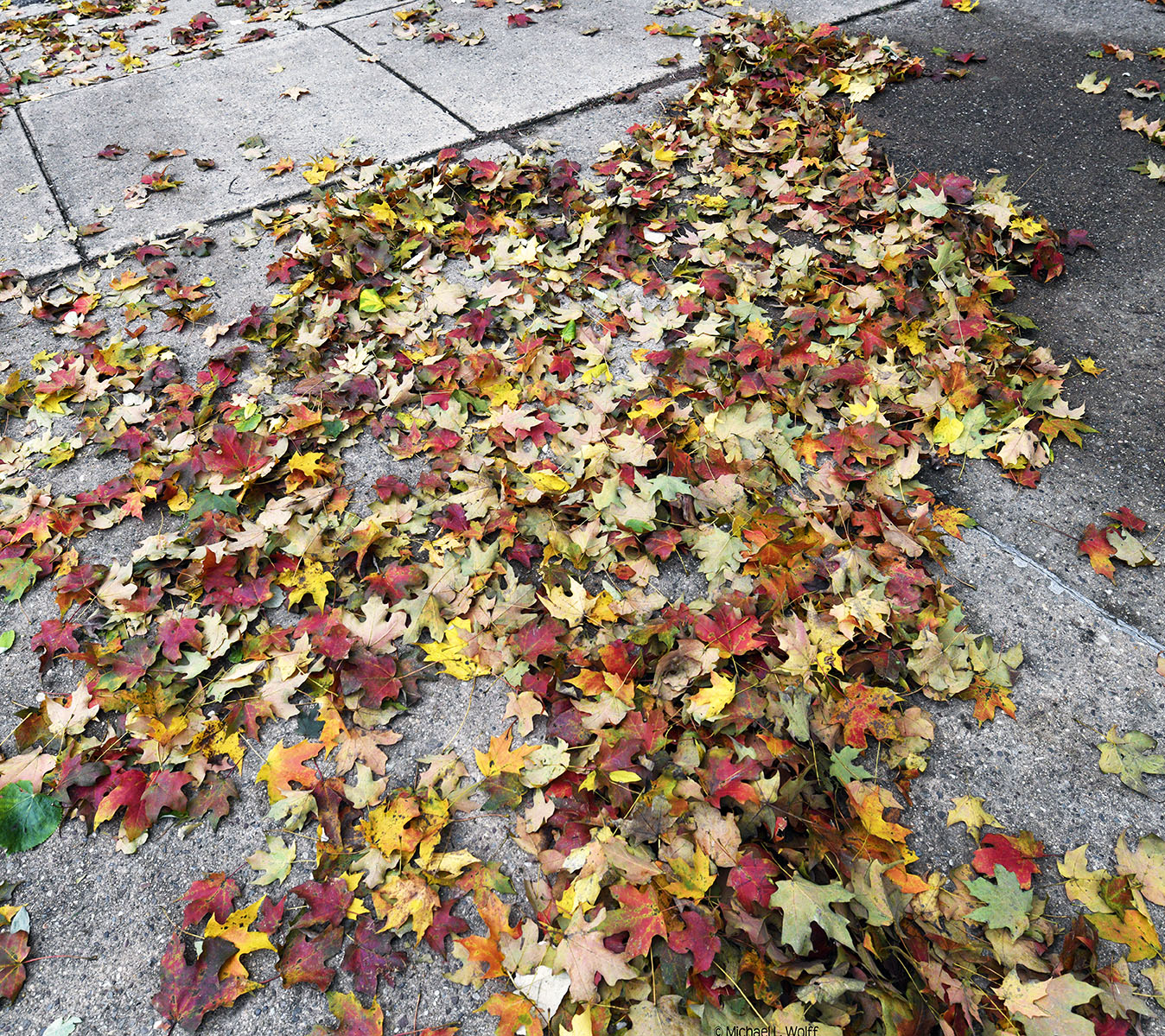
    The trees have been late in losing their leaves around here this season. Some leaves have turned a brilliant orange, some a subdued red, but for the most part, the leaves in my neighborhood are still attached to their branches. At least until this week when some suddenly started to float down and coat the sidewalks.

    I like Autumn.  I like the colors that brighten up the trees and the crunch of the leaves that have fallen to the ground. The slight nip of the wind in the air energizes my walk. Mostly, though, I feel my energy lift after the lethargy of the hot summer days.

    This Fall, though, has been slow in offering up its charms. The summer heat seemed to last longer than usual. After a round of cooler days, we are back to temps in the 70s! I wonder if our winter weather will be different as well. Certainly different from my childhood memories of autumn.

    But then so much, these days has changed. Weather-wise there are more storms, more drought, more floods all across our nation and the world. There is more political animosity, more anger, more active hatred. I try to look at people in a universal way, hoping to see what connects us rather than tears us apart. I look for the joy in life even though I know there are times for grief.

    As the leaves finally fall, it is easy to forget their beauty. But they will be back, vibrant as ever, as Spring comes around. I hope that we all remember that as the seasons can change, so can we. Let’s seek the kindness and beauty of life and reach out to share it with those around us.
     
    How are the seasons figured globally?


    Hippos in the Aquarium


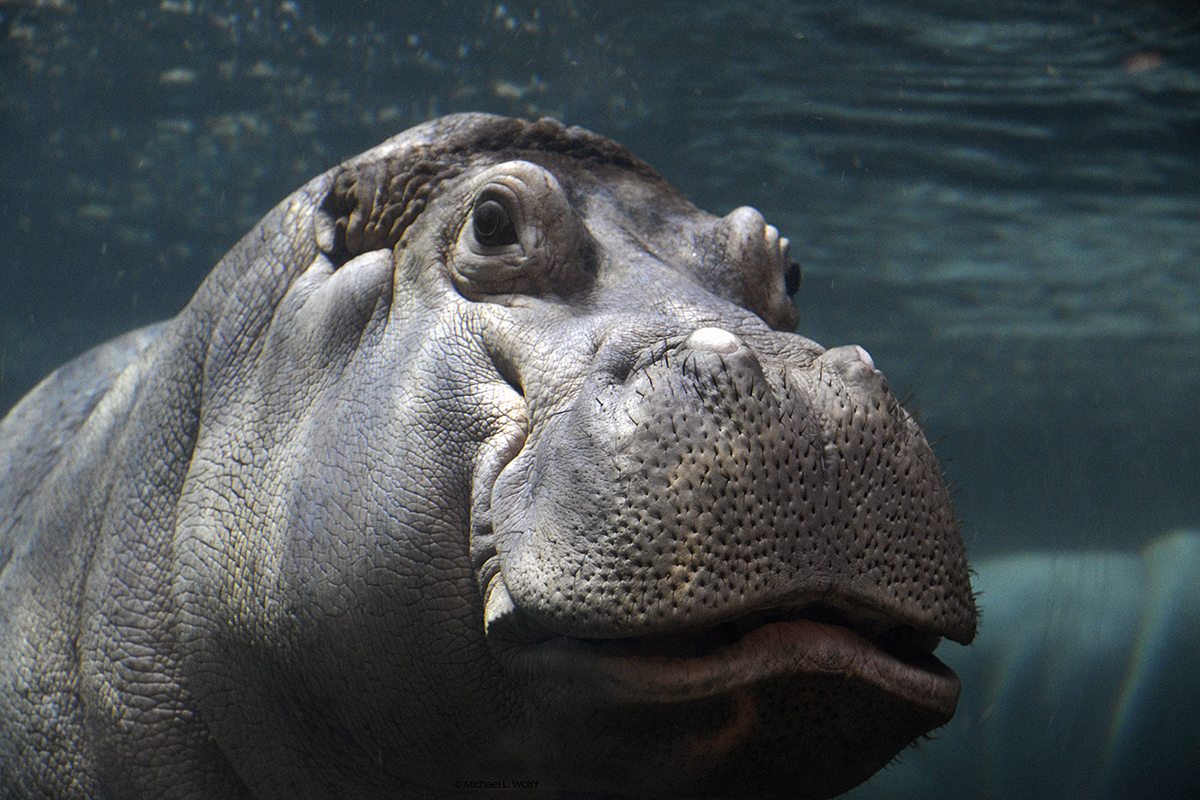
    Here is an amazing creature! No, he (actually she) wasn’t in my immediate backyard but she was close by in the New Jersey Camden Adventure Aquarium.
     
    There were two hippos swimming around in a tank where visitors could observe.
     
    Hippopotamus is Greek for river horse. The adult visitors were entranced by how such a large animal could swim so gracefully; a female hippopotamus weighs about 2,000 – 3,000 lbs. and a male can weigh 3,000 – 4,000 lbs. on average. The kids just wanted to touch the hippos as they came up to the glass. The hippos seemed as curious about the people as we were about them. It may have been that when they see people they anticipate getting fed and that is what happened. Large plant leaves were tossed into the tank and the hippos lunged for them.

    It’s hard to believe that these huge creatures are somewhat delicate. Their skin burns easily so they tend to eat  in the morning hours when the sun isn’t too strong and spend a good part of the day in the cool water. They are also vegetarian. But don’t let their gentle eating habits fool you. They are not always friendly and can be aggressive.

    I looked at the hippos with respect. They are like us, in a way, strong and needy, gentle and wary at the same time. It makes me think of how all aspects of nature resonates with the whole of nature. Like a big, if somewhat diverse family. Perhaps if we can appreciate nature’s wide diversity, we can do the same with people.
     
    Lots to know about hippos: