Blog

  • 275 Rare Diminutive Texts and Bindings To Be Seen From Patricia Pistner’s Collection

    Grolier club image

    Grolier Club interior


    City University of New York photo

    Thousands of years before books were contained within a hand-held technological tablet or phone, there were cuneiform tablets no bigger than the size of a quarter. On view through May 19, 2019 in the second floor gallery of the Grolier Club are 275 rare diminutive texts and bindings from around the world that have been created over the span of 4,500 years.  Size matters: these tiny tomes range in size from a maximum of four inches to less than one millimeter. Drawn from the collection of Patricia J. Pistner, the exhibition represents the history of the book in miniature form.

    Image: Almanac, written in the style of Nuremberg writing masters, Diocese of Bamberg, c. 1450. Illustrated manuscript on vellum, with seven colorful astronomical and astrological circular diagrams, one with a multi-colored patterned centerpiece, with a pinhole for a volvelle. 77 x 52 mm, 3 x 2.” Collection of Patricia J. Pistner 

    A Matter of Size: Miniature Bindings & Texts from the Collection of Patricia J. Pistner includes cuneiform tablets and other antiquities, medieval manuscripts and early printed materials, books and bindings by women, imprints of Benjamin Franklin and Abraham Lincoln, as well as contemporary design bindings and artists’ books.

    The exhibition is selected and organized by Pistner, along with Jan Storm van Leeuwen, former keeper of rare bindings at the Royal Library in The Hague and winner of the ILAB Breslauer Prize for Bibliography for his important study Dutch Decorated Binding in the 18th Century.  

    A collector of miniature books for over thirty years, Pistner’s love for very small tomes began at the age of seven when she began “publishing” tiny books for her first doll’s house.  As an adult, her passion was reignited after being inspired to fill the small library shelves of the miniature French townhouse she had commissioned. 

    “The plan to fill that library with real, readable, printed miniature books led to assembling the most aesthetically compelling, representative samples of the history of the book in the smallest formats,” says Pistner. “My hope is that fellow bibliophiles find tomes here that spark their interest and lead to an increased interest in and respect for the format.”

    Highlights include: image from title

    • Cuneiform Tablets and other examples of ancient texts dating from 2500 BCE.

    • Hyakumantō-daraniNara, Japan: c. 764–770 CE. Among the oldest block printed texts, housed in its original wooden pagoda.

    • Almanac, written in the style of Nuremberg writing masters, Diocese of Bamberg, c. 1450. Illustrated manuscript on vellum, with seven colorful astronomical and astrological circular diagrams, one with a multi-colored patterned centerpiece, with a pinhole for a volvelle.

    • Septem Psalmi poenitentiales, cum alijs multis devotissimo orationibus. Ac Kalendario Gregoriano. Venetiis: Nicolaus Misserinus, 1593. Measuring a mere 2.4” tall, this binding has rock crystal covers painted in reverse in the verre églomisé depicting St. Francis receiving the stigmata and the Adoration of the Magi.

    • Enchiridion p[re]clare ecclesie Sarum …. [Book of Hours, Use of Salisbury]. Paris: Widow Thielman Kerver, 1528. Printed by Yolande Bonhomme, the only female printer in Paris and daughter of the famous printer and bookseller, Pasquier Bonhomme. This elaborate mosaic binding by Lortic was done in the 19th century for Charles-Louis de Bourbon (bookplate). The book is in Latin but the captions are in English.

    • Bird’s Egg Nécessaire for Sewing Kit, with Étrennes a l’innocence [including an almanac], Paris: 1820. A very rare type of object, which was not made for any practical purpose, but is a thing of beauty and was probably given by a young man to his beloved.

    • Bibliothèque portative du voyageur, 33 vols. 1801- 1804. Napoleonic era traveling library housed in a book-shaped case contains a collection of works written by the most famous French writers.

    • The Proclamation of Emancipation. 1862. The first separate printing in book form of the Emancipation Proclamation that the Union Army distributed in the South.


    Editor’s Note: See the ArtsSummary photos of the exhibit … 

    Alphabet Magic: A Centennial Exhibition of the Work of Hermann & Gudrun Zapf

    Upcoming in the Exhibition Hall:

    Poet of the Body: New York’s Walt Whitman: May 15 – July 27, 2019

  • Earnings for Full-time, Year-round workers: Women at Work From the US Census Bureau

     women's occupations

    In honor of Women’s History Month, the US Census Bureau released a graphic showing median earnings by detailed occupation from the 2017 American Community Survey. The occupation table shows the female earnings for full-time, year-round workers in 2017 and figures on the number of women in select occupations.

    The Census Bureau collects data on industry, occupation and class of worker for the labor force.

    Did You Know? 165.3 million The number of females in the United States as of July 2017. The number of males was 160.4 million.
    Source: Vintage 2017 Population Estimates

    2 to 1 The approximate ratio by which women age 85 and older outnumbered men in 2017 (4.2 million to 2.3 million).
    Source: Vintage 2017 Population Estimates

    77.6 million The number of females age 16 and older who participated in the civilian labor force in 2017. This comprises 58.2 percent of females age 16 and older.
    Source: 2017 American Community Survey

    Earnings

    More Stats

  • Katharine Sullivan of the Justice Department’s Office on Violence Against Women Delivers: “A Central Component of Project Safe Neighborhoods is That Safe Neighborhoods Begin with Safe Homes”

    Acting Director Katharine Sullivan of the Justice Department’s Office on Violence Against Women Delivers Remarks at 19th Annual International Family Justice Center Conference; San DiegoCAKatie Sullivan, Operation Limelight at Dulles

    Wednesday, March 20, 2019

    Welcome everyone to the 19th Annual International Family Justice Center Conference. We have Centers represented from 40 states and 10 countries this week. It’s particularly exciting to be part of a conference that measures ACES, hope, resiliency, collective hope, and wellbeing in its conference attendees. Hope is going to increase in your life this week by being at this conference. Thank you to Casey Gwinn, Gael Strack, and the entire Alliance for HOPE team for convening this tremendous gathering.

    On June 15th 2018, the Office on Violence Against Women (OVW)’s Katharine (Katie) Sullivan, middle,  participated with the US Department of Homeland Security to support Operation Limelight USA at Dulles International Airport, right

    Improving the criminal justice response to domestic violence and sexual violence is the backbone of VAWA. Collaborative work that brings all the players in the justice system together with victim services is the heart. Family Justice Centers represent the best of this work —strengthening law enforcement, prosecution, offender accountability, and victim safety by working together to meet victims where they are. Adults and children, women and men, vulnerable people struggling to overcome challenges like substance abuse or human trafficking — Family Justice Centers are on the front lines welcoming survivors to take shelter in crisis. But you don’t stop there. You provide the tools and support that take survivors from fear to hope, from insecurity to self-sufficiency.

    Inspired by your creativity and innovation, I prioritize visits to Family Justice Centers. Family Justice Centers in places such as Denver, Anaheim, and Brooklyn have taught me so much about how you all are meeting the unique needs facing your communities. I just came back from Brooklyn, where I met with the lead prosecutor of the Brooklyn Family Justice Center, Michelle Kaminsky. Michelle told me about their Early Victim Engagement program, which helps reduce violent crime by contacting victims of domestic violence immediately after a defendant is arraigned. Brooklyn’s Early Victim Engagement pilot initiative was so successful in increasing victim participation in prosecution and subsequent rates of conviction that the program was adopted by other New York boroughs.

    I was also excited to hear about the culturally specific work the Brooklyn Family Justice Center is doing. One of their attorneys works closely with Muslim and immigrant communities, tackling complicated issues like female genital mutilation and cutting (FGM/C). FGM/C, is one of the most devastating forms of violence against women. We must stand together to demand zero tolerance for FGM/C. Just last week I was honored to be at the United Nations Commission on the Status of Women where I spoke on a panel about FGM/C. It is a problem right here in the United States. The CDC estimates 513,000 women and girls have suffered or are at risk of FGM/C in the U.S. OVW funds incredible local service providers, like Nisaa African Family Services, a grantee addressing FGM/C in a sensitive, culturally appropriate way as part of their work on sexual assault and domestic violence in African-diaspora communities in Iowa.

    When I first learned about Family Justice Centers and the benefits of co-location, I immediately thought of how perfectly positioned they are to address the very challenging issue of survivors struggling with substance abuse. OVW was excited to award $450,000 to the Alliance for HOPE in partnership with the National Center on Domestic Violence, Trauma and Mental Health to create trauma-informed approaches to helping survivors who come to Family Justice Centers and request help with substance use issues. For too long, survivors have been shamed, blamed, ostracized, and denied services when they come to agencies for help while actively using drugs and alcohol as part of their coping strategies or because perpetrators kept them hooked as part of a pattern of power and control. We need to change that and I believe Family Justice Centers will lead the way in providing collocated substance abuse and victim services.

    OVW is also proud to support the Alliance for Hope’s Training Institute on Strangulation Prevention. Last October, 1,000 Federal Bureau of Investigation (FBI) agents learned about the connection between stranglers and killers of law enforcement officers in this country. We must continue to investigate and prosecute the most dangerous abusers, including those who strangle, stalk, or use illegal firearms against their victims.

  • A Jo Freeman Review of Won Over: Reflections of a Federal Judge from Jim Crow Mississippi

    WON OVER: Reflections of a Federal Judge from Jim Crow Mississippi

    By William Alsup

    Foreword by Judge Thelton Henderson

    Published by NewSouth Books, Montgomery AL,  2019

     segregated cinema

    African-American patron going in colored entrance of the Crescent Theatre in Belzoni, Mississippi, ca 1939;  photographer Marion Post Wolcott. Wikipedia 

    by Jo Freeman

    When I was working in Mississippi for SCLC in 1966, I would not have believed that any of the young white men I saw on the streets (mostly harassing us) would ever reject white supremacy. They appeared as dedicated to its domination as sports fans are to their clubs.

    William Alsup writes that I was wrong; that there were some young white men who heard the civil rights movement’s message that white supremacy and segregation were wrong. They may not have bought into all of its messages — at least not then — but they heard enough of it to knock cracks in the closed society of Mississippi.

    The author’s memoir is not just about himself, but the small group of young white men who were his pals in his hometown of Jackson and on the campus of Mississippi State University (MSU). It’s about coming of age in the middle of a revolution and being “won over” to the other side.  

    They started with a teenage act of rebellion (so what else is new?) — when he and a buddy decided to paint over a billboard that said IMPEACH EARL WARREN. They got away with it; it made the local papers; his mother didn’t chastise him but only said “be careful.”

    Born in 1945, Alsup absorbed the big events of the 1950s when the issue of race went national. But it was the court-ordered admission of the first black student to the University of Mississippi in September of 1962 that made him and his friends think seriously about segregation. The Governor and the state newspapers called for active resistance as federal marshals escorted Air Force veteran James Meredith on the campus of the flagship university during three days of riots and two deaths. At this point, Alsup still believed in the Mississippi Way of Life, but one of his friends was beginning to question it.  Impeach Earl Warren

    Alsup later observed that only a small sliver of the Mississippi population supported civil rights, even modestly. He and his friends made a small step in that direction the following May when the Birmingham demonstrations were making national news and the NAACP was boycotting and picketing stores in Jackson. They wrote a letter to the editor of one of the Jackson newspapers supporting voting rights and equal education for Negroes – but nothing else. Nonetheless, it was a “call in the wilderness.”

    Right, An “Impeach Earl Warren sign”, posted in San Francisco in October 1958

    They were also affected by the contrast between white violence and the peaceful March on Washington on August 28, 1963. The comparison enhanced the moral authority of the civil rights movement.

    Most of his group went on to college, many to Mississippi State University — a land grant university. Of course blacks were not admitted, and very few women. At MSU Alsup joined the debate team, which took him all over the country for tournaments and expanded his friendship network. He also became active in the YMCA and the Young Democrats.

    Alsup doesn’t say so, but the Y was on the cutting edge of racial change throughout the South. The YW was ahead of the YM, but both used Christianity to talk about racial justice. 

    At this point I began to make comparisons between his experiences at MSU and mine at Berkeley. Cal was often called Red Square West, but the fact that MSU was making similar waves only a few years later tells us that there was something of a Zeitgeist running through higher education.

    Both schools had a speaker ban. Berkeley’s began in the 1930s as a Communist Speaker Ban and enlarged over time to be a controversial speaker ban. Alsup doesn’t recount the equivalent MSU history, but by his freshman year in 1963 controversial speakers were forbidden. In both institutions the University President opposed the ban but the governing board insisted on it.

  • Gardening, Strolling Through a Park, and Folding Clothes Counts: Linked to Lower Risk of Heart Disease in Older Women

    Vita Sackville's West In Your Garden

    Light physical activity such as gardening, strolling through a park, and folding clothes might be enough to significantly lower the risk of cardiovascular disease among women 63 and older, a new study has found. This kind of activity, researchers said, appears to reduce the risk of cardiovascular disease events such as stroke or heart failure by up to 22 percent, and the risk of heart attack or coronary death, by as much as 42 percent.

    The results of the study, which was funded by the National Heart, Lung, and Blood Institute (NHLBI), part of the National Institutes of Health, appear today in the journal JAMA Network Open.   

    “When we tell people to move with heart, we mean it, and the supporting evidence keeps growing,” said David Goff, M.D., Ph.D., director of the Division of Cardiovascular Sciences at NHLBI. “This study suggests that for older women, any and all movement counts towards better cardiovascular health.” Goff added that the findings are consistent with the federal government’s most recent physical activity guidelines, which encourage replacing sedentary behavior with light physical activity as much as possible.

    In the five-year prospective study, researchers followed more than 5,800 women ages 63 to 97 to find out if higher amounts of light physical activity were associated with reduced risks of coronary heart disease or cardiovascular disease.

    Across all racial and ethnic groups, the link was clear, said study author Andrea LaCroix, Ph.D., chair of the Division of Epidemiology and director of the Women’s Health Center of Excellence at the University of California, San Diego.

    “The higher the amount of activity, the lower the risk,” she said. “And the risk reduction showed regardless of the women’s overall health status, functional ability or even age. In other words, the association with light physical activity was apparent regardless of these other factors.”

    Heart disease is the leading cause of death among American women, and older women suffer profoundly: nearly 68 percent of those between 60 and 79 have it, as do older Americans overall. Of the estimated 85.6 million adults with at least one type of cardiovascular disease, more than half are age 60 or older. The women were part of the NHLBI-funded Objective Physical Activity and Cardiovascular Health (OPACH), a sub-cohort of the Women’s Health Initiative

    Participants wore hip-mounted accelerometers, a device like a fitness tracker, that measured their movement 24 hours a day for seven consecutive days. The accelerometers were also calibrated by age to distinguish between light, and moderate-to-vigorous physical activity — a monitoring detail considered a major strength of the study. The researchers then followed the participants for almost five years, tracking cardiovascular disease events such as heart attacks and strokes.

    “To our knowledge, this is the first study to investigate light physical activity measured by accelerometer in relation to fatal and non-fatal coronary heart disease in older women,” said LaCroix, who led the OPACH study.

    Previous studies have largely relied on self-reporting questionnaires, but most people, the researchers said, do not think of folding clothes or walking to the mailbox as physical activity of any kind.

    “Those questionnaires do not capture the low intensity movements accrued in activities of daily living,” LaCroix said. Even in her own OPACH findings, she noted, “there was no correlation between the amount of self-reported light physical activity and the amount we measured with the accelerometers. Without accurate reporting, we run the risk of discounting low intensity activity associated with important heart health benefits,” she said.

    Researchers need to conduct large randomized trials to determine if particular interventions might increase light physical activity in older women, and what effect that would have on cardiovascular disease rates. But the OPACH authors said they encourage this group to increase their light physical activity immediately.

    About the National Heart, Lung, and Blood Institute (NHLBI): NHLBI is the global leader in conducting and supporting research in heart, lung, and blood diseases and sleep disorders that advances scientific knowledge, improves public health, and saves lives. For more information, visit https://www.nhlbi.nih.gov.

    About the National Institutes of Health (NIH): NIH, the nation’s medical research agency, includes 27 Institutes and Centers and is a component of the U.S. Department of Health and Human Services. NIH is the primary federal agency conducting and supporting basic, clinical, and translational medical research, and is investigating the causes, treatments, and cures for both common and rare diseases. For more information about NIH and its programs, visit www.nih.gov.

    NIH…Turning Discovery Into Health®

  • Detours To Dreamland: Trying Not to Allow Any Morpheus Murderers Into My Boudoir

    by Rose Madeline MulaMorpheus

    I can’t remember when I became an insomniac.  I just know it seems like forever since I’ve been able to drop off when my head hits the pillow and awake in the morning refreshed after eight hours of peaceful, dreamless slumber.  

    Morpheus, the Greek God of Dreams; F. Tolstoy (1852, Tretyakov Gallery). Photo by shakko, Wikimedia

    It’s mostly my own fault.  I break all the rules. For one thing, I know I’m supposed to limit screens (TV, computer, tablet, cell phone) for a period before bedtime — and certainly not allow any of these Morpheus murderers into my boudoir, but I just can’t do it.  I need them all to distract my imaginative, catastrophizing mind from countless concerns, which multiply exponentially the moment I cross the threshold into my bedroom. “Why worry?” people ask. “It won’t change anything.” I know! That’s what worries me most!  And that’s why my toys are a must at bedtime. Gone are the days when all I needed was a teddy bear to cuddle. Instead, my nightstand is littered with so many electronic gadgets, remote controls, and chargers, there’s no room for a glass of water (which is just as well — I don’t need even more sleep-disruptive trips to the potty).

    Lately, in an effort to decrease those bathroom treks, I have not let any liquids past my lips after 7:00 PM. Not only has that been ineffective, but today I saw a report claiming that drinking a full glass of water at bedtime decreases the possibility of a fatal nocturnal heart attack.  So do I restrict my night time water intake in hopes for undisturbed rest (which might last forever) or do I guzzle down eight ounces while watching Steven Colbert with odds that I’ll still be awake (and alive) when the 5:00 AM news comes on?

    I don’t understand why watching TV in my den in the evening knocks me out unfailingly, but stumbling the twenty steps to my bedroom revives me, and turning on the TV in there has the same effect as participating in the ice bucket challenge.  It makes me bright-eyed, alert, and ready to face the day! Unfortunately, it’s midnight.

  • How They Did It: Reporters Uncovered Trump Hush Payments to Two Women, Stormy Daniels and Karen McDougal

     
    WSJ

    By 

     This year, for the first time, Journalist’s Resource is publishing a series of interviews with the finalists for the Goldsmith Prize for Investigative Reporting*, in the interest of giving a behind-the-scenes explanation of the process, tools, and legwork it takes to create an important piece of investigative journalism. 

    ————–

    A team from The Wall Street Journal uncovered secret payoffs that Donald Trump and his associates arranged during the 2016 presidential election campaign to suppress sexual allegations from two women, including a porn star known as Stormy Daniels.

    The Journal’s series of exclusive reports, most of which were published in 2018, prompted a federal investigation into campaign-finance abuses and implicated the president in a federal crime. Trump’s former personal attorney, Michael Cohen, pleaded guilty last year to a string of crimes, including violating campaign finance law by arranging large payments to two women who had alleged affairs with Trump. In late February 2019, Cohen testified before a House committee that Trump helped him coordinate the payment to Daniels.

    The Journal first reported on a Trump-related payoff right before the 2016 election. On Nov. 4, 2016, journalists Joe PalazzoloMichael Rothfeld and Lukas Alpert broke the news that the company that owns the National Enquirer, American Media Inc., agreed to give former Playboy model Karen McDougal $150,000 for her story of an extramarital affair with Trump a decade earlier. But the company, headed by a longtime friend of Trump, did not publish the story, the Journal reported.

    “We didn’t know at that time the extent to which Trump was involved or Michel Cohen was involved,” Palazzolo said during a recent podcast interview with Heidi Legg, special projects director at the Shorenstein Center, which runs Journalist’s Resource.

    After that first story, Rothfeld and Palazzolo worked for more than a year to investigate secret hush payments. Their next article, published in January 2018, reported on a $130,000 payment Cohen made to Daniels to keep her quiet a month before the election. Days later, Rothfeld and Palazzolo followed with another story detailing how Cohen used a shell company to make the payment to Daniels’ lawyer.

    The Journal ran several more articles in 2018 that focused on Trump’s relationship with Cohen, Trump’s role in the payoffs and how Cohen turned on the president, publicly implicating him.

    The series, titled “Trump’s Hush Money,” “fundamentally altered the trajectory of Mr. Trump’s presidency,” the Journal wrote in the paperwork it submitted to enter this year’s contest for the prestigious Goldsmith Prize for Investigative Reporting. The series recently was chosen as a finalist. The Journal also pointed out that once Cohen turned state’s evidence against the president, Cohen began cooperating with special counsel Robert Mueller’s ongoing investigation into Russian election tampering.

    To learn more about the series and how it was reported, Journalist Resource reached out to several reporters who had worked on it. In an interview by e-mail, Palazzolo spoke to us about how the team tracked down key details and handled tricky questions such as whether to rely on anonymous sources. He also offered tips for journalists interested in doing investigative reporting at a national level.

    Below are our six questions and Palazzolo’s answers. We made a few minor edits for clarity or to accommodate Journalist’s Resource’s editorial style.

     Denise Ordway, Journalist’s Resource: How did you find the shell company that Mr. Cohen used to make the hush payment to Stormy Daniels? And what steps did you take to confirm the information before publishing it?

    Joe Palazzolo: “We learned from a source that Michael Cohen used a shell company, but our source didn’t know the exact name. The source said it was something obvious, like ‘Damage Control LLC.’ We didn’t know where the company was incorporated. We had a general sense of when Cohen paid Daniels. Michael Rothfeld began requesting records from state agencies of all companies formed in September and October of 2016. We suspected Delaware, given its reputation for corporate secrecy and proximity to New York.

    Delaware’s Division of Corporations produced a report for us with thousands of LLCs [Limited Liability Companies]. We also got records from Nevada and Wyoming. We pored over them for likely candidates. Another source suggested we try looking for a company with ‘Resolution’ in the name.

    Presently, we found a Delaware company called Resolution Consultants LLC. Delaware’s online database offers scant information about corporations, except the incorporation service used and the date or formation. But you can request the formation documents from the Division of Corporations. We did, and sure enough, there was Michael Cohen, listed as the company’s “Authorized Person.” We then called the incorporation service Cohen used to confirm he was the right Michael Cohen. They had Cohen’s New York address on file.

    But Resolution Consultants LLC was formed on Sept. 30 and dissolved on Oct. 17, before the payment to Daniels, according to our sources. We figured Cohen had made an error in setting up the company or needed to change the company’s name for whatever reason. So we went to the spreadsheet of companies formed in Delaware that we’d created and narrowed our search to corporations that were created on Oct. 17, the same day Resolution Consultants was dissolved.

    Michael, myself and our editors, Mike Siconolfi and Ashby Jones, picked through the records, hundreds of them, for likely candidates. We all made lists. One company had struck all four of us as a possible match: Essential Consultants LLC. The next morning, we pulled the formation documents, and Michael Cohen’s name was on them. It took us another couple of days to confirm with our sources that Cohen used Essential for the payment.”

    *The winner of the 2019 Goldsmith Prize for Investigative Reporting was awarded on March 12, 2019, to J. David McSwane and Andrew Chavez of the Dallas Morning News, for their series “Pain and Profit“.

  • Senators Feinstein and Collins Introduce The Personal Care Products Safety Act to Protect “consumer health and strengthen the [FDA’s] efforts to regulate ingredients”

    US Senators Dianne Feinstein (D-Calif.) and Susan Collins (R-Maine) last week introduced the Personal Care Products Safety Act, a bill to protect consumer health and strengthen the Food and Drug Administration’s efforts to regulate ingredients in personal care products. The bill will update 80-year-old federal safety rules for the $60 billion personal care products industry.

    Cosmetics image from Wikipedia

    “From shampoo and shaving cream to deodorant and make-up, every American comes into contact with personal care products every day,” said Senator Feinstein. “Families trust that these products are safe, but unfortunately many ingredients have never been independently evaluated. Our bipartisan legislation, which has the support of numerous companies and consumer advocacy groups, would modernize FDA’s oversight authority and give consumers confidence that everyday personal care products won’t harm their health.”

    “Americans use a variety of personal care products daily, and they should be able to know whether the products that they are applying to their hair or skin are safe,” said Senator Collins. “By updating FDA oversight of the ingredients in cosmetics and personal care products for the first time in nearly 80 years, our legislation will help increase safety for consumers, protect small businesses, and provide regulatory certainty for manufacturers.”

    “Over the past six years, Beautycounter’s mission has brought us to Washington DC and state legislatures across the country to build momentum for legislative reform of the beauty industry,” said Gregg Renfrew, Beautycounter’s Founder & CEO. “That is why we are again proud to support the Personal Care Products Safety Act, a bill that prioritizes safety while helping businesses thrive. We applaud the continued leadership of Senators Feinstein and Collins to strengthen outdated regulations and protect public safety. Much more needs to be done to fully protect consumers and Beautycounter will fight to ensure that the most health protective law passes Congress.”

    “Thanks to the leadership of Sens. Feinstein and Collins, we’re closer than ever to real cosmetics reforms,” said Environmental Working Group President Ken Cook. “Most consumers would be shocked to learn that cosmetics companies can put just about any chemical in cosmetics, no matter how dangerous. It’s been 80 years since Congress last passed cosmetics law. The bipartisan Personal Care Products Safety Act will finally provide the Food and Drug Administration with the tools the agency needs to protect consumers from dangerous chemicals in these everyday products.”

    Consumer and health advocates are concerned about the use and concentration of some ingredients in personal care products. For example, according to the Centers for Disease Control and Prevention, short-term exposure to formaldehyde, used in smoothing hair treatments, has been reported to cause a range of negative health effects including headaches and shortness of breath. Long-term exposure to formaldehyde has been associated with increased risk of cancer.

    Another example is propylparaben, used as a preservative in a wide range of products. This chemical, which mimics estrogen, may be appropriate to use in small amounts but not in higher concentrations. According to scientific studies, chemicals that mimic estrogen can disrupt the endocrine system and have been linked to a wide range of health effects, including reproductive system disorders.

    The Personal Care Products Safety Act bill would require the FDA to evaluate a minimum of five ingredients found in personal care products per year to determine their safety and appropriate use. The review process set forth in the bill would provide companies with clear guidance about whether ingredients should continue to be used and whether consumer warnings are needed. For example, a chemical may be deemed inappropriate for use in children’s products or only appropriate for use by professionals.

  • Did I Miss Something? Belated Thoughts on a Matchmaker’s Skill


    The Matchmaker

     Gerard van Honthorst, The Match-Maker (1625); Centraal Museum, Utrecht

    By Joan L. Cannon

    Picture a petite (under five feet) little lady with wavy grey hair tidily confined in a genteel bun. Her features are unremarkable, refined and even, in the way that a very pretty girl could be expected to age. She wears a pince-nez. I remember her when she must have been in her early fifties.

    It’s become a preoccupation to try to evaluate old notions of people and events from my youth, now that experience has so broadened my imagination and perspectives. Embarrassing to realize how shallow and mistaken some of my former impressions appear to be. I hope I’m not alone in that. She was nearly ten years older than my mother. They were close all their lives. The two shared a piano teacher in their youth, and I suspect it was Catharine (with an A in the middle) who engineered a meeting between my mother and the man who would become my father.

    Catharine (called by everyone Mimi) was a single lady all her life, most of the adult part of which she spent living abroad in Switzerland. World War II brought her back to the US and several years spent in a residential hotel not far from where we lived in lower Manhattan. She often invited friends and my mother and me to tea. Now as I look back on these afternoons, they seem like something out of a BBC television mini series. Yet I always felt at home with Mimi.

    Those were my teenage years — filled with school, the war, my after-school jobs, and a serious boyfriend. It’s not surprising that a great many things escaped my notice. Mimi took an interest in me that often surprised me even then. Many of her kindnesses were gifts of unusual books. The first was a one-volume edition (boxed) of The Notebooks of Leonardo Da Vinci. I was then eleven years old, according to the date inside. Her choice mystified me. To this day I’ve merely looked at scattered pages without finding an impetus to make real use of it — something I intend to rectify forthwith.

    Read the rest of Joan L. Cannon’s essay, Did I Miss Something? Belated Thoughts On a Matchmaker’s Skill

  • Better Balance, Better World: Showcasing Women of BART on International Women’s Day

    Editor’s Note: Bay Area Rapid Transit (BART) is the rail system we use in the San Francisco Bay Area. These are some of the biographies of women who work for this vital transportation system.

    Senior Engineer Van Nguyen uses a gauge to measure fault creep in the BART Caldecott Tunnel

    Senior Engineer Van Nguyen uses a gauge to measure fault creep in the BART Caldecott Tunnel

    By Melissa Jordan
    BART Senior Web Producer

    Julia Quittman’s grandmother told her she should choose any career that made her happy: Now she’s a Senior Computer Systems Engineer keeping BART’s systems running.

    Maansii Chirag Sheth’s parents supported her decision to leave India as a young woman for the United States to pursue higher education and an electrical engineering career. Now she’s a Project Manager for cathodic protection, battling corrosion wherever metal meets water.

    Van Nguyen loved math and science since childhood and considered medical school, but decided to get an engineering degree in four years and start working sooner. Now she’s a Senior Engineer working on the Transbay Tube earthquake retrofit.

    They are three of the women at BART in nontraditional roles whose work we are highlighting for International Women’s Day March 8. For more than a century, International Women’s Day has been observed each year to celebrate the achievements of women and to call for greater gender equity around the world, across a variety of organizations and industries.

    The theme for 2019’s International Women’s Day is Better the Balance, Better the World – a message that BART has taken to heart by encouraging better balance in the traditionally male-dominated field of public transportation, particularly in technical areas like engineering.  

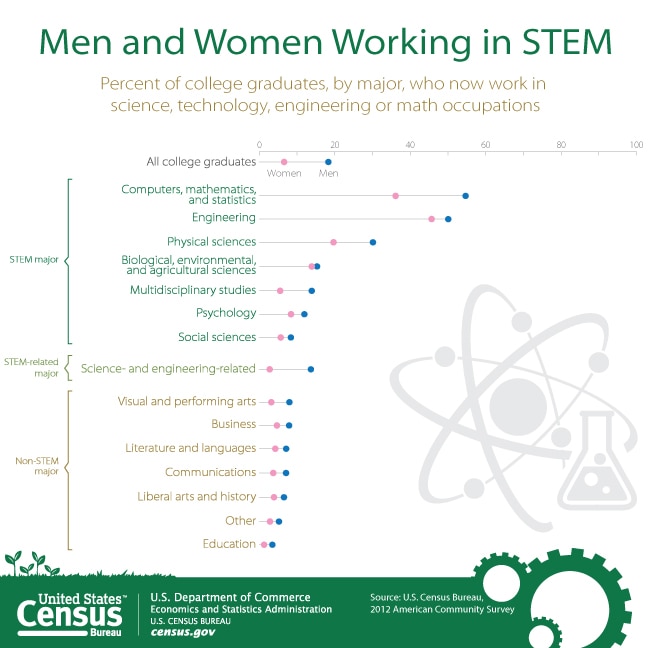
    In BART’s infrastructure engineering group, there are around 17% women, compared with about 11% of women engineers in the transportation industry overall. Of those BART engineers, 46% are women of color. Women are represented in key roles such as project and program managers and in all engineering disciplines. A few common threads run through their experiences: family support, mentors and role models both male and female, and grounding in STEM education (science, technology, engineering and math).

    “Research shows that organizations with good gender diversity outperform those without it,” said Karen Horting, Executive Director and CEO for the Society of Women Engineers. “It’s not simply that it’s the right thing to do; it’s also a business imperative.”

    Maansii Sheth

    Maansii Chirag Sheth checks on spools of cable to be used for Transbay Tube work


    Maansii Chirag Sheth spends time working to maintain the Transbay Tube exterior and other spots where equipment must be protected against corrosion.

    “I have challenging, intriguing projects to work on every day. I wanted to make a mark in society and work on something meaningful that would last,” said Sheth, who has worked at BART for nearly three years. “There is a very diverse culture here at BART and even though I am the only woman on my team, it has never been a barrier. Most of the leadership team are women and they are extremely supportive.”

    Sheth said mentors along the way, both men and women, showed her she could be whatever she wanted to be at BART. “There are many opportunities for advancement here,” she said.

    Heather Fergus

    Manager of Engineering Programs Heather Fergus reviews plans for one of her train control engineering projects

    Heather Fergus is a Manager of Engineering Programs who supports the Systems Engineering Group focusing on Train Control Engineering.  With a 20+ year Cisco Systems network engineering background supporting the finance and banking arena in Charlotte, N.C., she’s been in male-dominated industries most of her life. Fergus likes the problem-solving aspect of working at BART.  “I have learned so much about the Transportation industry since joining BART.  I had to change my thinking from a Cisco Switch to a Switch Machine.”

    “It’s a fantastic team,” she said of her group at BART.  “We are driving to complete a lot of large-scale projects to help keep the legacy fleet running, which we know is a big concern for riders as the Fleet of the Future deployment quickly moves ahead.”

    Ni Lee, who has been at BART more than 10 years and works in the integration engineering group, said the women in nontraditional roles in transit “bring something extra to the table.”

    “We often come at problem-solving from a different perspective,” she said. “Those of us who persisted, who had the determination to do these jobs that are more typically done by men, are not easily intimidated. We’re part of a culture change at BART making gender equality the new normal.”

    Senior Civil Engineer Martina Z. Frignani grew up in Brazil and initially considered architecture for a career then found that she loved engineering. She moved to the Bay Area in 2016 to work for General Electric and was a regular BART rider; when GE shut down her area of operations, she figured, why not be an engineer for BART?  “I like that you can work on a variety of different projects here, and you don’t have to do the same thing every day,” Frignani said. “You can also see a project through from the design stage, to the engineering, to the implementation.”

    One of her projects, part of the Measure RR rebuilding effort, involves safety barriers that will allow maintenance workers to perform certain tasks safely while trains are running, rather than having to backlog that work to be done in the short overnight window.

    “That means the work gets done faster to keep the trains running on schedule, and I know the riders appreciate that,” she said.

    Mitra Moheb

    Manager of Engineering Programs Mitra Moheb discusses a Richmond Yard Track Rehabilitation plan in a meeting with her team 

    Mitra Moheb, a Manager of Engineering Programs over various project areas within Measure RR, grew up with the role model of an uncle who was a structural engineer. A relatively new hire at BART, Moheb had broad experience working for the FTA, Caltrain, CalTrans, Marin County and AC Transit.

    “One of the things that drew me to BART was seeing the commitment to gender equality and the number of strong women in leadership roles here,” Moheb said. Asked about the perception that women tend to have more “soft skills,” she said, “You still have to back it up with logic and really knowing your subject matter, being a good manager or engineer.”

    While the largest number of women engineers at BART is in the Maintenance & Engineering group, there are others spread about in different parts of the organization, including Rolling Stock and Shops, the group that manages trains and their maintenance.