October is American Archives Month! We’re celebrating the work of archivists and the importance of archives with a series of blog posts highlighting our “Archives Across America.” [This] post comes from Sarah Navins from the Franklin D. Roosevelt Library in Hyde Park, New York.
Al Cornelius in the White House Map Room, ca. 1943. (FDR Library, National Archives)
Franklin D. Roosevelt’s mind saw in maps. His love of maps can be traced to his childhood when he first began collecting postage stamps. Stamps from all over the world expanded FDR’s knowledge and understanding of geography and the international community, a knowledge that he brought with him to the White House in 1933.
After the outbreak of World War II in 1939, National Geographic provided President Roosevelt and British Prime Minister Winston Churchill with special wall-mounted map cabinets hidden by enlarged photographs.
Inside the cabinets were maps on rollers organized by hemisphere, region, and theater of operation. Cartographers from National Geographic routinely updated these maps, bringing the new maps to the White House and personally installing them in the President’s cabinet,which hung in his private Oval Study. By simply turning in his chair and opening the cabinet, FDR could quickly check battle locations around the world.
President Franklin D. Roosevelt meets with Soviet Minister of Foreign Affairs Vyacheslav Molotov in the White House study, June 1, 1942. The President’s National Geographic map case can be seen in the background. (FDR Library, National Archives)
In January 1942, FDR converted a ladies’ cloakroom in the White House basement into a top-secret communications center. Modeled on a similar room maintained by Winston Churchill, the Map Room was a place where the President could monitor military activities around the globe. Here reports, documents, and coded messages were received, summarized, and filed.
Through the Map Room, Roosevelt communicated with Allied leaders around the globe, including Churchill, . Maps posted in the room were used to track the locations of land, sea, and air forces. The drably furnished office was staffed 24 hours a day by Army and Navy officers. The President could drop in at any time. Access was restricted to him, the Map Room staff, and specific individuals at the direction of the President. Even the Secret Service was barred. FDR’s Map Room was the precursor to the modern-day White House Situation Room.
In an oral history interview, Adm. John L. McCrea, Naval Aide to President Roosevelt, gave the following description of what exactly was in the Map Room:
Just what information did we store and were readily available in the Map Room? . . . [M]ore importantly by far, was the complete file of messages passed between the United States [the President], the United Kingdom [Mr. Churchill], China [Chiang Kai-Shek] and Russia [Joseph Stalin] having to do with the conduct of the war.
[V]isual aids were used to locate the whereabouts and numbers of U.S. Forces — Army, Air Force, Navy, Marine Corps throughout the War Zones. In addition the progressive day to day location of military and merchant convoys was posted, as was the locations of Naval Task Forces, the whereabouts of capital ships, etc.
The Book of Gutsy Women: Favorite Stories of Courage and Resilience
Published by New York: Simon & Schuster, 2019
450 pages. Lots of photographs
When I was going to school in the 1950s, it was rare to find a woman in my textbooks. When I looked for a job as a journalist in the late 1960s, I was told that women weren’t hired because they couldn’t cover riots. When the women’s liberation movement began to hit the media in the 1970s, a common retort was that women hadn’t done much of anything. “There are no great women artists” we were told.
In the 1980s and 1990s, when I read women’s history on my own, I realized that there were important and prominent women in every decade, but they disappeared when the history books were written. Women were like sand castles; men were like rocks. The waters of time washed over both and wiped out the women.
The Clintons — mother and daughter — are helping to remedy that. By telling the stories of 103 Gutsy women, they want to raise the sand from the beaches and fuse the particles into solid quartz.
Traditionally, what defined a woman as worthy of note was her beauty. To the Clintons, it’s their pushiness — their willingness to defy the status quo, their ability to get things done, their resilience. They tell stories of women who were courageous and determined.
The book is organized as a conversation between mother and daughter. In the first section, each talks about women they knew, or read about, who were important to them. In subsequent sections they tell us about more and more women who have stood up for themselves and others. These descriptions of strong women defy the popular belief that women are the “weaker sex.”
Spread throughout the world, these women have worked in many fields, from explorers to athletes to writers to politicians. They are young and old, of every race and ethnicity. They go back at least three centuries.
The Clinton’s have different perspectives, reflecting their generational difference. Much had changed by the time Chelsea was in school. She learned about important women who were absent from her mother’s early education. She grew up at a time when both of her parents held important positions and was able to watch her mother elevate women and the study of women. Indeed, if Chelsea had been the sole author of this book, Hillary would have headed her list of Gutsy women.
This is a book that every young woman needs to read. If I had known about Margaret Bourke-White when I was told that “women can’t cover riots,” I could have responded with a story about a photo-journalist who covered wars.
Older women will also benefit. When Hillary declared her candidacy for president in 2008, how many knew that over fifty women had already placed their names on a primary or general election ballot as candidates for President?
It’s a beautifully designed book, with lots of color photographs. It will go viral. Get it while you can.
Jo Freeman has published 11 books and hundreds of articles and book reviews. She is trying to finish her next book: Tell It Like It Is: Living History in the Southern Civil Rights Movement, 1965-66.
SoPo Unite is a social club that promotes an anti-vaping message at South Portland (Maine) High School. Founded in 2017, more than 60 of South Portland’s 900 students are members. Maine banned vaping or possession of an e-cigarette on school grounds, joining Montana, Oklahoma and Virginia. The Pew Charitable Trusts
The hallways at South Portland (Maine) High School were buzzing recently with talk of the mystery disease that has struck hundreds of young adults who vape. Snapchat, Facebook and Instagram have been filled with grisly photos of severely damaged lungs and stories about vaping-related deaths.
Kara Tierney-Trevor, the school’s social worker, said a handful of students have come to her and admitted that they vape regularly. They say they’re hooked on the sugary-tasting nicotine in their Juuls and they want to quit — but can’t.
“That’s never happened before,” Tierney-Trevor said. “No one ever came to us on their own and asked for help.”
Maine last week banned vaping or possession of an e-cigarette on school grounds, joining Montana, Oklahoma and Virginia. And in the past three years, at least 18 states have raised the legal smoking age for both traditional and e-cigarettes to 21 in response to the meteoric rise in adolescent vaping.
Other states have tackled flavors in e-cigarettes. Earlier this month, Democratic Gov. Gretchen Whitmer of Michigan became the first to issue a ban on flavored e-cigarette products to stem adolescent vaping. New York Gov. Andrew Cuomo, also a Democrat, issued a similar order. And the Trump administration has asked the Food and Drug Administration to consider a nationwide ban on all flavors of nicotine other than tobacco.
Meanwhile, a bill that would ban sweet-tasting nicotine products is gaining momentum in Massachusetts, and lawmakers in Arkansas, New Jersey and Utah are discussing similar restrictions.
Most people struck with the mystery lung disease had been vaping oils with THC, the psychoactive compound in marijuana, according to the U.S. Centers for Disease Control and Prevention.
But the national scare has given politicians an opening to regulate the nicotine vaping industry, which parents, teachers and some students blame for creating an epidemic of adolescent nicotine vaping.
The new flavoring bans are meant to reduce the allure of nicotine-laced vaping liquids for kids, and federal announcements and media coverage of the health risks to youths who vape aim to discourage them from experimenting with the addictive substance.
But research shows that fear doesn’t work when it comes to preventing adolescents from engaging in risky behavior. In fact, it may attract them. It’s hard to convince adolescents that vaping is dangerous if they see their teachers and parents doing it. And selling vaping products to kids under 18 is already against the law in all 50 states.
South Portland High School has found some strategies that may be working. Like other schools, they’re patrolling bathrooms and hallways and confiscating the devices when they find them.
But instead of suspending students for four to five days as they did under the old policy, school leaders are sending them home for just one day and giving them a thorough behavioral health assessment. School officials also are helping kids find social activities that don’t involve vaping and offering mental health and addiction counseling to kids who are already hooked.
A Sudden Surge
Adolescent cigarette smoking declined for more than four decades, but the most recent annual survey by the National Institute on Drug Abuse found an increase in adolescents using Juuls and other e-cigarettes to inhale nicotine vapors. Almost twice as many high school seniors surveyed were vaping in 2018 as in 2017, increasing from 11% to nearly 21%.
Vaping has been marketed to adults who already smoke tobacco as a healthier alternative to cigarettes and an effective way to quit.
But the FDA earlier this month ordered Juul Labs, which controls roughly three-quarters of the e-cigarette market, to stop advertising those unproven claims. The safety of e-cigarettes has yet to be scientifically proven, the FDA said.
And vaping nicotine is worse for adolescents, whose brains are still developing and who are more susceptible to addiction.
The nicotine salts used in vaping cartridges affect the brain faster than nicotine in traditional tobacco products.
Because liquid nicotine also metabolizes quickly, kids and adults who become addicted to it need a fix every 20 minutes to avoid feeling ill. For middle- and high-school students, that means raising their hand to go to the bathroom more than twice in a 60- to 90-minute class.
In response to recent lawsuits and federal investigations, Juul Labs has said it will cooperate in efforts to prevent adolescents from vaping. The company denies that it ever marketed to adolescents.
By October of that year, Bennett said school officers were constantly finding kids using the devices in bathrooms and carrying them in the halls.
But after dozens of devices were confiscated and educational programs at the school raised awareness of the problem, the number of students suspended for vaping or possessing a device started dropping.
By 2018, far fewer kids were caught vaping, Bennett said, and this year no devices have been confiscated yet.
But that doesn’t necessarily mean use has gone down, she said. They may just be getting better at hiding it and more careful about when and where they vape, she said.
Still, Bennett, one of three anti-vaping enforcers at South Portland High, says she’s encouraged that some seniors are starting to talk about quitting and they’re angry at the vaping industry for manipulating them into using in the first place.
Mitchell, a South Portland senior who didn’t want his last name published, is one of them. He said he’s been trying to stop for more than a year. He no longer vapes on weekends, he said, but he can’t resist when somebody offers him a hit in the school bathroom.
“Everybody’s just walking around ‘fiending,’” Mitchell said. “They go from bathroom to bathroom looking for a ‘shred’. They’re just like crackheads.”
Media attention to climate change has been increasing over the past several years, but not all articles on the subject are entirely accurate, and it can sometimes be difficult for non-expert readers to separate the wheat from the misleading chaff. To help with this quandary, Climate Feedback reviews high-profile climate change articles from a wide variety of publications, then annotates and verifies or rebuts their claims. This effort is carried out by dozens of scientific experts from around the world volunteering their assistance. Founded by climate scientist Dr. Emmanuel Vincent, Climate Feedback is a nonprofit, nonpartisan organization that describes itself as “a worldwide network of scientists sorting fact from fiction in climate change media coverage [whose] goal is to help readers know which news to trust.” Each selected piece is reviewed at either the article- or claim-level by multiple experts in relevant fields. Visitors can browse concise summaries of experts’ assessments of the reviewed articles, and they can also read each reviewer’s overall feedback as well as the full, line-by-line annotations in the context of the original article. Climate Feedback has been cited by numerous media outlets, including Ars Technica, The New York Times, and The Guardian. [JDC]
STEM teachers looking for a hands-on unit to pique their students’ interest in engineering may want to check out this activity available through TeachEngineering. This activity introduces students to the trebuchet, a compound machine developed in the Middle Ages as a siege engine that can be seen today in events like Punkin’ Chunkin’. Created with students in grades seven to nine in mind, the Trebuchet Design & Build Challenge takes place over ten 60-minute class periods. During this challenge, students work as teams to “design and build their own trebuchets from scratch while following a select number of constraints.” They later test their designs, collect data, use quantitative analysis to evaluate their trebuchet’s performance, and then give presentations on their design process and results. The Trebuchet Design & Build Challenge was developed as part of the Research Experiences for Teachers Program in the NASCENT (Nanomanufacturing Systems for Mobile Computing and Mobile Energy Technologies) Engineering Research Center at the University of Texas at Austin. TeachEngineering is a digital library of standards-aligned K-12 STEM teaching resources whose development was funded by the National Science Foundation and is currently managed by the University of Colorado-Boulder and Oregon State University. [JDC]
ALEXIS DE TOCQUEVILLE ON THE TYRANNY OF THE MAJORITY
Instructors of US history, civics, or social studies may be interested in this set of three lesson plans from EDSITEment, the National Endowment for the Humanities’ online collection of free teaching resources. These standards-aligned lessons focus on Chapter 7 in Volume 1, Part 2 of Alexis de Tocqueville’s influential tome Democracy in America, in which Tocqueville lays out his arguments about the dangers of the “tyranny of the majority.” Since Tocqueville can be a challenging author, these lessons are designed “to encourage both teachers and students to work through Tocqueville’s argument by breaking it down into its component parts.” Each lesson takes place over one class period, with the first introducing Tocqueville’s claims about the “omnipotent” power of the majority, then the second lesson examines Tocqueville’s reasoning about the dangers of unchecked power, while the third lesson concludes the unit by weighing Tocqueville’s argument that “there is no freedom of mind in America,” in comparison to Europe. Worksheets with excerpted passages from Democracy in America are included, as are links to the full text, suggestions for assignments, and other resources. This lesson unit is intended for high school classrooms, but anyone interested in considering Tocqueville’s work may also find it a helpful reading guide. [JDC]
PEW REPORT: FOR LOCAL NEWS, AMERICANS EMBRACE DIGITAL BUT STILL WANT STRONG COMMUNITY CONNECTION
How do Americans prefer to get their local news in the digital era? What do they want their local news to provide, and how successful do they feel their local media are at meeting their expectations? These are just some of the questions addressed in this report published by the Pew Research Center in March 2019. This report is based on a large survey of 34,897 U.S. adults conducted by the Center between October 15 and November 8 in 2018. Among the report’s many findings, 37 percent of Americans prefer to get their local news online, while 41 percent still prefer television. Most have generally favorable views of their local media and value media with a strong connection to their community, but 71 percent believe their local news outlets are doing well financially, while only 14 percent report having paid for local news in the past year. Those interested in further details can read the 123-page report online or download it as a PDF at the link above. The survey’s topline questionnaire results are also available for download. Additionally, readers should be sure to check out this report’s accompanying interactive feature where they can explore the local news dynamics in 99 geographic areas around the U.S. [JDC]
MNEMOSYNE: MEANDERINGS THROUGH ABY WARBURG’S ATLAS
German Jewish art historian and cultural theorist Aby M. Warburg’s Mnemosyne Atlas is an unfinished attempt to trace the importance of powerful themes in Western antiquity that emerge and re-emerge over time. This digital version of the Atlas, created by Cornell University and the Warburg Institute of the University of London, lets users explore guided pathways for ten panels of the Mnemosyne Atlas. For example, Panel 70, “The Pathos of the Baroque in the rape [of Proserpina]. Theater),” deals with reason and the lack of reason in the West, with guidance from experts Jane O. Newman, professor of comparative literature and European languages and studies at the University of California-Irvine and Laura Hatch, a Ph.D. student at UC-Irvine. Users can Browse Panels, clicking a panel to view an image of it and open options for its guided pathway. There is also a list of nine overlapping Mnemosyne Themes, accessible via the About tab. These themes link to the panels in which they appear and include topics like ancient cosmology, theatricality and anatomy, and the legacy of Greek astronomical thought. A section of suggested Readings by and about Warburg, as well as readings related to each panel, completes the site. [DS]
The federal government’s potential responses to climate change include adaptation (adjustments to natural or human systems in response to actual or expected climate change) and climate engineering (large-scale, deliberate interventions in the Earth’s climate system to diminish climate change or its impacts).
According to the National Research Council and the US Global Change Research Program, changes in Earth’s climate — including higher temperatures, changes in precipitation, rising sea levels, and more intense and frequent severe weather events — are under way and expected to grow over time. These risks create significant fiscal exposure for the federal government.
Recent GAO reports that reviewed the vulnerabilities of energy, water, defense infrastructure, ocean acidification risks, and climate change effects on federal insurers and supply chains found that federal agencies have begun to address climate change risks. For example, the combination of thawing permafrost, decreasing sea ice, rising sea levels, and land erosion on the Alaskan coast has damaged roads, seawalls, and runways at several Air Force radar early warning and communication installations (figure 1). The Department of Defense has begun to assess its installations’ vulnerability to potential climate change effects and directed its planners to consider climate change in planning efforts.
Figure 1: Coastal Erosion Near DOD Early Warning Site in Alaska
However, governmentwide coordination, planning, and research in climate change response needs to be improved, as does access to information and technical assistance for decision makers. These areas are part of GAO’s High Risk List designation for climate change. Policymakers have raised questions about climate engineering, or geoengineering — large-scale deliberate interventions in the earth’s climate system to diminish climate change or its impacts — and its role in a broader strategy of mitigating and adapting to climate change. Figure 2 shows examples of geoengineering. However, GAO has found that the United States lacks a clear strategy for geoengineering research. It is also unclear how current federal laws and international agreements apply to such interventions. Few geoengineering experiments or modeling studies have been conducted, and major uncertainties remain on the effectiveness and potential consequences of geoengineering.
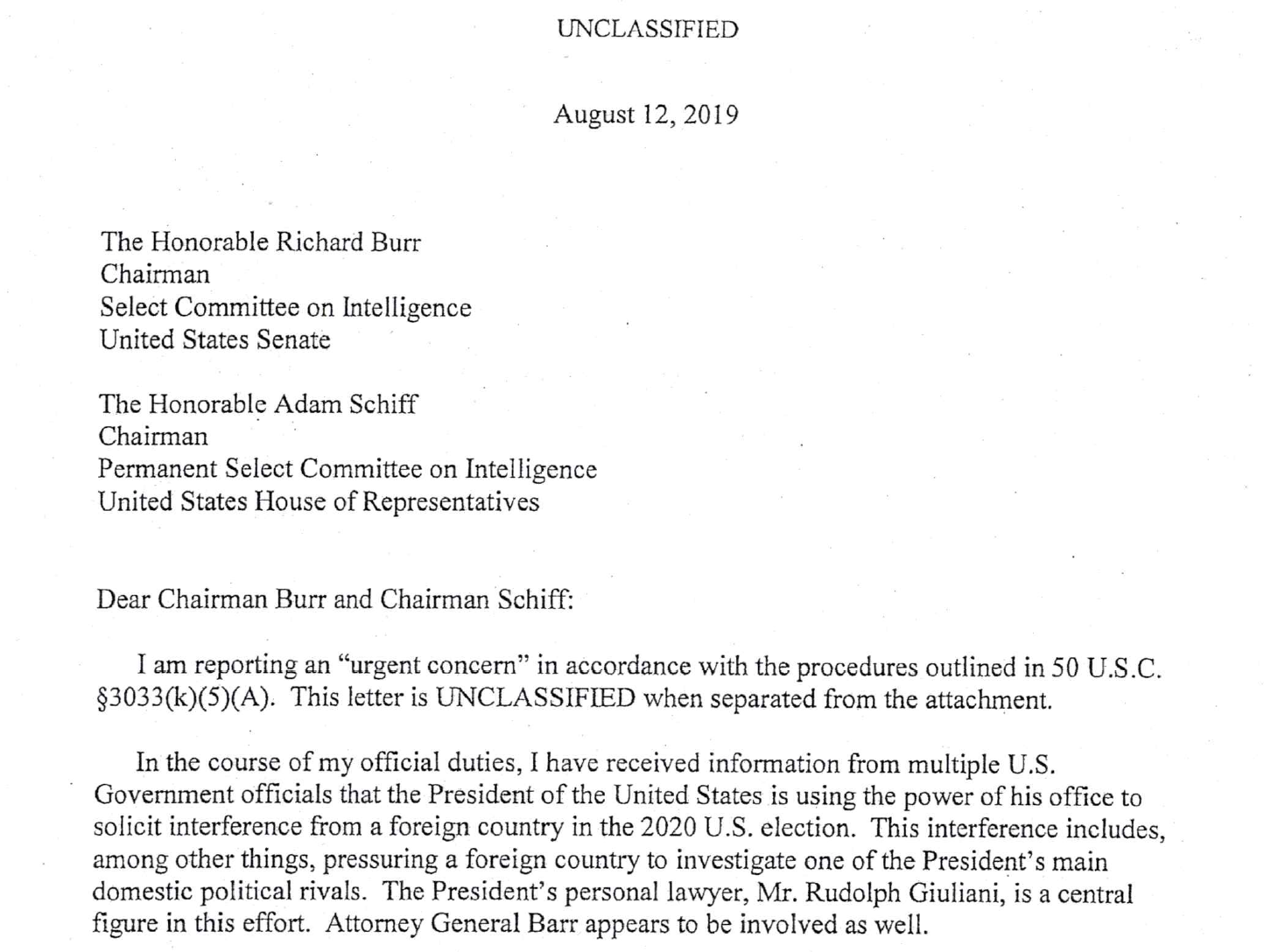
Witness: Joseph Maguire, Acting Director of National Intelligence
Joint Statement from Committee Chairs on Release of Ukraine Call Record; Washington, September 25, 2019
Today (September 25,2019), Rep. Adam Schiff, the Chairman of the House Permanent Select Committee on Intelligence, Rep. Jerrold Nadler, the Chairman of the House Judiciary Committee, Rep. Elijah E. Cummings, the Chairman of the Committee on Oversight and Reform, and Rep. Eliot L. Engel, the Chairman of the Committee on Foreign Affairs, issued the following statement:
“The transcript is an unambiguous, damning, and shocking abuse of the Office of the Presidency for personal political gain. This is a clear breach of trust placed in the President to faithfully execute the laws and to preserve, protect, and defend the Constitution.
“The record of the call released by the White House confirms our worst fears: that the President abused his office by directly and repeatedly asking a foreign country to investigate his political rival and open investigations meant to help the President politically. Not once, not twice, but more than half a dozen times during one telephone call. This was a shakedown. The President of the United States asked for a ‘favor’ after the Ukrainian President expressed his country’s need for weapons to defend against Russian aggression. The transcript also shows that the President promised follow-up by Attorney General William Barr or the President’s personal attorney Rudy Giuliani at least nine times.
“Let’s be clear: no quid pro quo is required to betray our country. Trump asked a foreign government to interfere in our elections—that is betrayal enough. The corruption exists whether or not Trump threatened — explicitly or implicitly — that a lack of cooperation could result in withholding military aid.
“Ukraine depends on the U.S. for economic, military, and diplomatic support — especially in its attempts to push back against Russian aggression — and is particularly vulnerable to pressure from any U.S. president. For a country so reliant on the United States, nothing more was needed.
“The call reportedly was preceded by a decision by Trump to withhold vital security assistance, and it was followed in quick succession by his personal lawyer, Rudy Giuliani, meeting with a top aide to the new Ukrainian president at Trump’s direction. According to reports, the Ukrainians eventually became aware that the aid was being withheld and expressed concern to U.S. officials.
“Congress needs the full and unredacted whistleblower complaint. We need to speak with the whistleblower. We need records of the communications. We need to speak with those knowledgeable about efforts by the President, the Attorney General, and the President’s personal attorney to secure political help from Ukraine, the decision to freeze security assistance, and the attempt to cover it up.
“We also need the records that our Committees requested from the State Department and the White House — by tomorrow’s deadline — or we will subpoena them.
“These requirements are especially urgent now that the Department of Justice apparently has chosen to stand down, whitewash this investigation, and block Congress from obtaining this information.
“Congress is now exercising its constitutional responsibility to investigate under the umbrella of impeachment, and we need cooperation immediately. Nothing less than full transparency will do when our national security is at risk.”
As the old fogey I suppose I must accept that I am at this stage of my life, I have often been very critical of the lifestyle and fashions of today. You know — things like brand new, (expensive!) jeans with ragged holes, multiple tattoos, face and body piercings, purple dreadlocks, everyone clutching a cell phone in one hand and a water bottle in the other every waking moment… What are they thinking? I ask myself. But then it occurs to me that considering some of the customs and styles of my youth, today’s generation might very well ask, what were we thinking?
Poodle skirt from the 1950s, Wikimedia Commons; A poodle skirt & matching collar in the permanent collection of The Children’s Museum of Indianapolis
One such example is the dead animal my mother draped around her shoulders — well, the sanitized, dressed skin of a dead animal, better known as a fur piece. A fur coat was bad enough, but this creature (formerly a fox) had a face, glass eyes, and a mouth that opened and clasped onto its tail, securing it around Mom’s neck. It was her pride and joy, a status symbol of the times, which in later years was replaced by a mink stole — a necessity in every fashionable matron’s wardrobe.
Completing the sartorial costume at all times were a hat (usually adorned with a small veil and feathers or artificial flowers, depending on the season) and gloves, preferably fine kid leather in fall and winter and white cotton in spring and summer. Fortunately, those accessories disappeared into oblivion long ago. I can’t remember when I last wore gloves or a hat (except for warmth or protection from the elements).
I also can’t remember the last time I wore frilly, voluminous petticoats that propped up impossibly full dresses. Yes, these may have been ridiculous — but I think far preferable to today’s skirts and dresses that are stretched so tightly across tummies and tushies that they produce a series of unsightly horizontal wrinkles that have somehow become an accepted fashion statement instead of an abomination to be banished by a steam iron. And it’s amazing how women manage to sit while their torsos are bound in those impossibly tight, short frocks. (“Frocks.” Now that’s a word that really dates me.)
Appropriations — The Senate is likely to consider H.R. 4378, a continuing resolution to fund the federal government through November 21.
Miscellaneous — This week, the House is scheduled to consider H.R. 3694, the Helping Families Fly Act, and H.R. 3246, the Traveling Parents Screening Consistency Act.
Rep. Joe Kennedy at Harvard Law School, Jon Chase/Harvard Staff Photographer
STEM — The House also is scheduled to consider H.R. 2528, the STEM Opportunities Act.
Mark-Ups:
Appropriations — On Tuesday, the Senate Appropriations Subcommittee on Commerce, Justice, Science, and Related Agencies will mark up the FY2020 Commerce, Justice, Science, and Related Agencies spending bill (as-yet-unnumbered).
On Thursday, the Senate Appropriations Committee will mark up several spending bills, including the FY2020 Commerce, Justice, Science, and Related Agencies (as-yet-unnumbered), and Legislative Branch (as-yet-unnumbered) bills.
International — On Wednesday, the Senate Foreign Relations Committee will mark up several bills, including a resolution to support the Global Fund to Fight AIDS, Tuberculosis, and Malaria (as-yet-unnumbered).
Small Business/Entrepreneurship —On Wednesday, the House Committee on Small Business will consider H.R. 4405, a bill to amend the Small Business Act to improve the women’s business center program.
H.R. 4399 — Rep. Bob Latta (R-OH)/Energy and Commerce (9/19/2019) — A bill to prohibit the approval of new abortion drugs, to prohibit investigational use exemptions for abortion drugs, and to impose additional regulatory requirements with respect to previously approved abortion drugs, and for other purposes.
H.R. 4442 — Rep. Sean Duffy (R-WI)/Judiciary (9/20/2019) — A bill to prohibit prenatal genetic testing and abortions on the basis of sexual orientation, and for other purposes.
Employment
H.R. 4452 — Rep. Raul Ruiz (D-CA)/Education and Labor; Oversight and Reform; House Administration (9/20/2019) — A bill to permit leave to care for an adult child, grandchild, or grandparent who has a serious health condition, and for other purposes.
Human Trafficking
H.R. 4388 — Rep. Alcee Hastings (D-FL)/Energy and Commerce (9/18/19) — A bill to provide for the implementation of curricula for training students, teachers, and school personnel to understand, recognize, prevent, and respond to signs of human trafficking and exploitation in children and youth, and for other purposes.
H.R. 4456 — Rep. Tim Walberg (R-MI)/Education and Labor (9/20/2019) — A bill to direct the secretary of Labor to train certain Department of Labor personnel how to effectively detect and assist law enforcement in preventing human trafficking during the course of their primary roles and responsibilities, and for other purposes.
International
S. Res. 318 — Sen. James Risch (R-ID)/Foreign Relations (9/18/19) — A resolution to support the Global Fund to fight AIDS, Tuberculosis, and Malaria, and the Sixth Replenishment.
Judiciary
S. 2512 — Sen. Cory Booker (D-NJ)/Judiciary (9/19/2019) — A bill to prohibit a court from awarding damages based on race, ethnicity, gender, religion, or actual or perceived sexual orientation, and for other purposes.
H.R. 4418 — Rep. Joe Kennedy, III (D-MA)/Judiciary (9/19/2019), II (D-MA)/Judiciary (9/19/2019) — A bill to prohibit a court from awarding damages based on race, ethnicity, gender, religion, or actual or perceived sexual orientation, and for other purposes.
Reproductive Health
S. Res. 317 — Sen. Elizabeth Warren (D-MA)/Health, Education, Labor, and Pensions (9/18/19) — A resolution recognizing the seriousness of polycystic ovary syndrome (PCOS) and expressing support for the designation of September 2019 as “PCOS Awareness Month.”
Small Business/Entrepreneurship
H.R. 4405 — Rep. Sharice Davids (D-KS)/Small Business (9/19/2019) — A bill to improve the women’s business center program, and for other purposes.
Tax Policy
S. 2490 — Sen. Martha McSally (R-AZ)/Finance (9/17/19) — A bill to make permanent certain changes made by Public Law 115-97 to the child tax credit.
This early American wholecloth quilt was made in the Colonial period. The blue resist fabric includes bold, fanciful botanical motifs. Collection of Bill Volckening; Wikipedia
For my family (and I suspect for many others), summer’s end seems to be fraught with ambivalent feelings about the seasonal changes. We say a lingering, regretful farewell to quiet days, but because we are a family of teachers, we also feel a surge of energy and excitement in anticipation of the new school term. We swelter in the dog days, but then a hint of cooler weather brings the first stirrings of anxiety over what winter will bring. We say sad farewells to visiting family members, but as soon as they are out the door, we begin looking forward to the holiday visits that are not too far away. It’s not exactly a sad time, this folding in of summer’s story, but any change is unsettling, and change is definitely in the air.
Over the last fifty years, there have been seven recessions. Each was different. In some, the drop in economic activity, as measured by the Gross Domestic Product (GDP), was small. For example, during the 1969 to 1970 recession, GDP shrank by only 0.2%, and from 2000 to 2002 it decreased by 0.4%. In others, the decrease was more severe: the prolonged mid-‘70s recession saw GDP drop 3.1% and in the last recession, our economy fell 4%.
Recessions are a natural part of the economic cycle. Presidents and Federal Reserve Chairs cannot eliminate them. They are a product of human behavior: economic growth leads to investor optimism, which pushes equity markets to appreciate faster than what corporate profits can sustain. When uncertainty emerges, there is a reduction in business investment and consumer spending. This cycle occurs on average every seven years.
Recessions impact workers, business owners, and investors in different ways. Employers may have to cut jobs. A company may find it no longer can meet its obligations and be forced to declare bankruptcy. For investors, less business activity leads to lower profits and lower stock valuations. It is important to appreciate that while stock market drops are usually more significant than the actual reduction in economic activity, the fall often comes after a period of excess returns. For example, in the five years leading up to the 1990 recession, the US stock market, as measured by the S&P 500 Index, more than doubled, then dropped by 20% from July of 1990 to October of that year. The drop reduced the 17% annualized return during the five preceding years to 12%. In the five years preceding the recession of 2001, the S&P 500 Index more than tripled and then dropped by half. The drop brought the five-year return from 26% down to 10%, a more reasonable long-term return but still above average.
Given the reality that there will be a recession in our future, there is a natural tendency to want to adjust our investment strategy in advance of a market drop. Ideally we would like to sell stocks and buy longer maturity bonds of higher quality borrowers just before a recession starts. And before others recognize the recovery, we’d like to reverse those trades – buying back into stock markets and reducing our interest rate sensitivity in our bonds. Unfortunately, it is impossible to know the timing of market fluctuations with greater certainty than the rest of the market. We may believe that the internet bubble leading into the 2001 recession was obvious, but many bought dot-com stocks based on dreams of doubling their money. We may feel the housing bubble which burst in 2007 was equally obvious, but many invested in securities on the assumption that geographically diverse real estate markets would never drop at the same time. To benefit from timing requires twice having a timely insight ahead of other investors.
A tactical shift out of equity markets too early or too late will lead to poor long-term investment returns. Analysts at JPMorgan calculated the average return of stocks during the twelve months leading up to a market peak was 23%.* Selling out of the stock market just a year before the market high misses out on significant appreciation in the index. After each peak, the average loss over the next twelve months was 14%. While capturing the +23% and avoiding the -14% would be great, selling within days of a market peak and buying back at the bottom is luck. A better strategy is to hold through the volatility, earning both the +23% and the -14% and ending up ahead by 6%.
The lesson of past economic and stock market cycles is that long-term investors are not hurt by recessions if they have an appropriately designed portfolio strategy and remain invested in accordance with that strategy.
Rather than guessing at the timing of the next recession, it is best to use the volatility of financial markets to your advantage:
Reduce your exposure to higher risk and return investments when they’ve appreciated by rebalancing back to your portfolio targets.
Have sufficient low-volatile assets to meet your spending needs while stock markets are down.
Maintaining a portfolio’s risk at an appropriate long-term average commensurate with your needs and goals will insulate your wealth from recessions and provide much greater peace of mind.
** based on the S&P 500 Index from 1945 through 2018
*Lex Zaharoff, CFA: Lex joined HTG in 2014. With over 30 years of experience advising wealthy families at four major private banks, Lex provides clients with a unique perspective on the art and the science of investing to achieve one’s financial goals. As Adjunct Professor of Finance at NYU’s Stern School of Business, Lex teaches the MBA course on wealth management. He has a BSE from Princeton University and an MBA from Harvard Business School.
 Al Cornelius in the White House Map Room, ca. 1943. (FDR Library, National Archives)
 President Franklin D. Roosevelt meets with Soviet Minister of Foreign Affairs Vyacheslav Molotov in the White House study, June 1, 1942. The President’s National Geographic map case can be seen in the background. (FDR Library, National Archives)