Author: SeniorWomenWeb

  • Ask a CDC Scientist: Dr. Terrence Tumpey and the Reconstruction of the 1918 Pandemic Virus Español

    An interview with Dr. Terrence Tumpey by Douglas Jordan

    In 2005, microbiologist Dr. Terrence Tumpey was approved by then-CDC director Dr. Julie Gerberding to use reverse genetics to reconstruct the 1918 influenza virus, which had been lost to history following the devastating pandemic of 1918. The decision to recreate the 1918 virus was made very carefully by senior government officials and then carried out under strict controls.

    Dr. Tumpey was chosen to be the only person authorized to work on the 1918 virus, and then only under biosecurity level 3 enhanced (BSL-3E) precautions. For example, to reduce risk to colleagues, Dr. Tumpey worked alone after normal agency hours. His health was continually monitored and he took influenza antiviral drugs preventively as a precaution in case he was exposed to infectious virus.Dr. Terence Tumpey

    This remarkable and historic scientific and public health accomplishment was the culmination of years of collaborative work. Using the decoded gene sequence of the 1918 virus obtained by researchers at the Armed Forces Institute of Pathology and plasmids provided by scientists at Mount Sinai, Dr. Tumpey was the first person to physically reconstruct and then study the live and complete 1918 virus in a laboratory setting. Today, Dr. Tumpey is the branch chief of the Influenza Division’s Immunology and Pathogenesis Branch (IPB) at CDC. One hundred years after the 1918 pandemic, I sat down with Dr. Tumpey to talk about his work on the 1918 virus and its significance.

    This image shows the order of events leading up to the reconstruction of the 1918 virus by Dr. Terrence Tumpey within CDC’s biosecurity level 3 enhanced laboratory.

    This image shows the order of events leading up to the reconstruction of the 1918 virus by Dr. Terrence Tumpey within CDC’s biosecurity level 3 enhanced laboratory.

    Why do you think it’s important to look back on the 1918 pandemic?

    Dr. Tumpey: The 1918 influenza pandemic was exceptional as it killed at least 50 million people worldwide, making it the worst influenza pandemic in recent recorded history. Clinicians and scientists of the time were grappling with many unknowns, and what added to the confusion was the erroneous belief that the disease was caused by a bacterium  ̶  not a virus  ̶  called Pfeiffer’s bacillus (a gram-negative bacterium now recognized as Haemophilus influenzae). It wasn’t for another 30 years that people would understand that the 1918 pandemic virus that infected 30% of the world’s population was an influenza A (H1N1) virus. Because of its impact, the 1918 pandemic is sometimes referred to as the “Mother of all Pandemics,” and it continues to inspire research on its origins and the relationship between the 1918 virus and other influenza viruses.

    How or why do you think the 1918 pandemic is still relevant today?

    Dr. Tumpey: Understanding the unique features of the 1918 pandemic is especially relevant, as nearly a century later, a descendent of this virus emerged to cause another pandemic. Reports of a novel swine-origin H1N1 virus (2009 H1N1) causing influenza-like illness, pneumonia, and death in people were first announced in April 2009. Laboratory-confirmed cases of human infection rose rapidly as the virus spread. A pandemic was declared on June 11, 2009, at which time 74 countries had reported more than 28,000 human infections with 144 deaths. That virus has continued to circulate as a human seasonal influenza virus since the 2009 pandemic.

    How did you become interested in flu as a career path?

    Dr. Tumpey: I became very interested in influenza during my graduate studies at the University of South Alabama Medical School. The study of influenza was part of my graduate coursework, and I was always shocked by the exceptionally high mortality rate of the 1918 influenza pandemic. Moreover, in lecturing about the ability of some influenza viruses to spread efficiently between people, one professor gave the example of three people sitting in a room; one has HIV, one has Ebola, and the other is infected with a human influenza virus.  If you spend time with those three people in the room (with no contact), which virus will make you sick? That example also got me interested in influenza and influenza transmission. I applied for an American Society of Microbiology (ASM) postdoctoral fellowship with Dr. Jacqueline Katz and received a two-year fellowship to work at CDC’s Influenza Branch and never looked back.

    What is the most rewarding part of your work?

    Dr. Tumpey: In general, I feel very fortunate to have had the opportunity to study the 1918 virus and other influenza viruses. I particularly enjoy the process of scientific discovery and mentoring trainees in the laboratory. The reconstruction of the 1918 virus also allowed us to study its individual genes and determine why the H1N1 pandemic virus was so lethal. The 1918 virus work revealed a prominent role for the polymerase proteins in enhanced virulence, which resulted in scientists generating new ideas for improving the development of novel antiviral drugs directed against these viral polymerases. As a result, it has been rewarding to see the development of and clinical trials associated with these novel antivirals. These new medications represent an important development as they can potentially expand our available tools against influenza disease.

    What are some of the highlights of your research and career?

    Dr. Tumpey: I am particularly proud of the characterization of the reconstructed 1918 pandemic virus and subsequent work studying that virus which killed so many. The work, as reported in the October 2005 issue of Science (vol. 310, p 77.)External, was done using a technique called reverse genetics to re-create a living 1918 virus.

    How did recreating the 1918 virus make you feel?

    I was very excited, and I was very anxious in 2005. When you’re getting ready to remake a virus that is estimated to have killed at least 50 million people worldwide, I was passionate about the great task ahead. I was very fortunate to have the support of CDC and NIH. Before the experiments began, the CDC Office of the Director provided oversight and guidance for this important project.  In particular, they carefully evaluated the specific studies to be conducted and concluded that this research could safely and securely be done under BSL-3-enhanced containment. It was decided that I would be the only scientist to rescue the 1918 virus at CDC and I was required to take additional safety precautions that included taking influenza antiviral prophylaxis. In addition, procedures were in place, such that if I experienced influenza-like illness I would quarantine myself at home and avoid contact with the outside world.

    Scientifically, everything was in place to be able to remake 1918 influenza virus using a technique called reverse genetics. I was thrilled to be the first person to fully rescue the 1918 virus in the summer of 2005. During multiple weeks in July 2005, my collaborators repeatedly asked me, “Do you have it?”  “Has the 1918 virus appeared in culture yet?”  When the 1918 virus finally appeared in my BSL-3E cell culture and I knew I had the historic virus in hand, I simply sent an email to my collaborators that read, “That’s one small step for man, one giant leap for mankind.”  They knew from the playful email that the 1918 virus was rescued. Overall, the virus rescue was very rewarding and it allowed the 1918 pandemic research to move forward and provide the scientific field with innovative discoveries.  In particular, the identification of novel influenza viral factors and new ideas for improving the development of antiviral drugs against all influenza viruses has been gratifying and exciting to watch.

  • Help From a Familiar (and revamped) Government Resource: Consumer Financial Protection Bureau Resources For Consumers During Covid-19 Pandemic

     volunteers with masks 1918 flu in Boston, Camp Devens

    Volunteers at the Boston Red Cross during the epidemic of 1918, assembling gauze masks; CDC Collection. Governor McCall asks for volunteers with medical training to help. 


    Editor’s Note: How the Bureau was founded; An explanation from President Barack Obama* and a statement from the head of the CFPB, Director Kathleen L. Kraninger

    Link to C-Spanhttps://www.c-span.org/video/?470203-1/consumer-financial-protection-bureau-oversight#Financial protection bureau new seal

    The Consumer Financial Protection Bureau (Bureau) has recently released several resources to help consumers take steps to protect their finances during the COVID-19 pandemic, including how to avoid financial scams and submit complaints to the Bureau.

    “During this difficult time, the Bureau is doing everything it can to facilitate the work of responsible financial companies supporting their customers and borrowers.  We want consumers facing hardships to be are aware of this posture and encourage them to discuss their specific circumstances with their lenders.  As a backstop, the CFPB stands ready to help consumers resolve issues with their financial services providers through our consumer complaint system,” said Director Kathleen L. Kraninger.

    Above, Consumer Financial Protection Bureau’s new seal

    “We also want consumers to know the various steps they can take to help themselves or a loved one, both in the short and long term.  Our resources address situations ranging from consumers having difficulty paying their bills or meeting other financial obligations to consumers experiencing a loss of income to avoiding scams,” concluded Kraninger.

    https://www.consumerfinance.gov/

    Following are links to the information available for consumers:

    Protect yourself financially from the impact of the coronavirus

    The CFPB continues to help consumers make informed financial decisions with up-to-date information and resources

    Protecting your credit during the coronavirus pandemic

    Coronavirus and dealing with debt: Tips to help ease the impact

    Tips for financial caregivers during the coronavirus pandemic


    The Consumer Financial Protection Bureau is a 21st century agency that helps consumer finance markets work by regularly identifying and addressing outdated, unnecessary, or unduly burdensome regulations, by making rules more effective, by consistently enforcing federal consumer financial law, and by empowering consumers to take more control over their economic lives.  For more information, visit consumerfinance.gov.

    *From President Barack Obama in 2011: *ELIZABETH’S CONSUMER FINANCIAL PROTECTION BUREAU IS STANDING UP FOR AMERICAN CONSUMERS AND HOLDING WALL STREET ACCOUNTABLE

    In 2008, greedy financial institutions crashed our economy and working families all across this country paid the price. Millions of Americans lost their jobs, millions lost their homes, and millions lost their savings. In the aftermath, President Obama signed into law the toughest Wall Street reforms and strongest consumer protections in a generation. Those reforms included a new agency — the Consumer Financial Protection Bureau — dedicated to stopping scams and holding financial firms accountable when they cheat people.

  • Preventing the Spread of Coronavirus Disease 2019 in Homes and Residential Communities

    Recommended precautions for household members, intimate partners, and caregivers in a nonhealthcare setting of

    A patient with symptomatic laboratory-confirmed COVID-19

    OR

    A patient under investigation

    Household members, intimate partners, and caregivers in a nonhealthcare setting may have close contact with a person with symptomatic, laboratory-confirmed COVID-19 or a person under investigation. Close contacts should monitor their health; they should call their healthcare provider right away if they develop symptoms suggestive of COVID-19 (e.g., fever, cough, shortness of breath) (see Interim US Guidance for Risk Assessment and Public Health Management of Persons with Potential Coronavirus Disease 2019 (COVID-19) Exposure in Travel-associated or Community Settings.) https://www.cdc.gov/coronavirus/2019-ncov/php/risk-assessment.html

    Close contacts should also follow these recommendations:

    • Make sure that you understand and can help the patient follow their healthcare provider’s instructions for medication(s) and care. You should help the patient with basic needs in the home and provide support for getting groceries, prescriptions, and other personal needs.
    • Monitor the patient’s symptoms. If the patient is getting sicker, call his or her healthcare provider and tell them that the patient has laboratory-confirmed COVID-19. This will help the healthcare provider’s office take steps to keep other people in the office or waiting room from getting infected. Ask the healthcare provider to call the local or state health department for additional guidance. If the patient has a medical emergency and you need to call 911, notify the dispatch personnel that the patient has, or is being evaluated for COVID-19.
    • Household members should stay in another room or be separated from the patient as much as possible. Household members should use a separate bedroom and bathroom, if available.
    • Prohibit visitors who do not have an essential need to be in the home.
    • Household members should care for any pets in the home. Do not handle pets or other animals while sick.  For more information, see COVID-19 and Animals.
    • Make sure that shared spaces in the home have good air flow, such as by an air conditioner or an opened window, weather permitting.
    • Perform hand hygiene frequently. Wash your hands often with soap and water for at least 20 seconds or use an alcohol-based hand sanitizer that contains 60 to 95% alcohol, covering all surfaces of your hands and rubbing them together until they feel dry. Soap and water should be used preferentially if hands are visibly dirty.
    • Avoid touching your eyes, nose, and mouth with unwashed hands.
    • The patient should wear a facemask when you are around other people. If the patient is not able to wear a facemask (for example, because it causes trouble breathing), you, as the caregiver, should wear a mask when you are in the same room as the patient.
    • Wear a disposable facemask and gloves when you touch or have contact with the patient’s blood, stool, or body fluids, such as saliva, sputum, nasal mucus, vomit, urine.
      • Throw out disposable facemasks and gloves after using them. Do not reuse.
      • When removing personal protective equipment, first remove and dispose of gloves. Then, immediately clean your hands with soap and water or alcohol-based hand sanitizer. Next, remove and dispose of facemask, and immediately clean your hands again with soap and water or alcohol-based hand sanitizer.
    • Avoid sharing household items with the patient. You should not share dishes, drinking glasses, cups, eating utensils, towels, bedding, or other items. After the patient uses these items, you should wash them thoroughly (see below “Wash laundry thoroughly”).
    • Clean all “high-touch” surfaces, such as counters, tabletops, doorknobs, bathroom fixtures, toilets, phones, keyboards, tablets, and bedside tables, every day. Also, clean any surfaces that may have blood, stool, or body fluids on them.
      • Use a household cleaning spray or wipe, according to the label instructions. Labels contain instructions for safe and effective use of the cleaning product including precautions you should take when applying the product, such as wearing gloves and making sure you have good ventilation during use of the product.
    • Wash laundry thoroughly.
      • Immediately remove and wash clothes or bedding that have blood, stool, or body fluids on them.
      • Wear disposable gloves while handling soiled items and keep soiled items away from your body. Clean your hands (with soap and water or an alcohol-based hand sanitizer) immediately after removing your gloves.
      • Read and follow directions on labels of laundry or clothing items and detergent. In general, using a normal laundry detergent according to washing machine instructions and dry thoroughly using the warmest temperatures recommended on the clothing label.
    • Place all used disposable gloves, facemasks, and other contaminated items in a lined container before disposing of them with other household waste. Clean your hands (with soap and water or an alcohol-based hand sanitizer) immediately after handling these items. Soap and water should be used preferentially if hands are visibly dirty.
    • Discuss any additional questions with your state or local health department or healthcare provider. Check available hours when contacting your local health department.

    Footnotes

    1Home healthcare personnel should refer to Interim Infection Prevention and Control Recommendations for Patients with Known or Patients Under Investigation for Coronavirus Disease 2019 (COVID-19) in a Healthcare Setting.

    2Close contact is defined as—

    a) being within approximately 6 feet (2 meters) of a COVID-19 case for a prolonged period of time; close contact can occur while caring for, living with, visiting, or sharing a health care waiting area or room with a COVID-19 case

    – or –

    b) having direct contact with infectious secretions of a COVID-19 case (e.g., being coughed on).

     
  • And Now For Something Completely Different: Daddy Long-Legs — A Weird and Wonderful Railway

    Editor’s Note: In honor of the late Josef Lesser, the Co-author of  Hollywood’s Trains and Trolleys

    Photographic Archives Volunteer Nick sheds some light on an unusual discovery at the National Railway Museum’s archives.

    One of the most unusual photographic collections in the National Railway Museum’s archives which I’ve come across as a volunteer cataloguer is one by Ellis Kelsey, an amateur photographer who lived in Eastbourne, Sussex, in the late 19th and early 20th centuries. His work was regularly exhibited at the Royal Photographic Society (RPS) exhibitions in London between 1899 and 1914.


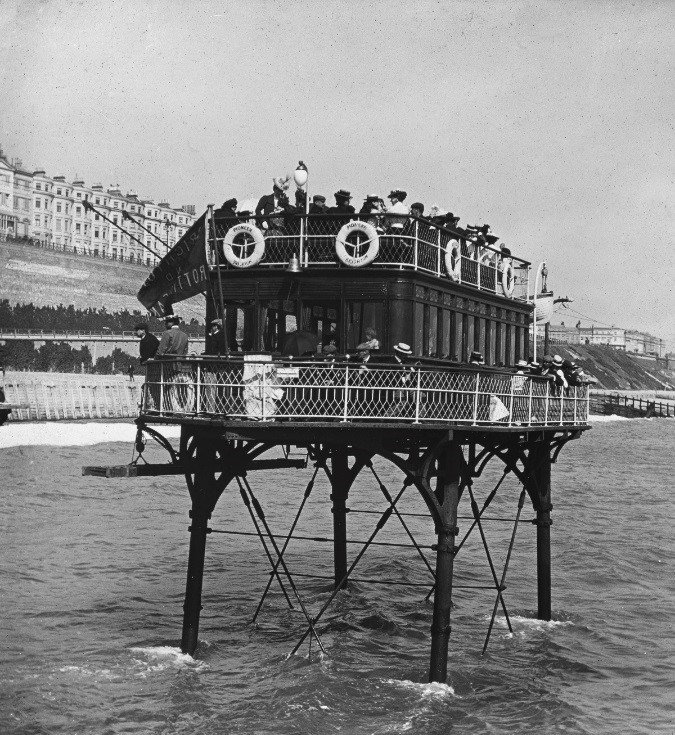
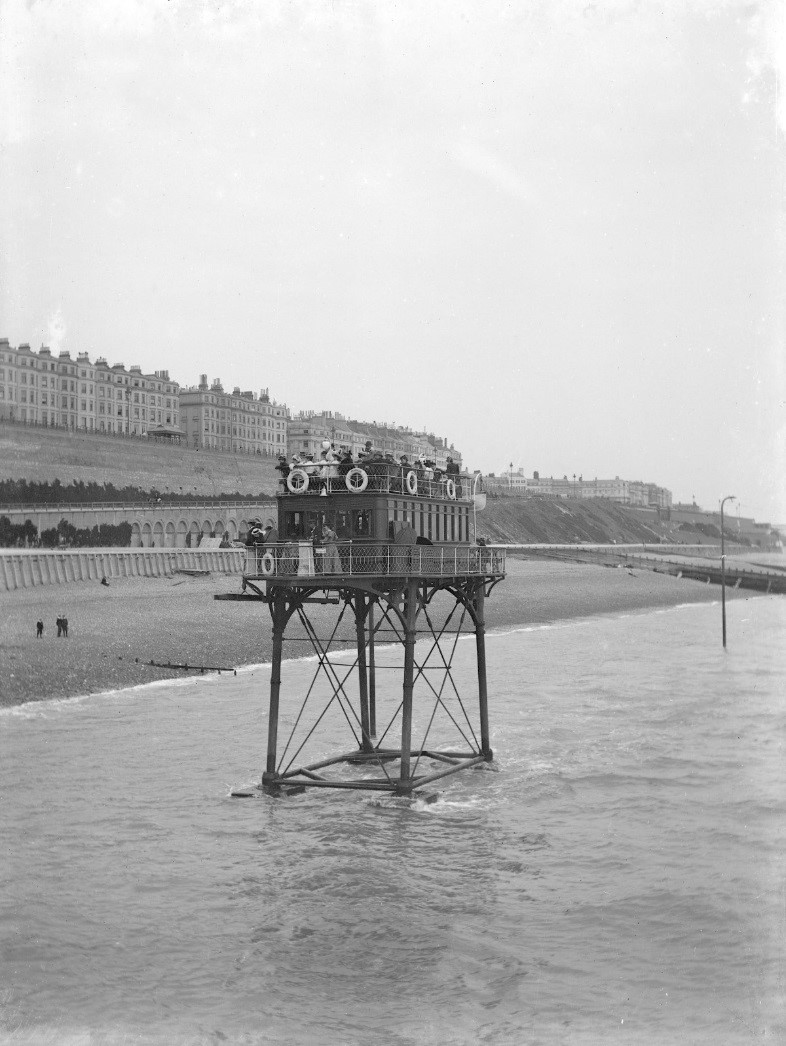
    ‘Pioneer’ car approaches Palace Pier, with Marine Drive in the background. The uniformed captain is at the controls, and the lifeboat can be seen suspended at the rear of the carriage (Ellis Kelsey collection)

    A collection of 29 of his photographs was donated to the museum, some of railway-related subjects and others recording aspects of Sussex life.

    The series includes six images of a unique electric seaside railway by Magnus Volk, the electrical engineer who designed and built Volk’s Electric Railway which opened on the seafront at Brighton in 1883 and is still in operation to this day. The Electric Railway ran eastwards as far as Paston Place, but the terrain made it impracticable to extend it to Rottingdean, so Volk decided to construct the Brighton and Rottingdean Seashore Electric Railway which would run on rails under the sea close to the shoreline.

    A poster for the seashore electric railway
    Volk’s Brighton & Rottingdean Seashore Electric Railway poster (SSPL)
    The 'Pioneer' car shortly after departing from Palace Pier at high tide

     
    ‘Pioneer’ car shortly after departing from Palace Pier at high tide. The two trolley poles drawing electricity from the supply cable are behind the flag (Ellis Kelsey collection)

    Construction started in 1894 and the railway was opened in November 1896. Passengers were carried in a large tramcar-like carriage on a deck mounted on long stilts. It was named ‘Pioneer’ but popularly known as ‘daddy long-legs’. It was equipped with a lifeboat and lifebelts, and had to be operated by a qualified sea captain.

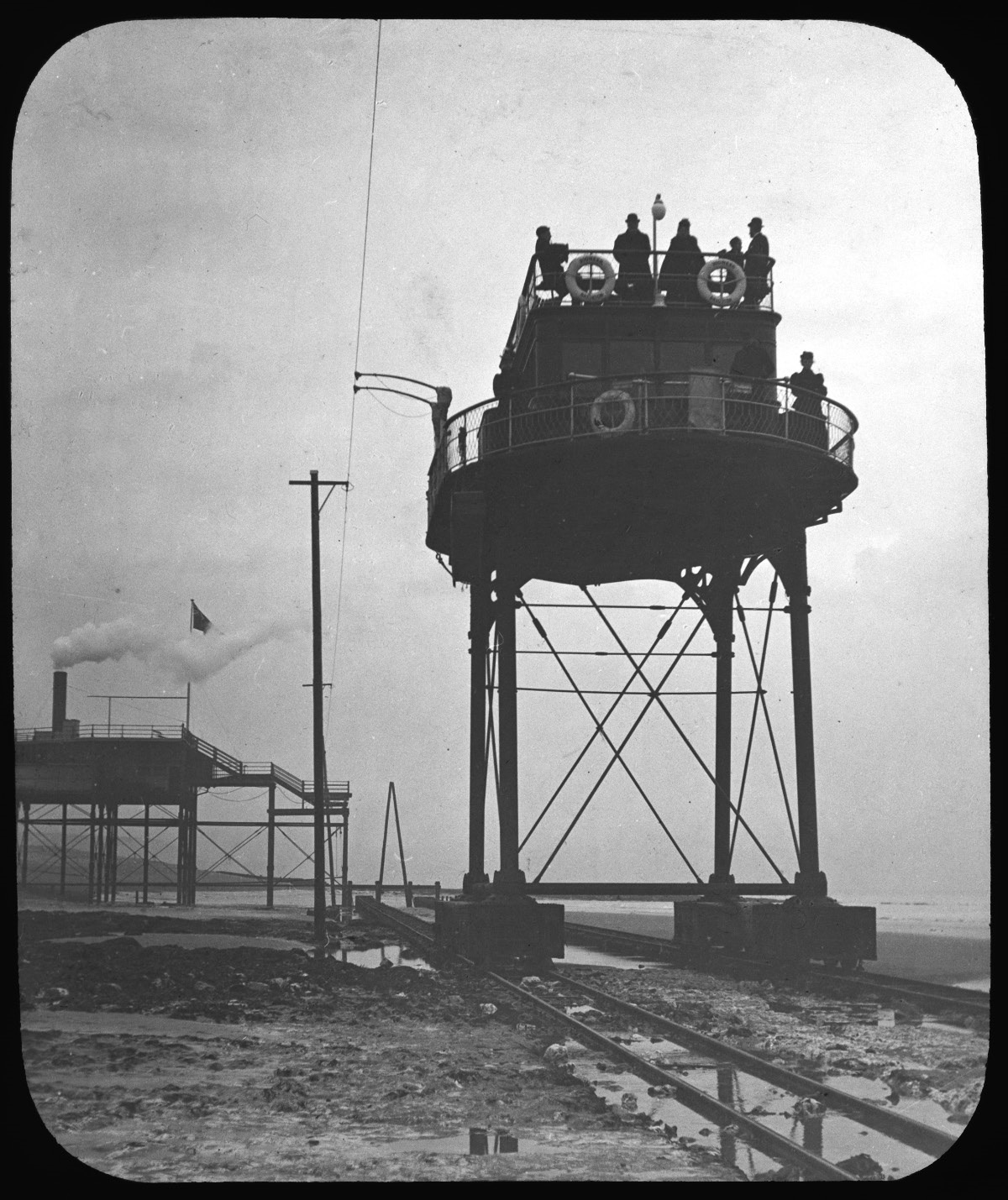
    A view of the 'Pioneer' car, taken from ground level


    ‘Pioneer’ car, taken from ground level at low tide at Rottingdean pier in July 1898 or July 1899. The electricity supply pole and cable are clearly visible, with the two trolley poles connecting the cable and the car. (Ellis Kelsey collection)


    A view of the 'Pioneer' car in July 1898 shortly after departing from Palace Pier at low tide


     ‘Pioneer’ car in July 1898 shortly after departing from Palace Pier at low tide. The lifeboat is suspended at the front. The bogies at the bottom of the four legs are clearly visible (Ellis Kelsey collection)

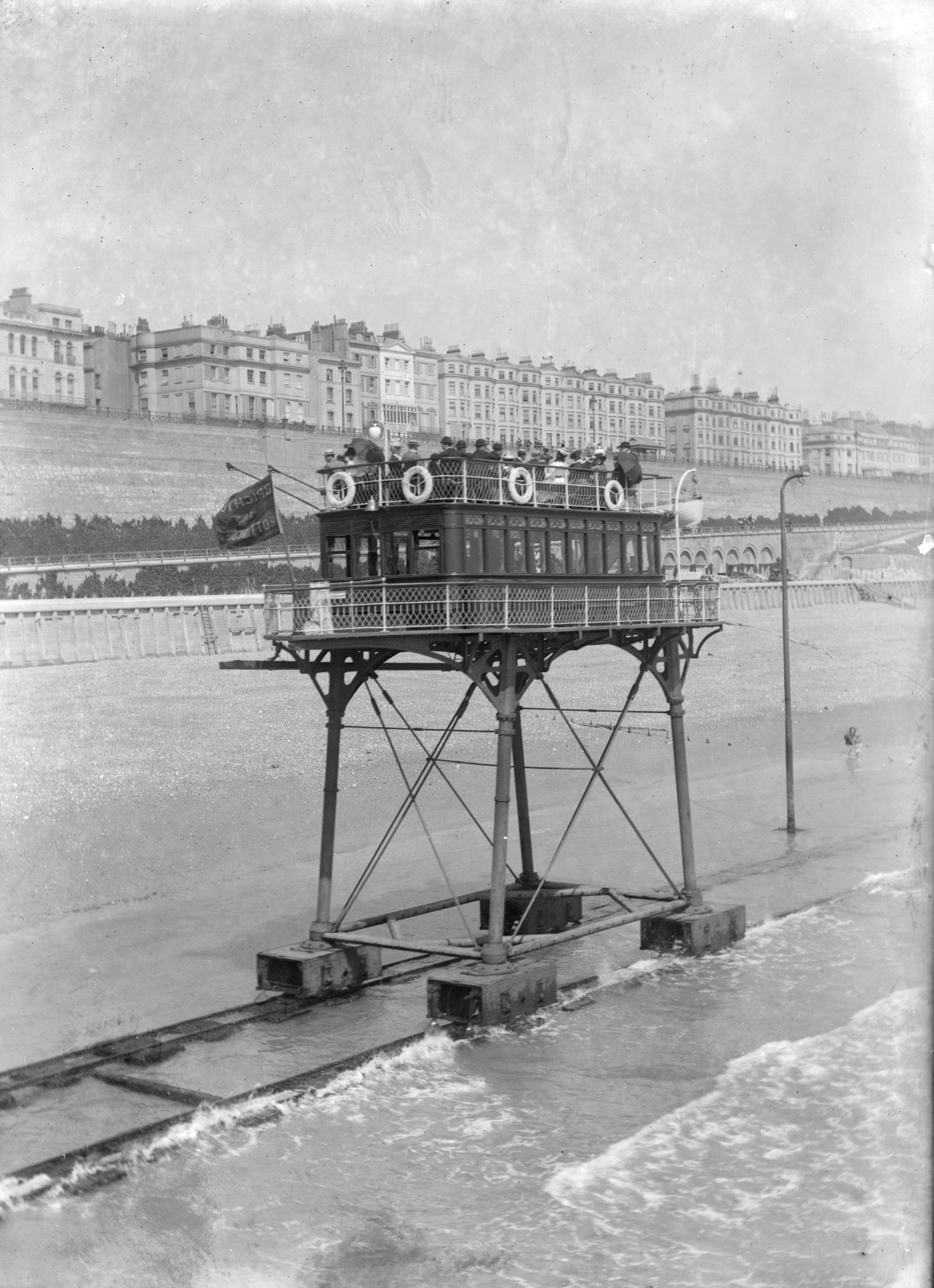
    Power was provided by an electricity cable mounted on tall poles along the shoreline, connected by trolley poles to motors in the bogies at the foot of the stilts.

    The 'Pioneer' car approaching the photographer at low tide
    The ‘Pioneer’ car approaching the photographer at low tide, apparently on a dull day. The uniformed captain is at the controls. The line of tall poles carrying the electricity supply cable extend along the coast (Ellis Kelsey collection)The view from the upper deck
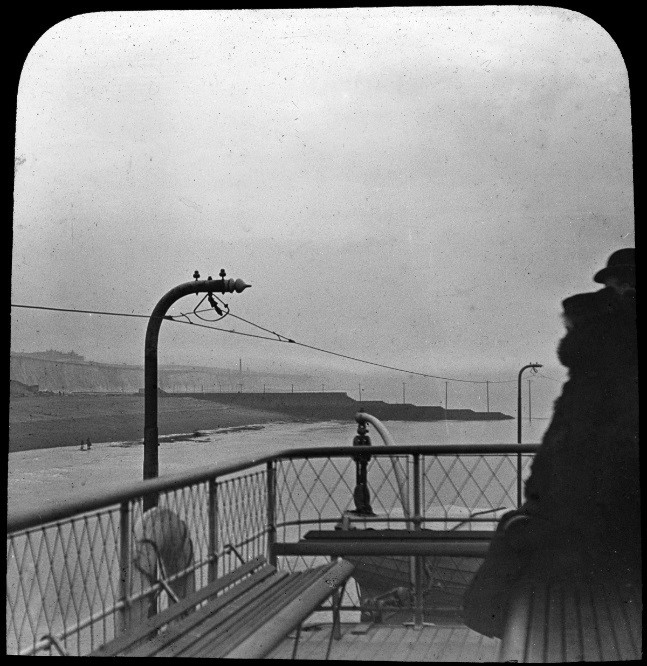
    An image taken on the upper deck of the ‘Pioneer’ car, looking east towards Rottingdean. Two passengers, warmly wrapped up, are seated on a bench. The line of poles carrying the electricity supply cable curves round a groyne into the distance (Ellis Kelsey collection)

    Only a few days after it opened, the railway was put out of action by a severe storm. It reopened in July 1897 and ran without major incident until damage to the trackbed meant it couldn’t operate during the summer of 1900, causing a serious loss of business to Magnus Volk. Then in 1901, Brighton Corporation exercised its right to remove some of the track to enable sea defences to be built, and the project came to an end.

    Read more about the ‘Daddy long-legs’, with more photographs, on the Volk’s Electric Railway Association website.

  • Two Berkeley Professors: Targeted Intervention on COVID-19 Must Support Businesses, Workers

    Gabriel Zucman, Assistant professor of economics | March 18, 2020; Co-authored with Emmanuel Saez, professor of economics, University of Berkeley

    Store closure sign (UC Berkeley photo by Yasmin Anwar)Coronavirus threatens the world’s economic life, and current proposals from governments around the globe are failing to match the scale of the crisis. Today, the chancellor, Rishi Sunak, [UK Chancellor of the Exchequer] announced £330 billion of loans and that some companies would not have to pay business rates for the next 12 months.

    While loans help businesses in the short term, they do not compensate for losses and only allow companies to smooth costs over a longer period.

    In the United States, the Trump administration has suggested direct cash payments to individuals. Such measures (such as $1,000 given to each U.S. household) help to alleviate temporary economic hardship but are poorly targeted: It’s too little for those who lose their jobs, and it is not needed by those who don’t. During social distancing, the goal should not be to increase demand, since people can no longer spend on many goods and services.Prof Emmanuel Saez

    Unemployment insurance, or benefits, and paid sick leave policies come closest to helping laid off workers and those unable to work, but they do not prevent redundancies and do not help businesses. Tax relief, such as the business rate holiday offered by the UK to sectors most affected by the recession, such as hospitality and retail, will help. But there’s no guarantee this relief will be enough to prevent bankruptcies and job losses.

    Prof. Gabriel Zucman, right

    There is, however, a radical and targeted solution to the specific causes of the coronavirus global recession: governments should step in as payers of last resort, which means they would cover wage and maintenance costs for businesses facing shutdown. In the context of this pandemic, we need a new form of social insurance, one that directly helps both workers and businesses.

    So, how does this work in practice? The drop in demand caused by social distancing measures, and a following decrease in output and therefore GDP, is expected to be short, probably for a few months. Governments cannot undo this direct output loss, but they can prevent a very sharp but short recession becoming a long-lasting depression.

    Absent government actions, and many businesses and workers do not have enough liquidity to weather dramatic shortfalls in demand causing mass redundancies. Keeping businesses alive through this crisis and making sure workers continue to receive their wages is essential.

    The most direct way to provide this insurance is to have governments act as payers of last resort, so that hibernating businesses can keep paying their workers (known in economic terms as idle workers) instead of laying them off, and can keep paying their necessary bills such as rent, utilities and interest instead of going bankrupt.

    In practice, in the US, the unemployment insurance system is already up and running, making it possible to compute and deliver compensation to idle workers. Workers should immediately start receiving special unemployment insurance benefits so they are no longer a cost to their employers — even though they stay formally employed — and no re-hiring process is needed once they can come back to work.

  • Deaconess Health System Face Mask Sewing Instructions: How to Make a Face Mask and Boston Globe Opinion Piece on Covering Your Face

    Deaconess Face Mask Project from their Facebook Post:doctor wearing face mask during surgery

    “Prior to modern disposable masks, washable fabric masks were standard use for hospitals,” said Dawn Rogers, MSN, RN, FNP-C, Patient Safety & Infection Prevention Office at Deaconess. “We will be able to sterilize these masks and use them repeatedly as needed. While it’s less than ideal, we want to do our best to protect our staff and patients during this pandemic.”

    Right: A medical professional wearing a surgical mask during an operation … Artur Bergman – CPMC Surgery

    DEACONESS.COM, www.deaconess.com

    **https://www.deaconess.com/SpecialPages/How-to-make-a-Face-Mask/Documents-Mask/Mask-Information.pdf

    The Instructions: How to make a Face Mask

    You will need a cotton fabric, a pretty print is best

    Cotton flannel for the backing

    Rope elastic: beading cord elastic will work (You may also use 1/8″ flat elastic)

    Cut the elastic 7” long and tie a knot at each end (DO NOT knot the ends of the flat)


    You can make 2 sizes: Adult and Child; Cut 9×6 (Adult) or 7×5.5 (Child).

    1. Put right sides of cotton


            2. Starting at the center of bottom edge sew to the first corner, stop. Sew the elastic with the knot out into the corner. A few stitches forward and back will hold this.


    1. Sew the next corner, stop, and bring the other end of that same elastic to the corner and sew a few stitches forward and back.


    1. Now sew across that top of the mask to the next corner. Again put an elastic with the knot out.


    1. Sew to next corner and sew in the other end of the same elastic.


    1. Sew across the bottom leaving about 1.5” to 2” open. Stop, cut the thread. Tum inside out.


    1. Pin 3 tucks on each side of the mask. Make sure the tucks arc the same direction.


    1. Sew around the edge of the mask twice.


    It is so easy 10 make this.

    Be sure any fabric design is placed horizontally.

  • What? You Have Nothing to Do? Explore Some Museums Collections Online

    Met image

    Editor’s Note: We’ve been going to Museums for all of our lives … from the East Coast to the West Coast. Some museums are very open to the public (you don’t have to be a member) to explore their collections and exhibits online. 

    Let us know if you’d like to recommend some museums and galleries whose websites you’ve visited by sending an email to: tammgray@gmail.com; we can add them to our list.

    Joséphine-Éléonore-Marie-Pauline de Galard de Brassac de Béarn (1825–1860), Princesse de Broglie, Jean Auguste Dominique Ingres (French, Montauban 1780–1867 Paris), 1851–53,Robert Lehman Collection, 1975, Metropolitan Museum of Art; from Heilbrunn Timeline of Art History

    Jean-Auguste-Dominique Ingres, the neo-classical French artist par excellence, painted this masterpiece toward the end of his life when his reputation as a portraitist to prominent citizens and Orléanist aristocrats had been long established. Pauline de Broglie sat for the artist’s final commission. Ingres captures the shy reserve of his subject while illuminating through seamless brushwork the material quality of her many fine attributes: her rich blue satin and lace ball gown, the gold embroidered shawl, and silk damask chair, together with finely tooled jewels of pearl, enamel, and gold. The portrait was commissioned by the sitter’s husband, Albert de Broglie, a few years after their ill-fated marriage. Pauline was stricken with tuberculosis soon after completion of the exquisite portrait, leaving five sons and a grieving husband. Through Albert’s lifetime, it was draped in fabric on the walls of the family residence. The portrait remained in the de Broglie family until shortly before Robert Lehman acquired it. 

    The American Museum of Natural History, New York City

    Although onsite programs and access have been suspended, the Museum is continuing to provide online programs and online access, including to:

    Please continue to refer to the Centers for Disease Control and Prevention (CDC) and the New York Department of Health and Mental Hygiene (NYC Health) for the latest information and safety guidelines. The Museum is following the guidance of New York City on closures and will be keeping visitors updated as additional guidance is issued.

  • From the National Institutes of Health (NIH): New Coronavirus Stable for Hours on Surfaces Including Copper, Cardboard, Plastics and Stainless Steel

    Tuesday, March 17, 2020

    Novel Coronavirus SARS-CoV-2This scanning electron microscope image shows SARS-CoV-2 (yellow) — also known as 2019-nCoV, the virus that causes COVID-19 —isolated from a patient in the US, emerging from the surface of cells (blue/pink) cultured in the lab. NIAID-RML

    What 

    The virus in aerosols and on surfaces, according to a new study from National Institutes of Health, CDC, UCLA and Princeton University scientists in The New England Journal of Medicine. The scientists found that severe acute respiratory syndrome coronavirus 2 (SARS-CoV-2) was detectable in aerosols for up to three hours, up to four hours on copper, up to 24 hours on cardboard and up to two to three days on plastic and stainless steel. The results provide key information about the stability of SARS-CoV-2, which causes COVID-19 disease, and suggests that people may acquire the virus through the air and after touching contaminated objects. The study information was widely shared during the past two weeks after the researchers placed the contents on a preprint server to quickly share their data with colleagues.

    The NIH scientists, from the National Institute of Allergy and Infectious Diseases’ Montana facility at Rocky Mountain Laboratories, compared how the environment affects SARS-CoV-2 and SARS-CoV-1, which causes SARS. SARS-CoV-1, like its successor now circulating across the globe, emerged from China and infected more than 8,000 people in 2002 and 2003. SARS-CoV-1 was eradicated by intensive contact tracing and case isolation measures and no cases have been detected since 2004. SARS-CoV-1 is the human coronavirus most closely related to SARS-CoV-2. In the stability study the two viruses behaved similarly, which unfortunately fails to explain why COVID-19 has become a much larger outbreak.

    The NIH study attempted to mimic virus being deposited from an infected person onto everyday surfaces in a household or hospital setting, such as through coughing or touching objects. The scientists then investigated how long the virus remained infectious on these surfaces.

    The scientists highlighted additional observations from their study:

    • If the viability of the two coronaviruses is similar, why is SARS-CoV-2 resulting in more cases? Emerging evidence suggests that people infected with SARS-CoV-2 might be spreading virus without recognizing, or prior to recognizing, symptoms. This would make disease control measures that were effective against SARS-CoV-1 less effective against its successor.
    • In contrast to SARS-CoV-1, most secondary cases of virus transmission of SARS-CoV-2 appear to be occurring in community settings rather than healthcare settings.  However, healthcare settings are also vulnerable to the introduction and spread of SARS-CoV-2, and the stability of SARS-CoV-2 in aerosols and on surfaces likely contributes to transmission of the virus in healthcare settings.

    The findings affirm the guidance from public health professionals to use precautions similar to those for influenza and other respiratory viruses to prevent the spread of SARS-CoV-2:

    • Avoid close contact with people who are sick.
    • Avoid touching your eyes, nose, and mouth.
    • Stay home when you are sick.
    • Cover your cough or sneeze with a tissue, then throw the tissue in the trash.
    • Clean and disinfect frequently touched objects and surfaces using a regular household cleaning spray or wipe.

    Article

    N van Doremalen, et al. Aerosol and surface stability of HCoV-19 (SARS-CoV-2) compared to SARS-CoV-1. The New England Journal of Medicine. DOI: 10.1056/NEJMc2004973 (2020).

    Who

    NIAID Director Anthony S. Fauci, M.D., and Vincent Munster, Ph.D., a principal investigator in NIAID’s Laboratory of Virology, are available to comment on this study.

    This media availability describes a basic research finding. Basic research increases our understanding of human behavior and biology, which is foundational to advancing new and better ways to prevent, diagnose, and treat disease. Science is an unpredictable and incremental process— each research advance builds on past discoveries, often in unexpected ways. Most clinical advances would not be possible without the knowledge of fundamental basic research.

    NIAID conducts and supports research — at NIH, throughout the United States, and worldwide — to study the causes of infectious and immune-mediated diseases, and to develop better means of preventing, diagnosing and treating these illnesses. News releases, fact sheets and other NIAID-related materials are available on the NIAID website

    Editor’s Note,  A New York Times article: https://www.nytimes.com/2020/03/14/health/coronavirus-elderly-protection.html

    About the National Institutes of Health (NIH): NIH, the nation’s medical research agency, includes 27 Institutes and Centers and is a component of the U.S. Department of Health and Human Services. NIH is the primary federal agency conducting and supporting basic, clinical, and translational medical research, and is investigating the causes, treatments, and cures for both common and rare diseases. For more information about NIH and its programs, visit www.nih.gov.

    NIH… Turning Discovery Into Health®

  • Weekly Legislative Update March 9-13, 2020: Bills For Paid Sick Leave, Perinatal Workforce, Public Health Emergency, Maternity Care Coordination by Dept of Veterans Affairs

    women who worked during WWII

    Women shipfitters working on board the USS Nereus at the US Navy Yard on Mare Island, Vallejo, California circa 1943. (Department of Defense)

    Bills Introduced

     
    Employment
    H.R. 6150 — Rep. Rosa DeLauro (D-CT)/Education and Labor; House Administration; Oversight and Reform; Judiciary (3/9/20) — A bill to allow Americans to earn paid sick time so that they can address their own health needs and the health needs of their families.
     
    H.R. 6164 — Rep. Gwen Moore (D-WI)/Energy and Commerce (3/10/20) — A bill to grow and diversify the perinatal workforce, and for other purposes.
     
    S. 3448 — Sen. Tina Smith (D-MN)/Health, Education, Labor, and Pensions (3/11/20) — A bill to provide for certain contracting requirements to promote fair and safe workplaces, and for other purposes.
     
    H.R. 6220 — Rep. Bobby Scott (D-VA)/Education and Labor; Oversight and Reform; House Administration (3/12/20) — A bill to provide for leave with respect to a public health emergency, and for other purposes.
     
    H.R. 6240 — Rep. Alcee Hastings (D-FL)/Oversight and Reform; House Administration; Judiciary (3/12/20) — A bill to establish a Government-wide initiative to promote diversity and inclusion in the Federal workforce, and for other purposes.
     
    Family/Reproductive Health
    H.R. 6132 —Rep. Lucy McBath (D-GA)/Energy and Commerce; Financial Services; Agricultural; Transportation and Infrastructure; Education and Labor (3/9/20) — A bill to address social determinants of health for women in the prenatal and postpartum periods, and for other purposes.
     
    H.R. 6137 — Rep. Jan Schakowsky (D-IL)/Energy and Commerce (3/9/20) — A bill to establish and implement a Perinatal Care Alternative Payment Model Demonstration Project, and for other purposes.
     
    H.R. 6138 — Rep. Eddie Bernie Johnson (D-TX)/Energy and Commerce (3/9/20) — A bill to improve maternal health outcomes, especially for underserved populations, through investments in technology, and for other purposes.
     
    H.R. 6142 — Rep. Lauren Underwood (D-IL)/Energy and Commerce; Financial Services; Transportation and Infrastructure; Education and Labor; Judiciary; Natural Resources; Agriculture; Veterans’ Affairs — A bill to end preventable maternal mortality and severe maternal morbidity in the United States and close disparities in maternal health outcomes, and for other purposes.
     
    H.R. 6143 — Rep. Joe Kennedy III (D-MA)/Energy and Commerce (3/9/20) — A bill to improve maternal mental and behavioral health outcomes with a particular focus on outcomes for minority women, and for other purposes.
     
    H.R. 6144 — Rep. Alma Adams (D-NC)/Energy and Commerce (3/9/20) — A bill to make investments in community-based organizations and other initiatives to prevent maternal mortality and severe maternal morbidity, especially for Black women, and for other purposes.
     
    H. Res. 888 — Rep. David Scott (D-GA)/Energy and Commerce (3/9/20) — Supporting the designation of March 2020 as Endometriosis Awareness Month.
     
    S. 3424  — Sen. Kamala Harris (D-CA)/Health, Education, Labor, and Pensions (3/10/20) — A bill to end preventable maternal mortality and severe maternal morbidity in the United States and close disparities in maternal health outcomes, and for other purposes.
     
    H.R. 6165 — Rep. Sharice Davids (D-KS)/Energy and Commerce; Natural Resources (3/10/20) — A bill to improve data collection with respect to maternal mortality and severe maternal morbidity, and for other purposes.
     
    H.R. 6178 — Rep. Suzanne Bonamici (D-OR)/Energy and Commerce (3/10/20) — A bill to provide for a demonstration program to facilitate the clinical adoption of pregnancy intention screening initiatives by health care and social service providers.
     
    S. 3443 — Sen. Bob Casey (D-PA)/Finance (3/11/20) — A bill to provide Medicaid coverage for all pregnant and postpartum women, to provide coverage under the Medicaid program for services provided by doulas, midwives, and lactation consultants, and for other purposes.

  • Automatic Stabilizers: What Are They and Do They Help Workers Who Stay Home Due to the Corona Virus?

     2020 Geneva International Motor Show

    From the International Geneva Motor Show 2020 this week, before cancellation due to Corona Virus; GIMS

    Editor’s Note: Nowadays, we’re always behind with our newspaper reading.  But then again, we’re usually determinedly catching up, even if we’re a week behind and our newspaper mercilicious in providing lengthy stories. Thus, we found ourselves staring at an unfamiliar term, “automatic stabilizers” in their Business section last Tuesday.*  After reading this paragraph from The New York Times article, Social Safety Net in Europe Eases Quarantine’s Toll, I decided to look up a Congressional Budget Office Working Paper from 2015.  (When we Googled the term, it came up with sandwiches termed C.B.O. for McDonald’s Chicken, Bacon and Onion!)

    We went back to an earlier time and read the available working paper explanation from our Congressional Budget Office in November 2015: 

    “Federal receipts and outlays regularly respond to cyclical movements in the economy. When the economy is operating below its potential, personal income and other tax bases are depressed, causing revenues to be lower than if the economy was operating at its potential. At such times, outlays for unemployment insurance benefits and other types of transfer programs are elevated. By contrast, when the economy is operating above its potential, revenues are higher and transfer payments are lower than would be the case if the economy was operating at its potential.

    Those “automatic stabilizers” thus tend to dampen the size of cyclical movements in the economy, by supporting or restraining private spending. The Congressional Budget Office estimates the size of the automatic stabilizers using actual data for past years and the agency’s current-law projections for the current and future years by relating movements in various components of federal revenues and outlays to measures of cyclical movements in the economy.

    Most types of revenues — mainly personal, corporate, and social insurance taxes — are sensitive to the business cycle and account for most of the value of the automatic stabilizers. A relatively small part of total outlays — those for the programs that are intended to support people’s income and have a cyclical component — contribute to the value of the automatic stabilizers; those benefits include ones from unemployment insurance, Medicaid, and SNAP (the Supplemental Nutrition Assistance Program). The automatic stabilizers do not include discretionary spending because that spending (which requires legislation) is not automatic or interest payments because those outlays are not designed to provide income support.

    CBO’s estimates of the automatic stabilizers are based on the estimated cyclical elements of those revenues and outlays. The magnitude of the automatic stabilizers is zero when the economy is operating at its potential and grows as the economy operates further away from its potential.1 CBO estimates that the automatic stabilizers significantly increased the federal deficit in fiscal year 2014 but will increase the deficit by smaller amounts as the economy improves over the next few years. 2 Given the degree to which the economy was operating below its potential, CBO estimates that the automatic stabilizers added $203 billion to the deficit in 2014, an amount equal to 1.1 percent of potential (maximum sustainable) gross domestic product (GDP) (see Tables 1 and 2). By comparison, CBO estimates that the automatic stabilizers added $343 billion (2.2 percent of potential GDP) to the deficit in fiscal year 2010 — the year after the most recent recession.3 According to CBO’s projections, under current law the automatic stabilizers will add an amount equal to 0.2 percent of potential GDP to the deficit each year after 2017.

    *”The governments of most European countries are offsetting the cost of emergency sick leave for employers an aiding smaller companies that are scrambling to survive. Most European governments require business to grant employees some form of paid sick leave. Germany, France, Denmark and The Netherlands are among the countries where workers have a right to receive full pay, in some cases for at least six weeks, if they are ill, are quarantined or are told to stay home by their employers.” From The New York Times Business section, Tuesday, March 10, 2020.