Author: SeniorWomenWeb

  • Rates of Patient Infections: Medicare Cuts Payment to 774 Hospitals Over Patient Complications

     Logo for Centers for Medicare and Medicaid Services

    February 19, 2021

    The federal government has penalized 774 hospitals for having the highest rates of patient infections or other potentially avoidable medical complications. Those hospitals, which include some of the nation’s marquee medical centers, will lose 1% of their Medicare payments over 12 months.

    The penalties, based on patients who stayed in the hospitals anytime between mid-2017 and 2019, before the pandemic, are not related to covid-19. They were levied under a program created by the Affordable Care Act that uses the threat of losing Medicare money to motivate hospitals to protect patients from harm.

    On any given day, one in every 31 hospital patients has an infection that was contracted during their stay, according to the Centers for Disease Control and Prevention. Infections and other complications can prolong hospital stays, complicate treatments and, in the worst instances, kill patients.

    “Although significant progress has been made in preventing some healthcare-associated infection types, there is much more work to be done,” the CDC says.

    Now in its seventh year, the Hospital-Acquired Condition Reduction Program has been greeted with disapproval and resignation by hospitals, which argue that penalties are meted out arbitrarily. Under the law, Medicare each year must punish the quarter of general care hospitals with the highest rates of patient safety issues. The government assesses the rates of infections, blood clots, sepsis cases, bedsores, hip fractures and other complications that occur in hospitals and might have been prevented. The total penalty amount is based on how much Medicare pays each hospital during the federal fiscal year — from last October through September.

    Hospitals can be punished even if they have improved over past years — and some have. At times, the difference in infection and complication rates between the hospitals that get punished and those that escape punishment is negligible, but the requirement to penalize one-quarter of hospitals is unbending under the law. Akin Demehin, director of policy at the American Hospital Association, said the penalties were “a game of chance” based on “badly flawed” measures.

    Some hospitals insist they received penalties because they were more thorough than others in finding and reporting infections and other complications to the federal Centers for Medicare & Medicaid Services and the CDC.

    “The all-or-none penalty is unlike any other in Medicare’s programs,” said Dr. Karl Bilimoria, vice president for quality at Northwestern Medicine, whose flagship Northwestern Memorial Hospital in Chicago was penalized this year. He said Northwestern takes the penalty seriously because of the amount of money at stake, “but, at the same time, we know that we will have some trouble with some of the measures because we do a really good job identifying” complications.

    Other renowned hospitals penalized this year include Ronald Reagan UCLA Medical Center and Cedars-Sinai Medical Center in Los Angeles; UCSF Medical Center in San Francisco; Beth Israel Deaconess Medical Center and Tufts Medical Center in Boston; New York-Presbyterian Hospital in New York; UPMC Presbyterian Shadyside in Pittsburgh; and Vanderbilt University Medical Center in Nashville, Tennessee.

  • The Scout Report: Penn and Slavery Project, Robots Reading Vogue, Open Book Publishers, Black History in Two Minutes & Maps of Home

    GENERAL INTEREST

    Back to Top

    PENN AND SLAVERY PROJECT
    SOCIAL STUDIES

    Founded in 2017, the Penn and Slavery Project researches the University of Pennsylvania’s ties to slavery and scientific racism. In doing so, the project hopes to correct false narratives about Penn’s history and create increased accountability and change. The message of accountability is not limited to their campus, either; the project emphasizes “that no colony, state, or well-funded university was buffered from slavery’s reach.” The project is powered by undergraduate student researchers and designers, with support from faculty and fellows. Readers can explore the students’ reports by semester (Fall 2017-Spring 2019) on the Student Reports page. Users can also explore the research by topic (“slave ownership,” “finances,” “medical school,” and “campus”). The project also acknowledges gaps in research. For example, the contributors note that “while the archives provide ample information about powerful white men who helped create the university, the information about the lived experience of enslaved people is much harder to find.” For more information about the project and its impact, readers may want to explore the relevant news stories catalogued on the About page. [EMB]


    ROBOTS READING VOGUE
    SOCIAL STUDIES

    Robots Reading Vogue explores the digital humanities (DH) possibilities presented using data from Vogue magazine. Vogue creates a DH bonanza, as it has been “continuously published for over a century,” and is “completely digitized,” resulting in some six terabytes of data and thousands of covers and images. Several experiments are showcased on the website, including the Diana Vreeland Memo Generator, a project that pulls the text of over 200 memos written by Diana Vreeland (former editor-in-chief of American Vogue) to create Vreeland-esque memos on the fly. Another project, Advertisements in Vogue, looks at the frequency of ads per issue and plots the data on a graph. The interactive charts allow readers to compare the advertising highpoints for companies like Estee Lauder, Tiffany & Co., and Calvin Klein. Robots Reading Vogue is a joint project at Yale University, headed by Associate Director for Access and Research Services at the Haas Arts Library Lindsay King and Director of the Digital Humanities Lab Peter Leonard. [DS]


    OPEN BOOK PUBLISHERS
    LANGUAGE ARTS

    At first glance, Open Book Publishers may look like an ordinary bookselling site. What makes the literary hub unique is that it not only publishes books in traditional print and ebook formats, but it also publishes “free online editions of every title in PDF, HTML and XML formats that can be read via our website, downloaded, reused or embedded anywhere.” This online format also allows for more interactive texts, as authors can embed images, audio, and more. Readers can browse the latest titles on the home page or sort by categories, including Digital Humanities and Sciences, using the left-hand panel. Educators may want to pay special attention to the selection of Textbooks and Learning Guides. The site also provides information about the submission process and hosts a blog packed with book reviews and other insights. In addition to sales and donations, Open Book Publishers receives financial support from the Polonsky Foundation, the Thriplow Charitable Trust, the Jessica E. Smith and Kevin R. Brine Charitable Trust, and The Progress Foundation. [EMB]


    BLACK HISTORY IN TWO MINUTES (OR SO)
    SOCIAL STUDIES

    As readers continue to celebrate Black History Month, the Black History in Two Minutes (or so) podcast is a wonderful resource to learn the full scope of U.S. history. The award-winning show explores important people and events from the past and present. These episodes create more accurate depictions of well-studied events such as the Civil War and school integration, while also highlighting prominent figures left out of most history books (for example, a recent episode discusses Oscar Micheaux, the first Black indie filmmaker). The resource is well suited for educators, too; as the name implies, episodes are short and accessible to a general audience. The podcast is executive produced by an impressive team: Robert F. Smith, (Founder, Chairman, and CEO of Vista Equity Partners); Henry Louis Gates Jr. (Alphonse Fletcher University Professor and Director of the Hutchins Center for African and African American Research at Harvard University); Dyllan McGee (an Emmy and Peabody award-winning filmmaker and co-founder of McGee Media); and Deon Taylor (film director and founder of Hidden Empire Film Group). Professor Gates also narrates the series. Listeners can subscribe on their favorite podcast platform, including Apple Podcasts, Amazon Music, Android, and Stitcher. Readers will also find the show on YouTube, Twitter, Instagram, and Facebook. [EMB]


    MAPS OF HOME
    SOCIAL STUDIES

    Maps of Home tells the story of growing up and going back. This theme may be relatable to many readers, as COVID-19 led to many relocations and returns. In the piece, author Dylan Moriarty reminisces on the nearly two decades he spent growing up in Janesville, Wisconsin. He later moved to New York, returning to the Midwest mostly for “holiday pop-ins” in the years that followed. A family member’s illness caused Moriarty to return to Wisconsin for a longer period of time, and he decided to reflect on his homecoming in this data visualization. The nostalgic prose and engaging visuals make the piece a sweet read, culminating in a memorable line: “It is enthralling realizing that for each of those folk, this lil’ dot [referring to map coordinates] blows out to a whole other story.” To add an audio element to the piece, users will want to click the “Hover for Companion tunes” button in the right corner. This will initiate a fitting playlist, beginning with the song “Home Again” by Michael Kiwanuka. Maps of Home was created with Mapbox and OpenStreetMap data. Readers who enjoyed this piece may wish to explore the other posts on Moriarty’s blog, Moriarty Naps. [EMB]

    Copyright © 2021 Internet Scout Research Group – http://scout.wisc.edu

    The Internet Scout Research Group, located in the Computer Sciences Department at the University of Wisconsin-Madison, provides Internet publications and software to the research and education communities under grants from the National Science Foundation, the Andrew W. Mellon foundation, and other philanthropic organizations. Users may make and distribute verbatim copies of any of Internet Scout’s publications or web content, provided this paragraph, including the above copyright notice, is preserved on all copies.

  • US Census Report: Young Adults Living Alone Report Anxiety, Depression During Pandemic

    Living Alone Has More Impact on Mental Health of Young Adults Than Older Adults

    By Thom File and Matthew Marlay

    young adults living alone

    Younger adults living alone were more likely than older adults living alone to report symptoms of both anxiety and depression in recent weeks, according to new U.S. Census Bureau data.
     
    Census.gov photo, right

    The Household Pulse Survey provides insight into the mental health and well-being of adults living alone during the Coronavirus pandemic. The survey asks two questions related to symptoms of anxiety, and two questions about symptoms of depression.

    Those between ages 18 and 29 and 30 and 44 reported higher rates of anxiety and depression.

    Phase 3 of the survey collects data over two-week intervals, and this article relies on publicly available data collected from Oct. 28 through Nov. 9, a time period in which the Census Bureau sent invitations to 1,035,752 households and received a total of 58,729 responses.

    Among adults living alone, respondents age 65 and over reported lower rates of anxiety and depression than those in other age groups.

    Those between ages 18 and 29 and 30 and 44 reported higher rates of anxiety and depression. The age groups were not statistically different from each other on either measure.

    Respondents in the 45-64 age group reported symptoms of both anxiety and depression at rates that fell between those of the youngest and oldest respondents. 

    Financial Stress

    Economic disruptions such as a loss of income had an impact on the mental health of those living alone, as did the expectation of losing employment income in the next four weeks.

    About half (51%) of individuals living alone who either lost or expected to lose employment income reported anxiety, compared with only about a third (32%) of those who had not experienced or expected the same type of economic disruption.

    Similarly, about 44% of those who had experienced or expected lost income reported symptoms of depression, compared with about 26% of those who had not experienced or expected economic disruption.

  • Jo Freeman Reviews Kamala’s Way, an Overview of Harris’ Life in California Politics

    Review of

    Kamala’s WayKamala's Way
    By Dan Morain
    New York: Simon & Schuster, 2021, viii + 250 pages
    $28 cloth
     
     
    This is a political biography.  
     
    Published only a week before Kamala Harris was inaugurated as this country’s first female Vice President, this book is an overview of Harris’ life in California politics.  The author was able to write it so quickly because he has reported on California politics, policy and justice for two newspapers in that state for four decades; Harris has been politically active for about three.  
     
    Born in Oakland CA in 1964, Harris left the state with her mother at age 12 and returned ten years later.  As a student at UC’s Hastings Law School, she got an internship in the Alameda County District Attorney’s office across the bay.  This led to a job in that office after she graduated and a 26-year career as a prosecutor.  She was DA of San Francisco County for two terms and was in the middle of her second term as California’s Attorney General when five-term Senator Barbara Boxer retired.  Harris entered the race and won in a walk.  
     
    Her style as a Senator was shaped by her career as a prosecutor.  She was often accused of cross-examining witnesses at Committee hearings rather than questioning them.  It didn’t affect her style as a person.  This book is full of anecdotes of personal kindnesses done outside the public glare.  One-on-one, Harris has an attractive personality and makes friends easily.
     
    Of all the issues that shaped Harris career, the longest running is her opposition to the death penalty.  That led her to refuse to ask that a cop-killer be sentenced to death when she was San Francisco DA.  The police unions never forgave her.
     
    Reproductive rights and immigration were also important issues.  The author devotes major space to these and a short chapter to the Kavanaugh hearing, where Harris gently walked Dr. Christine Blasey Ford through her experience of sexual assault by Kavanaugh when they were teenagers.

  • From the Office of the Historian: Office of Art & Archives, Office of the Clerk: The 1954 Shooting Onto the House of Representatives

    The 1954 Shooting

    On March 1, 1954, a group of armed Puerto Rican nationalists fired onto the House Floor from the public galleries wounding five U.S. Representatives. Within a matter of moments, normal House proceedings were thrown into chaos creating a scene etched into the memories of Members, staff, and Pages. Remember this event by exploring oral histories, objects from the House Collection, and historical video footage.

    Timeline of 1954 Shooting Events

    Timeline of 1954 Shooting Events

    This chronology features eyewitness accounts and newspaper reports from the time of the shooting and from the days that followed.

    1954 Shooting in the House Chamber in Oral History

    1954 Shooting in the House Chamber in Oral History

    Follow along as eyewitnesses recall the attack in the House Chamber in 1954 and the aftermath of the violence.

    Newsreel Footage of the 1954 Shooting in the House Chamber

    Newsreel Footage of the 1954 Shooting in the House Chamber

    Universal-International News report from March 1, 1954, narrated by Fred Maness, on the shooting in the House Chamber.

    Featured Collection Object: House Chamber Seat Back

    Featured Collection Object: House Chamber Seat Back

    This seat back from the House Chamber was hit by a bullet on March 1, 1954.


    How the House Works

    The House of Representatives can feel like a small bustling city. The work of many people — not just elected Representatives, but also police officers, policy experts, carpenters, and more — has kept this small city in business over the centuries. Here, learn more about the surprising history of who and what keeps the House running. 

  • Federal Reserve Chair Jerome H. Powell: Getting Back to a Strong Labor Market

    February 10, 2021

    Getting Back to a Strong Labor MarketJerome Powell, Chair of the Fed Reserve

    Chair Jerome H. Powell At the Economic Club of New York (via webcast)

    The Labor Market of a Year Ago
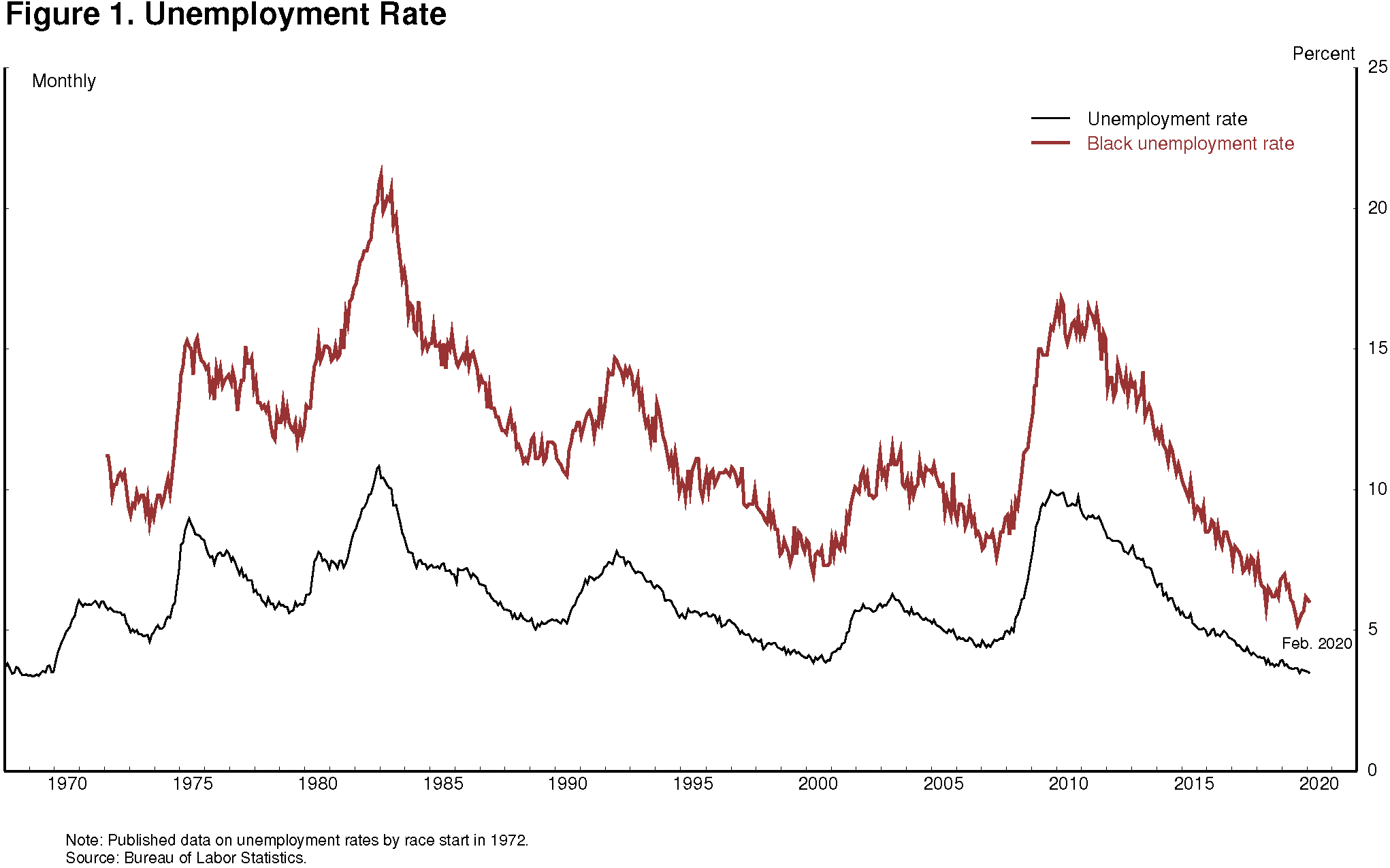
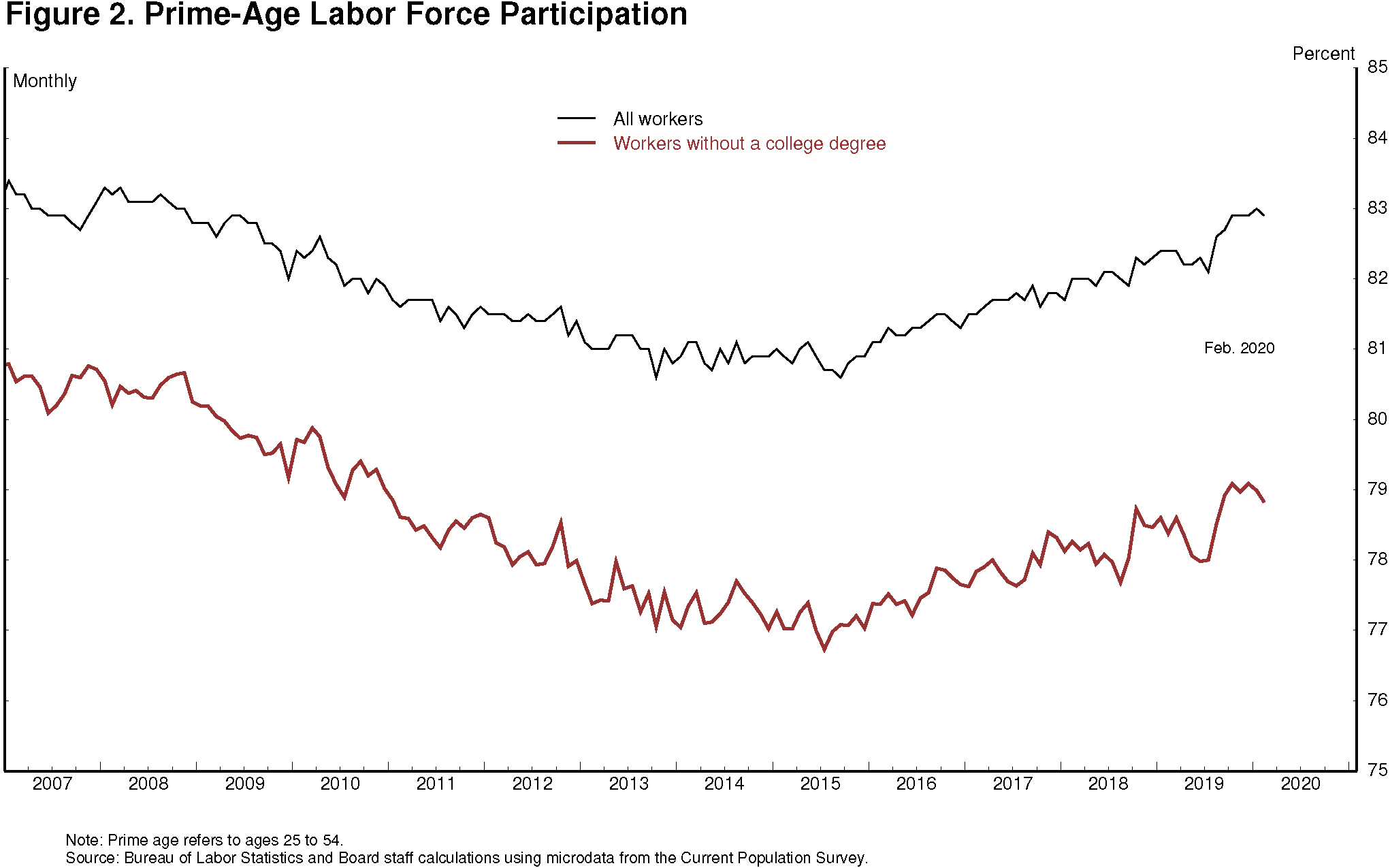
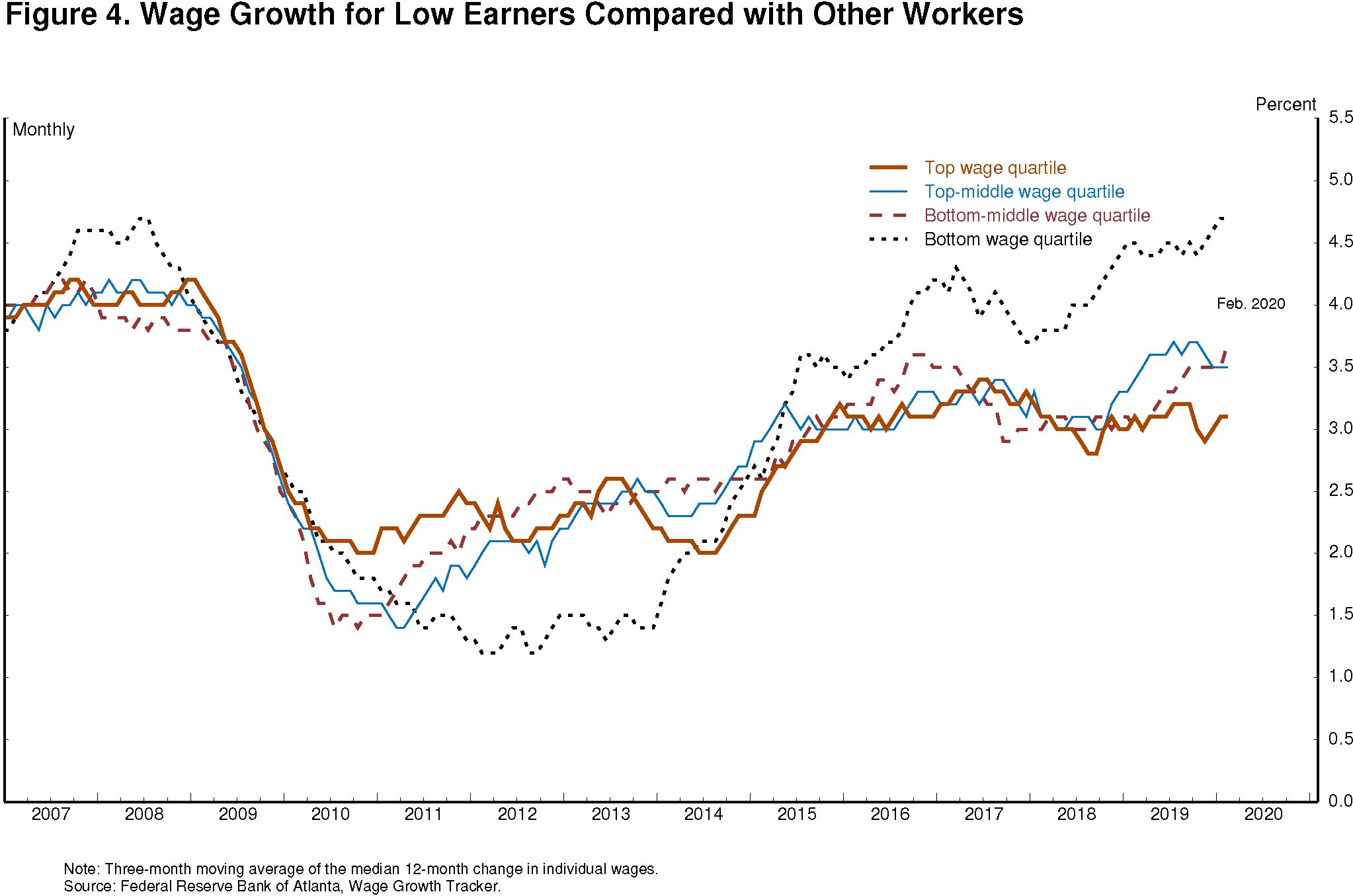
    We need only look to February of last year to see how beneficial a strong labor market can be. The overall unemployment rate was 3.5 percent, the lowest level in a half-century. The unemployment rate for African Americans had also reached historical lows (figure 1). Prime-age labor force participation was the highest in over a decade, and a high proportion of households saw jobs as “plentiful.”1 Overall wage growth was moderate, but wages were rising more rapidly for earners on the lower end of the scale. These encouraging statistics were reaffirmed and given voice by those we met and conferred with, including the community, labor, and business leaders; retirees; students; and others we met with during the 14 Fed Listens events we conducted in 2019.2

    Many of these gains had emerged only in the later years of the expansion. The labor force participation rate, for example, had been steadily declining from 2008 to 2015 even as the recovery from the Global Financial Crisis unfolded. In fact, in 2015, prime-age labor force participation — which I focus on because it is not significantly affected by the aging of the population — reached its lowest level in 30 years even as the unemployment rate declined to a relatively low 5 percent. Also concerning was that much of the decline in participation up to that point had been concentrated in the population without a college degree (figure 2). At the time, many forecasters worried that globalization and technological change might have permanently reduced job opportunities for these individuals, and that, as a result, there might be limited scope for participation to recover.

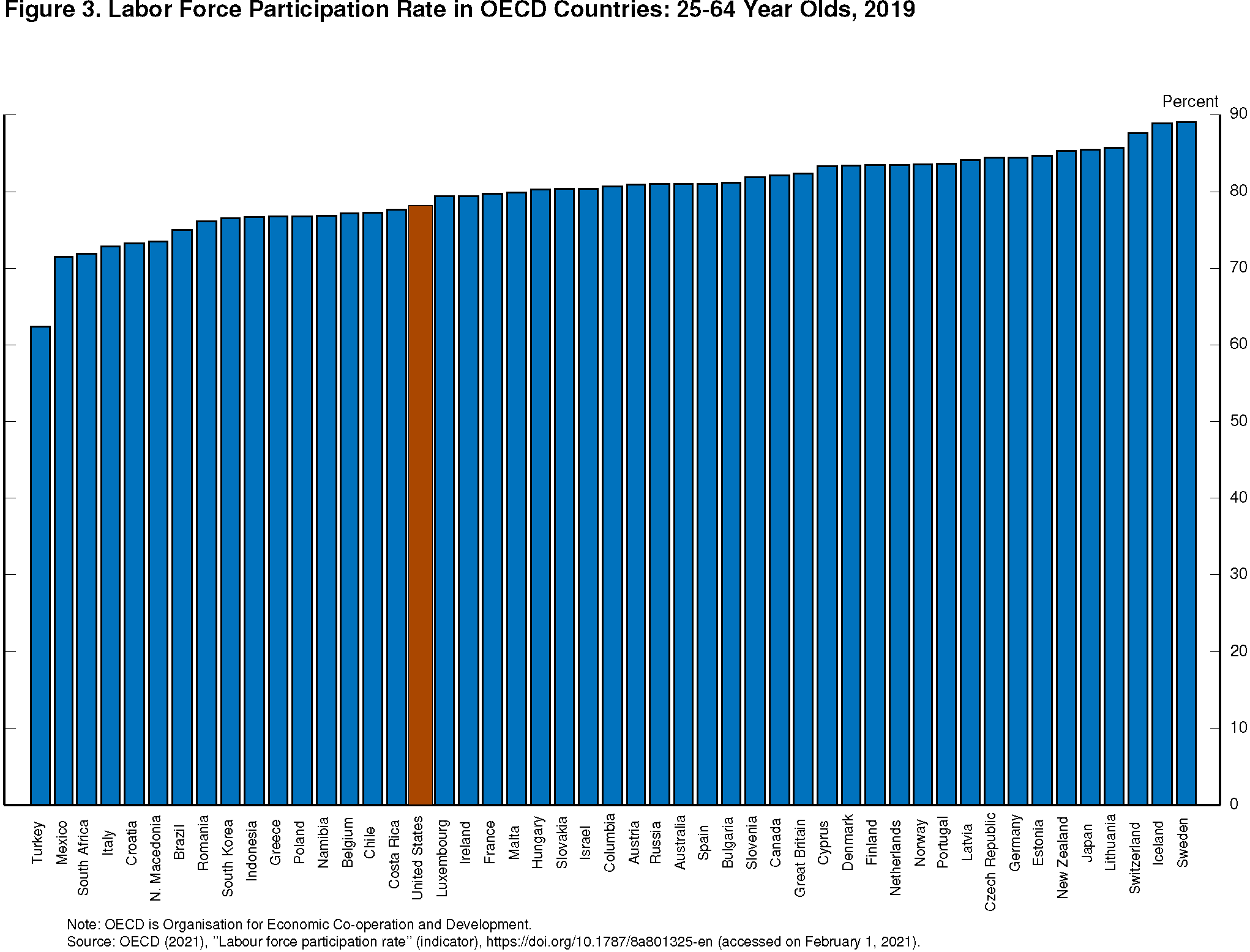
    Fortunately, the participation rate after 2015 consistently outperformed expectations, and by the beginning of 2020, the prime-age participation rate had fully reversed its decline from the 2008-to-2015 period. Moreover, gains in participation were concentrated among people without a college degree. Given that U.S. labor force participation has lagged relative to other advanced economy nations, this progress was especially welcome (figure 3).3

    As I mentioned, we also saw faster wage growth for low earners once the labor market had strengthened sufficiently. Nearly six years into the recovery, wage growth for the lowest earning quartile had been persistently modest and well below the pace enjoyed by other workers. At the tipping point of 2015, however, as the labor market continued to strengthen, the trend reversed, with wage growth for the lowest quartile consistently and significantly exceeding that of other workers (figure 4).

    At the end of 2015, the Black unemployment rate was still quite elevated, at 9 percent, despite the relatively low overall unemployment rate. But that disparity too began to shrink; as the expansion continued beyond 2015, Black unemployment reached a historic low of 5.2 percent, and the gap between Black and white unemployment rates was the narrowest since 1972, when data on unemployment by race started to be collected. Black unemployment has tended to rise more than overall unemployment in recessions but also to fall more quickly in expansions.4 Over the course of a long expansion, these persistent disparities can decline significantly, but, without policies to address their underlying causes, they may increase again when the economy ultimately turns down.

  • Ferida Wolff’s Backyard: Hearts and Lovers; Ah, Memories (of African Violets)

    Hearts and Lovers

     It’s snowing today, the second snowstorm in a week. It’s easy to get into the “Oh no, not again.” mode, anticipating the shoveling that will be needed when it stops. 

    But when I looked out the window to see how much snow had fallen, I got quite the surprise. A car had backed into the driveway across the street and left an incredible image in the snow. Two interconnected hearts! They stayed that way for a while. No other cars came down the street to disturb them. Then two people came by, chatting happily as they walked their dog, and it seemed to be an affirmation of the snowy hearts.

    What a way to start the day? So what if I have to shovel? I actually don’t mind doing it. And I know that when the snow stops and I get out there, shovel in hand, I will be thinking of the unexpected hearts that were so delightful to see. And maybe it will be a reminder that in our present difficult time, there is still much to be appreciated and enjoyed. 


    Ah, Memories

    African Violets             

    This is a time that nourishes memories. Some of my friends are going through their closets and rediscovering things they had forgotten. One friend found a coat that she used to wear on cold days when walking her dog. Now her daughter wears the same coat while walking her own dog, appreciating its physical and emotional warmth. Another friend looked back on her quilting days and thought it might be good to re-explore that craft.

    An African Violet plant on my kitchen windowsill brings back memories of my mother-in-law, may she rest in peace, who was a nature lover. She planted gardens outdoors and pots of plants indoors. She especially loved African Violets and gave me the plant that I still have. I’ve separated it several times, giving plants to my daughter, to my friend, to my sister and another one to myself.

    Earlier this year I noticed that my poor African Violet seemed cramped so I replanted it in a little bit bigger pot.  It started to blossom. And it hasn’t stopped! I look at it each time I wash dishes or start to cook, amazed by its continuing beauty but also reminded of the gift my mother-in-law had with plants. Her skill continues to impress me but it is the plant itself that keeps a loving memory alive.

    Caring for African Violets:

    https://newengland.com/today/living/g

    Editor’s NoteSaintpaulia ionantha

    Common Name: African violet 
    Type: Herbaceous perennial
    Family: Gesneriaceae
    Native Range: Tanzania
     
    Missouri Botanical Garden: 

    www.missouribotanicalgarden.org › Portals › Factsheets › African Violets2
    Thumbnail image
    File Format: PDF/Adobe Acrobat
     
    The genus name Saintpaulia was named after the Baron. The species name, ionantha, Greek for “resembling a violet,” is in reference to the flower. African violets …
     
    www.missouribotanicalgarden.org › PlantFinder › PlantFinderDetails
    Thumbnail image
     
    The soil for growing African violets must be porous to allow surplus water to pass through readily. Most violets are now grown in pasteurized soilless mixes.
     
    www.missouribotanicalgarden.org › your-garden › questionid › afmid
     
    African violets are among the most popular indoor flowering plants. They are not really violets but, rather, members of the Gesneriad family and are native to east …
  • GAO: SEXUAL HARASSMENT AND ASSAULT: Guidance Needed to Ensure Consistent Tracking, Response, and Training for DOD Civilians

    Sexual harassment and assault in the workplace can cause long-term trauma for victims and may affect the Department of Defense’s more than 900,000 federal civilian employees.

    DOD [Department of Defense] estimated that about 49,700 of its civilian employees experienced sexual harassment and about 2,500 experienced work-related sexual assault in FY2018, but it does not fully track reports of these behaviors.  Also, civilian employees may not have access to DOD-provided reporting and support services available to servicemembers.

    Our 19 recommendations include tracking civilian sexual harassment and assault incidents and expanding access to reporting and support services.

    The Pentagon Building

    What GAO Found

    The Department of Defense (DOD) has taken steps to track reports of sexual harassment and sexual assault involving its federal civilian employees, but its visibility over both types of incidents is hindered by guidance and information-sharing challenges. While employees may not report all incidents for a variety of reasons, DOD also lacks visibility over those incidents that have been reported. For example, from fiscal years 2015 through 2019, DOD recorded 370 civilian employees as victims of sexual assault and 199 civilian employees as alleged offenders. However, these data do not include all incidents of sexual assault reported over this time period. Specifically, based on DOD guidance, examples of incidents that could be excluded from these data include those involving civilian employee victims (1) occurring in the continental United States, (2) employed by DOD components other than the military services, such as defense agencies, and (3) who are also military dependents. Without guidance that addresses these areas, DOD does not know the extent to which its civilian workforce has reported work-related sexual assault worldwide.

  • Kaiser Family Foundation (KFF), February 8th: This Early Stage of the COVID-19 Vaccine Roll-Out, Most Older Adults Have Not Yet Been Vaccinated As Supply Remains Limited

    Since the beginning of the coronavirus pandemic, older adults have been at greater risk of serious illness, hospitalization, and death due to COVID-19. In mid-January, the Trump Administration advised states to expand vaccine eligibility to people ages 65 and older, in addition to health care workers, and residents and staff in long-term care facilities – a recommendation that was reinforced by the incoming Biden Administration. As of February 1, 2021, more than half of all states (29 states and the District of Columbia) have expanded eligibility for COVID-19 vaccines to include people 65 and older.

    To date, nearly 32 million people, or about 10% of the US population, have received at least one dose of a COVID-19 vaccine. According to the CDC, adults ages 65 and older, including residents of long-term care facilities who are primarily in this age group, account for 29% of all people who were administered a COVID-19 vaccine dose in the first month of vaccination, disproportionate to their share of the overall population (15%). Nationwide, more than 54 million people are age 65 or older, in addition to those who are living in long-term care facilities.

    This analysis looks at COVID-19 vaccination rates among older adults at the state level, and the share of all vaccines administered that have been given to older adults, among the 28 states and DC that are currently reporting vaccination data by age as of February 4, 2021. This analysis covers the early stages of vaccination efforts when many – but not all – states had recently expanded eligibility to include the 65-and-older population but still coping with high demand and very limited supplies of COVID-19 vaccines.

    Findings

    Older adults have been disproportionately affected by COVID-19, with the highest cumulative rates of hospitalizations and deaths (Figure 1). Hospitalization and death rates due to COVID-19 increase with age. For example, the hospitalization rate for adults 65 to 74 is more than 2.5 times higher than for adults ages 40-49 years old. The differences in death rates are even more dramatic: the death rate for adults 65 to 74 is more than 9.5 times higher than among adults ages 40-49. And even among people ages 65 and older, rates of hospitalizations and deaths continue to increase as age increases. The rate of hospitalizations is more than 2.5 times higher and deaths 7.4 times higher among those 85 and older compared to those 65-74.

    Adults 65 and older have comprised the majority – at least 75% – of all COVID-19 deaths in every month since the significant escalation of the pandemic in Spring 2020 (Figure 2). The share of people who died of COVID-19 who were 65 and older reached a high of 82% in May 2020 before dipping somewhat in the summer months, but has remained higher than 80% since October 2020. More than half of COVID-19 deaths overall have been among people 75 and older.

    As of February 4, 2021, 28 states and the District of Columbia are reporting some COVID-19 vaccination data by age – but not all of these states have expanded to begin vaccinating people 65 and older specifically (Figure 3; Appendix Table 1). Of states reporting vaccination data by age, 15 are reporting data for adults 65 and older, all of which have expanded vaccinations to this age group; 13 are reporting data for adults 60 and older, 4 of which have expanded vaccinations to people 65 and older; and 1 is reporting data for adults 70 and older (in addition to data for people 50 to 69 years old). Some of the most populous states in the country, including New York and California, are not currently reporting vaccination data by age.

  • ‘Cruel’ Digital Race For Vaccines Leaves Many Seniors Behind; Challenges Facing Seniors Speak To the Country’s Fragmented Approach

    nurses in the 1918 pandemic

    February 4, 2021

    With millions of older Americans eligible for covid-19 vaccines and limited supplies, many continue to describe a frantic and frustrating search to secure a shot, beset by uncertainty and difficulty. 

    The efforts to vaccinate people 65 and older have strained under the enormous demand that has overwhelmed cumbersome, inconsistent scheduling systems.

    The struggle represents a shift from the first wave of vaccinations — health care workers in health care settings — which went comparatively smoothly. Now, in most places, elderly people are pitted against one another, competing on an unstable technological playing field for limited shots.

    Red Cross workers of Boston, Massachusetts, removing bundles of masks for American soldiers from a table where other women made them, 1918. (National Archives Identifier 45499363)

    “You can’t have the vaccine distribution be a race between elderly people typing and younger people typing,” said Jeremy Novich, a clinical psychologist in New York City who has begun a group to help people navigate the technology to get appointments. “That’s not a race. That’s just cruel.”

    While the demand is an encouraging sign of public trust in the vaccines, the challenges facing seniors also speak to the country’s fragmented approach, which has left many confused and enlisting family members to hunt down appointments. 

    “It’s just maddening,” said Bill Walsh, with AARP. It should be a smooth pathway from signing up to getting the vaccine, and that’s just not what we’re seeing so far.” 

    Glitchy websites, jammed phone lines and long lines outside clinics have become commonplace as states expand who’s eligible — sometimes triggering a mad dash for shots that can sound more like trying to score a ticket for a music festival than obtaining a lifesaving vaccine. 

    After being inundated, some public health departments are trying to hire more staff members to handle their vaccination hotlines and specifically target seniors who may not be able to navigate a complicated online sign-up process.  

    “Just posting a website and urging people to go there is not a recipe for success,” said Walsh. 

    ‘Terribly Competitive’ 

    Like many other seniors, Colleen Brooks, 85, had trouble sorting through the myriad online resources about how to find the vaccine where she lives, on Vashon Island in the Puget Sound near Seattle.

    “It was an overwhelming amount of information,” she said. “I knew it was here someplace, but it wasn’t easy to find out how to get it.”

    After making calls, Brooks eventually got a tip from a friend who had spotted the vaccines being unloaded at their town pharmacy. When she dropped by her health clinic to inquire about how to sign up, it happened they were giving out shots that same day.  

    That was totally serendipitous for me, but I actually personally know several seniors who just kind of gave up,” said Brooks.