‘A key motivation for this study is that sex plays a crucial role in human brain development, in aging, and in the manifestation of psychiatric and neurological disorders,’ said Vinod Menon.
clelia-clelia
“A key motivation for this study is that sex plays a crucial role in human brain development, in aging, and in the manifestation of psychiatric and neurological disorders,” said Vinod Menon, PhD, professor of psychiatry and behavioral sciences and director of the Stanford Cognitive and Systems Neuroscience Laboratory. “Identifying consistent and replicable sex differences in the healthy adult brain is a critical step toward a deeper understanding of sex-specific vulnerabilities in psychiatric and neurological disorders.”
Menon is the study’s senior author. The lead authors are senior research scientist Srikanth Ryali, PhD, and academic staff researcher Yuan Zhang, PhD.
“Hotspots” that most helped the model distinguish male brains from female ones include the default mode network, a brain system that helps us process self-referential information, and the striatum and limbic network, which are involved in learning and how we respond to rewards.
The investigators noted that this work does not weigh in on whether sex-related differences arise early in life or may be driven by hormonal differences or the different societal circumstances that men and women may be more likely to encounter.
Uncovering brain differences
The extent to which a person’s sex affects how their brain is organized and operates has long been a point of dispute among scientists. While we know the sex chromosomes we are born with help determine the cocktail of hormones our brains are exposed to — particularly during early development, puberty and aging — researchers have long struggled to connect sex to concrete differences in the human brain. Brain structures tend to look much the same in men and women, and previous research examining how brain regions work together has also largely failed to turn up consistent brain indicators of sex.
This model demonstrated superior performance compared with those in previous studies, in part because it used a deep neural network that analyzes dynamic MRI scans. This approach captures the intricate interplay among different brain regions. When the researchers tested the model on around 1,500 brain scans, it could almost always tell if the scan came from a woman or a man.
The model’s success suggests that detectable sex differences do exist in the brain but just haven’t been picked up reliably before. The fact that it worked so well in different datasets, including brain scans from multiple sites in the U.S. and Europe, make the findings especially convincing as it controls for many confounds that can plague studies of this kind.
“This is a very strong piece of evidence that sex is a robust determinant of human brain organization,” Menon said.
The Alabama Supreme Court’s Decision on Embryonic Personhood; KFF Health News’ Weekly Health Policy News Podcast, “What the Health?”

The Host
The Alabama Supreme Court’s groundbreaking ruling last week that frozen embryos have legal rights as people has touched off a national debate about the potential fallout of the “personhood” movement. Already the University of Alabama-Birmingham has paused its in vitro fertilization program while it determines the ongoing legality of a process that has become increasingly common for those wishing to start a family.
Meanwhile, former President Donald Trump is reportedly leaning toward endorsing a national, 16-week abortion ban. At the same time, former aides are planning a long agenda of reproductive health restrictions should Trump win a second term.
This week’s panelists are Julie Rovner of KFF Health News, Lauren Weber of The Washington Post, Rachana Pradhan of KFF Health News, and Victoria Knight of Axios.
Panelists
Among the takeaways from this week’s episode:
- The Alabama Supreme Court’s decision on embryonic personhood could have wide-ranging implications beyond reproductive health care, with potential implications for tax deductions, child support payments, criminal law, and much more.
- Donald Trump is considering a national abortion ban at 16 weeks of gestation, according to recent reports. It is unclear whether such a ban would go far enough to please his conservative supporters, but it would be far enough to give Democrats ammunition to campaign on it. And some are looking into using a 19th-century anti-smut law, the Comstock Act, to implement a national ban under a new Trump presidency — no action from Congress necessary.
- New reporting from KFF Health News draws on many interviews with clinicians at Catholic hospitals about how the Roman Catholic Church’s directives dictate the care they may offer patients, especially in reproductive health. It also draws attention to the vast number of religiously affiliated hospitals and the fact that, for many women, a Catholic hospital may be their only option.
- Questions about President Joe Biden’s cognitive health are drawing attention to ageism in politics — as well as in American life, with fewer people taking precautions against the covid-19 virus even as it remains a serious threat to vulnerable people, especially the elderly. The mental fitness of the nation’s leaders is a valid, relevant question for many voters, though the questions are also fueled by frustration with a political system in which many offices are held by older people who have been around a long time.
NIH Study Offers New Clues Into the Causes of Post-infectious ME/CFS: Myalgic Encephalomyelitis/chronic Fatigue Syndrome; These findings, for the first time, suggest a link between specific abnormalities or imbalances in the brain and ME/CFS.
In-depth study finds brain, immune, and metabolic abnormalities linked to debilitating chronic disease.
In a detailed clinical study, researchers at the National Institutes of Health have found differences in the brains and immune systems of people with post-infectious myalgic encephalomyelitis/chronic fatigue syndrome (PI-ME/CFS). They also found distinct differences between men and women with the disease. The findings were published in Nature Communications.
“People with ME/CFS have very real and disabling symptoms, but uncovering their biological basis has been extremely difficult,” said Walter Koroshetz, M.D., (seen right) director of NIH’s National Institute of Neurological Disorders and Stroke (NINDS). “This in-depth study of a small group of people found a number of factors that likely contribute to their ME/CFS. Now researchers can test whether these findings apply to a larger patient group and move towards identifying treatments that target core drivers of the disease.”
A team of multidisciplinary researchers discovered how feelings of fatigue are processed in the brains of people with ME/CFS. Results from functional magnetic resonance imaging (fMRI) brain scans showed that people with ME/CFS had lower activity in a brain region called the temporal-parietal junction (TPJ), which may cause fatigue by disrupting the way the brain decides how to exert effort.
They also analyzed spinal fluid collected from participants and found abnormally low levels of catecholamines and other molecules that help regulate the nervous system in people with ME/CFS compared to healthy controls. Reduced levels of certain catecholamines were associated with worse motor performance, effort-related behaviors, and cognitive symptoms. These findings, for the first time, suggest a link between specific abnormalities or imbalances in the brain and ME/CFS.
“We think that the immune activation is affecting the brain in various ways, causing biochemical changes and downstream effects like motor, autonomic, and cardiorespiratory dysfunction,” said Avindra Nath, M.D., clinical director at NINDS and senior author of the study.
Immune testing revealed that the ME/CFS group had higher levels of naive B cells and lower levels of switched memory B cells — cells that help the immune system fight off pathogens — in blood compared to healthy controls. Naive B cells are always present in the body and activate when they encounter any given antigen, a foreign substance that triggers the immune system. Memory B cells respond to a specific antigen and help maintain adaptive or acquired immunity. More studies are needed to determine how these immune markers relate to brain dysfunction and fatigue in ME/CFS.
To study fatigue, Dr. Nath and his team asked participants to make risk-based decisions about exerting physical effort. This allowed them to assess the cognitive aspects of fatigue, or how an individual decides how much effort to exert when given a choice. People with ME/CFS had difficulties with the effort choice task and with sustaining effort. The motor cortex, a brain region in charge of telling the body to move, also remained abnormally active during fatiguing tasks. There were no signs of muscle fatigue. This suggests that fatigue in ME/CFS could be caused by a dysfunction of brain regions that drive the motor cortex, such as the TPJ.
“We may have identified a physiological focal point for fatigue in this population,” said Brian Walitt, M.D., M.P.H., associate research physician at NINDS and first author of the study. “Rather than physical exhaustion or a lack of motivation, fatigue may arise from a mismatch between what someone thinks they can achieve and what their bodies perform.”
Deeper analyses revealed differences between men and women in gene expression patterns, immune cell populations, and metabolic markers. Males had altered T cell activation, as well as markers of innate immunity, while females had abnormal B cell and white blood cell growth patterns. Men and women also had distinct markers of inflammation.
“Men and women were quite divergent in their data, and that tells you that ME/CFS is not one-size-fits-all,” said Dr. Nath. “Considering male and female immune differences in ME/CFS, the results may open up new avenues of research that could provide insight into other infection-associated chronic diseases.”
The study, which was conducted at the NIH Clinical Center, took a comprehensive look at ME/CFS that developed after a viral or bacterial infection. The team used state-of-the-art techniques to examine 17 people with PI-ME/CFS who had been sick for less than five years and 21 healthy controls. Participants were screened and medically evaluated for ME/CFS over several days and underwent extensive tests, including clinical exams, fMRI brain imaging, physical and cognitive performance tests, autonomic function tests, skin and muscle biopsies, and advanced analyses of blood and spinal fluid. Participants also spent time in metabolic chambers where, under controlled conditions, their diet, energy consumption, metabolism, sleep patterns, and gut microbiome were evaluated. During a second visit, they completed a cardiopulmonary exercise test to measure the body’s response to exercise.
Many studies have identified immune, microbiome, and other abnormalities in ME/CFS, but the results tend to be inconsistent and exactly how these markers relate to or cause fatigue and other symptoms is unknown. By using a rigorous phenotyping approach to pull out meaningful differences, this study helps validate prior results and may identify new ways to target the brain or immune system therapeutically.
The highly collaborative project involved 75 investigators across 15 institutes and centers in the NIH Intramural Research Program, and at national and international institutions. Dr. Nath and his colleagues plan to publish additional findings from the data that was collected during this study.
The study was supported in part by the Intramural Research Program at the NIH.
NINDS is the nation’s leading funder of research on the brain and nervous system. The mission of NINDS is to seek fundamental knowledge about the brain and nervous system and to use that knowledge to reduce the burden of neurological disease.
About the National Institutes of Health (NIH): NIH, the nation’s medical research agency, includes 27 Institutes and Centers and is a component of the U.S. Department of Health and Human Services. NIH is the primary federal agency conducting and supporting basic, clinical, and translational medical research, and is investigating the causes, treatments, and cures for both common and rare diseases. For more information about NIH and its programs, visit www.nih.gov.
NIH…Turning Discovery Into Health®
Ferida’s Wolff’s Backyard: The Snow Turned Into Snowy Rain As It Fell From The Trees. Still Lovely …
As our communities become more urbanized, the natural features around us tend to get pushed into the background and often go unnoticed. In “Ferida’s Backyard,” I look at the details of nature locally, from a neighborhood perspective, frequently from a backyard vantage point. It excites me to share what I see. An awareness of the natural connection can beautifully enhance our lives. www.feridasbackyard.blogspot.com
The snow turned into snowy rain as it fell from the trees. Still lovely.
www.feridasbackyard.blogspot.com
SUNDAY, FEBRUARY 18, 2024
Stanford Researchers Urge Caution With New Mixed Reality Headsets; Visual Distortions, Feelings of Social Absence and Motion Sickness Can Undercut the Vibe
A new study finds that headsets merging the external world with digital content via passthrough video technology can offer amazing experiences, but visual distortions, feelings of social absence, and motion sickness can undercut the vibe, dissuading prolonged usage.
Among the buzziest consumer technologies right now are “mixed reality” or “spatial computing” headsets that convincingly blend views of the real world with digital content.
A key enabling technology behind these gizmos is passthrough video, which involves blocking out all light so users must rely on cameras on the headsets to see the external world around them via real-time video playing on tiny screens. The arrangement allows users to physically interact with their environments and go about daily activities but with added digital content displayed, ranging from familiar device apps to innovative gaming scenarios. If tech companies’ visions come true, users would wear these headsets for extended periods, even all day long at work and at home, ushering in new modes of human-computer and social interaction.
To put passthrough video through its paces, a diverse team of Stanford researchers recently conducted field tests alongside longitudinal analyses of their personal journeys and interpersonal interactions. As described in a new study in Technology, Mind, and Behavior, overall user experiences proved – fittingly enough – mixed, with moments of both awe and unsettlement. The researchers accordingly recommend caution regarding prolonged headset use and call for a longer-term assessment.
“Given how far headsets with passthrough video have come, it’s time to dedicate serious academic thought to the psychological and behavioral effects of this technology,” said Jeremy Bailenson, the Thomas More Storke Professor in the Stanford School of Humanities and Sciences and founding director of the Virtual Human Interaction Lab (VHIL). “We want to understand the implications of living in a life in which we rely on passthrough for hours every day to see the world around us.”

Stanford VHIL researchers developing the protocol for how to safely use headsets in public. (Image credit: Virtual Human Interaction Lab)
Pros of passthrough
For the study, 10 research scholars in the VHIL and Bailenson himself spent at least 140 minutes over two or three sessions wearing Meta Quest 3 passthrough video headsets, which became widely available in October 2023.
The researchers engaged in a wide range of activities such as having conversations, walking outdoors, playing games, and eating and cooking food. For safety reasons, given concerns about potentially tripping over objects or encountering moving people or vehicles, a chaperone not wearing a headset remained present at all times.
The study participants attempted to examine the experience from both a hands-on, subjective perspective as well as a removed, clinical view. “We took an observational approach, more akin to naturalists, and really dove into the medium in an exploratory way,” said study co-author James Brown, a master’s student in the Symbolic Systems Program.
In general, the researchers found they enjoyed many aspects of having reality filtered through passthrough. “For a lot of us, wearing a headset in public was exciting,” said study co-author Monique Tania Santoso, a doctoral student in the Department of Communication.
“It was a very novel experience being in these headsets while walking around campus, interacting with strangers, and even buying coffee,” said co-author Portia Wang, a second-year master’s student in the Management Science and Engineering Department studying computational social science.
As for Bailenson, who has long followed the development of passthrough video and recalls first donning a rudimentary device back in the late 1990s, the experience was “mind-blowing” in comparison.
“It’s hard to describe until you try it, but it feels like magic with these newest headsets,” Bailenson said. “The immediacy of the video, the stereo color, and the incredible visuals that can be rendered, including making walls or objects disappear – your eyes and brain for the most part can’t tell the difference.”
Stanford News Service: A New, Portable Antenna Could Help Restore Communication After Disasters
Researchers from Stanford and the American University of Beirut have developed a lightweight, portable antenna that can communicate with satellites and devices on the ground, making it easier to coordinate rescue and relief efforts in disaster-prone areas.
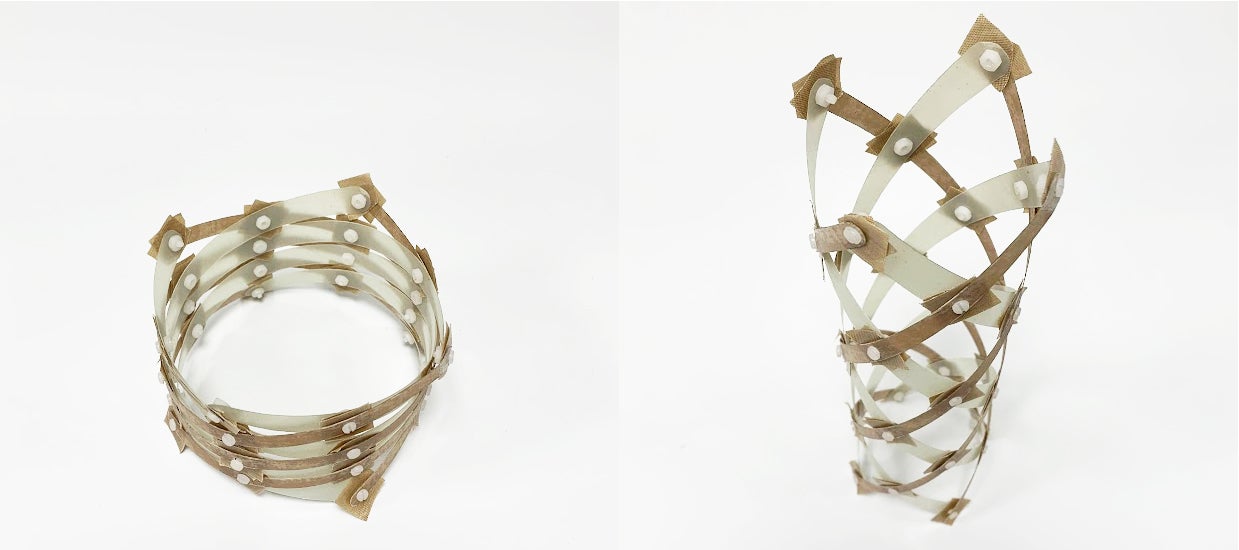
The bi-stable deployable quadrifilar helix antenna passively reconfigures its radiation characteristics in terms of pattern and polarization. (Image credit: Courtesy Reconfigurable & Active Structures Lab)
When an earthquake, flood, or other disaster strikes a region, existing communication infrastructure such as cell phone and radio towers are often damaged or destroyed. Restoring emergency communications as quickly as possible is vital for coordinating rescue and relief efforts.
Researchers at Stanford University and the American University of Beirut (AUB) have developed a portable antenna that could be quickly deployed in disaster-prone areas or used to set up communications in underdeveloped regions. The antenna, described recently in Nature Communications, packs down to a small size and can easily shift between two configurations to communicate either with satellites or devices on the ground without using additional power.
“The state-of-the-art solutions typically employed in these areas are heavy, metallic dishes. They’re not easy to move around, they require a lot of power to operate, and they’re not particularly cost-effective,” said Maria Sakovsky, an assistant professor of aeronautics and astronautics at Stanford. “Our antenna is lightweight, low-power, and can switch between two operating states. It’s able to do more with as little as possible in these areas where communications are lacking.”
Two functions in one antenna
The researchers developed the antenna with an approach typically used to design devices that are being deployed in space. Because of fuel and space limitations, technology being sent into orbit must be very lightweight and packaged as small as possible. Once the items are in orbit, they unfold into the proper shape for use. The researchers wanted their antenna to be similarly collapsible and lightweight.
The antenna designed by Sakovsky and her colleagues at AUB, including Joseph Costantine, Youssef Tawk, and Rosette Maria Bichara, is made of fiber composites (a material often used in satellites) and resembles a child’s finger-trap toy, with multiple strips of material crossing in spirals. Just like any helix-based antenna, conductive material running through the antenna sends out signals, but thanks to its unique structure, the researchers can adjust the pattern and power of those signals in the new antenna by pulling it into longer shapes or shorter shapes.
“Because we wanted the antenna to be able to collapse into a packable shape, we started with this structure that led us to a very untraditional antenna design,” Sakovsky said. “We’re using shapes that have never been used on helical antennas before, and we’ve shown that they work.”
At its most compact, the antenna is a hollow ring that stands just over 1 inch tall and about 5 inches across – not much larger than a bracelet – and weighs 1.4 ounces. In this shape, it’s able to reach satellites with a high-power signal sent in a particular direction. When stretched out to about a foot tall, the antenna sends a lower power signal in all directions, more like a Wi-Fi router.
Shifting between these two states is as simple as pulling or pushing on the antenna. These movements don’t even need to be particularly precise because, once the antenna is moved past a certain point, the structure snaps to the right position. The specific size and shape of the antenna design will determine which frequencies those two states communicate across.
“The frequency you want to operate at will dictate how large the antenna needs to be, but we’ve been able to show that no matter what frequency you operate at, you can scale this design principle to achieve the same performance,” Sakovsky said.
The fabricated prototype was tested for deployment and structural performance at Stanford and its electromagnetic radiation characteristics at the antenna measurement facilities at AUB.
National Archives Records Lay Foundation for Killers of the Flower Moon: The Osage Murders and the Birth of the FBI
By Kristin Phillips | National Archives News
For his Killers of the Flower Moon: The Osage Murders and the Birth of the FBI, author David Grann relied on National Archives records to tell the harrowing story of a series of murders in the Osage nation in Oklahoma in the 1920s.
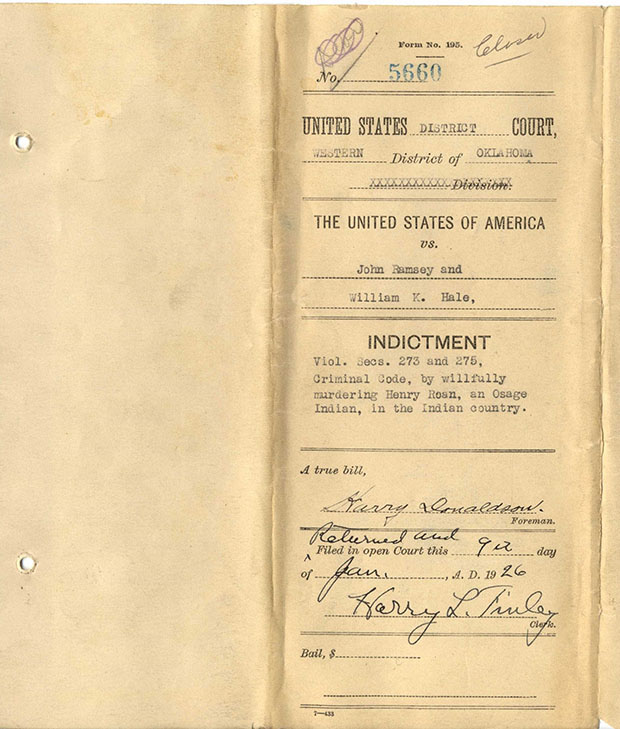
The indictment of John Ramsey and William K. Hale in the U.S. District Court for the Western District of Oklahoma. (Criminal Case 5660: U.S. v. John Ramsey and William K. Hale)
The motion picture based on the book was released in October 2023 and has been nominated for 10 Academy Awards.
Grann’s research at the regional archives in Fort Worth and Kansas City was critical to his story. For nearly five years, Grann and his team researched files relating to the Osage Tribe, including guardianship, probate, and criminal case records. These records from the Department of the Interior, Bureau of Indian Affairs, U.S. Court of Appeals, and U.S. District Courts are all stored in the National Archives’ field offices.
“During a recent CBS 60 Minutes interview, Grann highlighted the moment he realized the importance of the Register of Guardians, 1919–1924,” said Michael Wright, Director of Archival Operations at the National Archives at Fort Worth. “The ledger is a handwritten record of the names of guardians of minor and ‘incompetent’ Osages.”
In his book, Grann explained the prevalence of guardianship in Osage country, stating that guardians were “assigned to any American Indians whom the Department of the Interior deemed ‘incompetent.’” Guardians often used the system to their own advantage “to swindle the very people they were ostensibly protecting.”
Records in the National Archives’ holdings included the arrests, trials, and subsequent incarceration of William Hale and John Ramsey for their involvement in the Osage murders. Materials relating to the “Reign of Terror” caused by Hale and Ramsey in the 1920s can be found in Criminal Case 3778: U.S. v. John Ramsey, Criminal Case 2900: U.S. v. William K. Hale, Criminal Case 5659: U.S. v. William K. Hale and John Ramsey, and Criminal Case 5660: U.S. v. John Ramsey and William K. Hale. The Notorious Offender Files, 1919–1975, contain the records pertaining to Inmate #26,518 (Hale) and Inmate #26,519 (Ramsey).
“Sometimes original research leads to the discovery of interesting side stories,” said Jake Ersland, Director of Archival Operations at the National Archives at Kansas City. “In this instance, we found that while Thomas Bruce White [one of the undercover Federal Bureau of Investigation agents] was later serving as warden of Leavenworth Federal Penitentiary, two inmates were serving sentences for the murder of his brother, John Dudley White. [Inmate Case Files, July 3, 1895–November 5, 1957]”
In a 2017 interview published in Prologue: Quarterly of the National Archives, Grann stated, “I could not have written this book without the amazing holdings at the National Archives, where I spent hours upon hours researching this largely forgotten chapter in American history. There were so many surprising documents. . . . Often I would spend several days going through boxes, not finding anything relevant, and then open up a folder to discover something astonishing, like the secret grand jury testimony [that investigated the Osage murders].”
Additional records related to the Osage murders can be found in Individual Indian Guardianship Files, Register of Guardians, and Probate Files and Council Minutes and Proceedings of the Osage Tribal Council. These records are held by the National Archives at Fort Worth and some have been digitized and are available in the National Archives Catalog.
IRS: Take Care When Choosing a Tax Return Professional, Ensure That Your Personal and Financial Information is Safe and Secure
The Internal Revenue Service today reminded taxpayers that carefully choosing a tax professional to prepare a tax return is vital to ensuring that their personal and financial information is safe and secure and treated with care.
Most tax return preparers provide honest, high-quality service. But some may cause harm through fraud, identity theft and other scams.
It is important for taxpayers to understand who they’re choosing and what important questions to ask when hiring an individual or firm to prepare their tax return.
Another reason to choose a tax preparer carefully is because taxpayers are ultimately legally responsible for all the information on their income tax return, regardless of who prepares it.
The IRS has put together a Directory of Federal Tax Return Preparers with Credentials and Select Qualifications to help individuals find a tax pro that meets high standards. There is also a special page on IRS.gov for Choosing a Tax Professional that can help guide taxpayers in making a good choice, including selecting someone affiliated with a recognized national tax association. There are different kinds of tax professionals, and a taxpayer’s needs will help determine which kind of preparer is best for them.
Red flags to watch out for
There are warning signs that can help steer taxpayers away from unscrupulous tax return preparers. For instance, not signing a tax return is a red flag that a paid preparer is likely not to be trusted. They may be looking to make a quick profit by promising a big refund or charging fees based on the size of the refund.
These unscrupulous “ghost” preparers often print the return and have the taxpayer sign and mail it to the IRS. For electronically filed returns, a ghost preparer will prepare the tax return but refuse to digitally sign it as the paid preparer. Taxpayers should avoid this type of unethical preparer.
In addition, taxpayers should always choose a tax professional with a valid Preparer Tax Identification Number. By law, anyone who is paid to prepare or assists in preparing federal tax returns must have a valid PTIN. Paid preparers must sign and include their PTIN on any tax return they prepare.
Other tips
Here are a few other tips to consider when choosing a tax return preparer:
- Look for a preparer who’s available year-round. If questions come up about a tax return, taxpayers may need to contact the preparer after the filing season is over.
- Review the preparer’s history. Check the Better Business Bureau website for information about the preparer. Look for disciplinary actions and the license status for credentialed preparers. For CPAs, check the State Board of Accountancy’s website, and for attorneys check with the State Bar Association. For enrolled agents go to IRS.gov and search for “verify enrolled agent status” or check the IRS Directory of Federal Tax Return Preparers.
- Ask about service fees. Taxpayers should avoid tax return preparers who base their fees on a percentage of the refund or who offer to deposit all or part of the refund into their own financial accounts. Be wary of tax return preparers who claim they can get larger refunds than their competitors.
- Find an authorized IRS e-file provider. They are qualified to prepare, transmit and process e-filed returns. The IRS issues most refunds in fewer than 21 days for taxpayers who file electronically and choose direct deposit.
- Provide records and receipts. Good preparers ask to see these documents. They’ll also ask questions to determine the client’s total income, deductions, tax credits and other items. Do not hire a preparer who e-files a tax return using a pay stub instead of a Form W-2. This is against IRS e-file rules.
- Understand the preparer’s credentials and qualifications. Attorneys, CPAs and enrolled agents can represent any client before the IRS in any situation. Annual Filing Season Program participants may represent taxpayers in limited situations if they prepared and signed the tax return.
- Never sign a blank or incomplete return. Taxpayers are responsible for filing a complete and correct tax return.
- Review the tax return before signing it. Be sure to ask questions if something is not clear or appears inaccurate. Any refund should go directly to the taxpayer – not into the preparer’s bank account. Review the routing and bank account number on the completed return and make sure it’s accurate.
Taxpayers can report preparer misconduct to the IRS using Form 14157, Complaint: Tax Return Preparer. If a taxpayer suspects a tax return preparer filed or changed their tax return without their consent, they should file Form 14157-A, Tax Return Preparer Fraud or Misconduct Affidavit.
For more information
Senate Judiciary Committee Hearing: https://www.judiciary.senate.gov/protecting-children-online
Durbin Delivers Opening Statement During Senate Judiciary Committee Hearing Examining Big Tech’s Failures to Protect Kids from Sexual Exploitation Online
Committee to hear from CEOs of Discord, Meta, Snap, TikTok, and X
WASHINGTON – U.S. Senate Majority Whip Dick Durbin (D-IL), Chair of the Senate Judiciary Committee, today delivered an opening statement during a Senate Judiciary Committee hearing entitled “Big Tech and the Online Child Sexual Exploitation Crisis,” featuring testimony from the CEOs of Discord, Meta, Snap, TikTok, and X (formerly known as Twitter)—a consensus panel agreed to by Chair Durbin and Ranking Member Graham. The companies range in size, products offered, demographics served, and approaches to address child sexual exploitation and child sexual abuse material.
Online child sexual exploitation is a crisis in this country. In 2013, the National Center for Missing & Exploited Children (NCMEC), received approximately 1,380 CyberTips per day. By 2023 — just 10 years later — the number of CyberTips had risen to 100,000 reports per day.
Key Quotes:
“Today, the Senate Judiciary Committee will continue its work on an issue [that is] on the mind of most American families: how to keep our kids safe from sexual exploitation in the internet age.”
“Online child sexual exploitation includes the use of online platforms to target and groom children, and the production and endless distribution of child sexual abuse material, or CSAM, which can haunt victims for their entire lives or in some cases take their lives.”
“In recent years, we have also seen an explosion in so-called financial ‘sextortion,’ in which a predator uses a fake social media account to trick a minor into sending explicit photos or videos, then threatens to release them unless the victim sends money.”
“This disturbing growth in child sexual exploitation is driven by one thing: changes in technology… Smartphones are in the pockets of seemingly every man, woman, and teenager on the planet. These apps have changed the way we live, work, and play. But, as investigations have detailed, social media and messaging apps have also given predators powerful new tools to sexually exploit children.”
“Discord has been used to groom, abduct, and abuse children. Meta’s Instagram helped connect and promote a network of pedophiles. Snapchat’s disappearing messages have been co-opted by criminals who financially sextort young victims. TikTok has become a, ‘platform of choice’ for predators to access, engage, and groom children for abuse, and the prevalence of CSAM on X has grown as the company has gutted its trust and safety workforce.”
“Today, we will hear from the CEOs of each of these companies. They are not the only tech companies that have contributed to this crisis, but they are responsible for many of the dangers our children face online. Their design choices, their failures to adequately invest in trust and safety, and their constant pursuit of engagement and profit over basic safety have all put our kids and grandkids at risk.”
“Coincidently, several of these companies implemented commonsense child safety improvements within the last week—days before their CEOs would have had to justify their lack of action to Congress. But the tech industry alone is not to blame for the situation we’re in.”
“Those of us in Congress need to look in the mirror. In 1996—the same year the Motorola StarTAC was flying off shelves and years before social media went mainstream—we passed Section 230 of the Communications Decency Act. This law immunized then-nascent internet platforms from liability for user-generated content.”
“For the past 30 years, Section 230 has remained largely unchanged, allowing Big Tech to grow into the most profitable industry in the history of capitalism without fear of liability for unsafe practices.”
“That must change. Over the past year, this Committee has unanimously reported five bills that would finally hold tech companies accountable for child sexual exploitation on their platforms.”
“One of those bills is my STOP CSAM Act. Critically, it would let victims sue online providers that promote or aid and abet online child sexual exploitation, or that host or store CSAM. This stand against online child sexual exploitation is bipartisan and absolutely necessary. Let this hearing be the call to action we need to get kids online safety legislation to the President’s desk.”
Durbin and the Committee have extensively examined and investigated the plague of online child sexual exploitation, through hearings, legislation, and oversight efforts. This hearing will build on that work and highlight the need for Congress to act on the bipartisan bills reported by the Committee. Visit this webpage for an overview of the Committee’s efforts, including descriptions of the pending legislation and a timeline of events.
New York City’s Cooper Hewitt’s Retrospective of British Artist’s Es Devlin
An Atlas of Es Devlin is the first monographic museum exhibition dedicated to British artist and stage designer Es Devlin (born 1971), who is renowned for work that transforms audiences. she has charted a course from kinetic stage designs at the National Theatre and the Metropolitan Opera to installations at major institutions, including the World Expo, Lincoln Center, and the United Nations headquarters.
Her sculptures for Olympic Ceremonies, NFL Super Bowl halftime shows, and stadium tours for Beyoncé, The Weeknd, and U2 frame narratives that feel personal at a monumental scale. Over the past decade, she has adapted her craft to address climate and civilizational crises. Her public installations on endangered species and languages have inspired audiences to reimagine their connections to each other and to the planet.
She shapes stories in ways that stay with us and reframe our thinking. These stories often begin in the margins of texts.
Devlin’s work is rooted in a lifelong practice of reading and drawing. Sketches and small cardboard models form the seeds of her large-scale architectures. Until now, these drawings, paintings, and sculptures have remained unseen. For this first monographic exhibition of her work, Devlin and the curators dug through her 30-year archive, mapping throughlines that connect her teenage paintings to her stage designs to her contemporary installations. Devlin calls the result an atlas — a collection of maps.
Connect with your own inspiration, explore the Es Devlin Creative Curriculum.
Exhibition Highlights


