
Julia Sneden Reprise: Still Learning; Learning Differently
Da Vinci Mirror Writing; Image by Luc Viatour / https://Lucnix.be
by Julia Sneden
We do not bind the feet of our babies so that all will fit into one, universal shoe size. Why do we try to wrestle their minds into one educational box?
Most children are able to perform adequately in school, some with great ease and some with a slower pace and lots of hard work. But what of perfectly intelligent students who cannot fit our educational molds? Referred to by many confusing terms like dyslexic,learning disabled, ADD or ADHD, or even the intimidating strephosymbolic, these children can be infuriating to teach. They seem unable to concentrate on what is being presented. They can be highly distractible. They appear to be unable to remember more than one instruction at a time. When they do get the right answers, they seem to receive them direct from heaven, because as far as we can tell, their reasoning processes are nothing like ours. Not only are those processes hard to follow: the students themselves often can’t describe them.
In math class, they may be the only ones to offer a correct answer to a sophisticated problem, but when asked to demonstrate on the board how they reached it, they can’t do it. The teacher may suspect back-of-the-book cheating from the answer page. Teachers often are annoyed by such students because their intelligence is obvious, and surely if only they had more discipline, or more sleep, or more patience, or better support from home, they could reach answers in a more organized fashion…
Well, no. They are divergent learners, and our world is full of them. Their scores on IQ tests may range from average to highly gifted. Sometimes, with prescriptive teaching on a 1:1 basis, they can be taught to learn in traditional ways. More frequently, they simply hunker down and make do until they can get away from school and take on real life, where they often do just fine, or even excel in their chosen fields.
Our schools are all too rarely set up to accommodate these kids. When I taught kindergarten, I was actively involved in identifying children with learning differences. In my class, we looked for children who were at high risk for having difficulty in learning to read, so that in first grade, they could enter a special program designed to prevent failure. The following observations and conclusions come from my experiences with those children during my teaching years.
The first three years of grammar school are really all about learning to read, and those children who have problems with it often suffer serious crises of confidence, no matter how bright they are. You can’t watch everyone around you catching on to something that you yourself can’t understand, without being shaken mightily. One of the biggest stumbling blocks for many children is the fact that our alphabet consists of two-dimensional symbols for a series of sounds. In their world up to this point, two-dimensional symbols (such as drawings) represent three dimensional objects. I know of one nearly adult student of technical theatre who could read nothing but his own name, and yet he was able to wire an entire theatre building from a schematic drawing. The drawing, of course, was a two-dimensional representation of a three-dimensional concept.
One reason why the study of music can often help school performance is that, in addition to its obvious relationships to math, musical notes are also two-dimensional symbols for sounds. Grasp that concept, and you grasp the basis of reading, either words or music.
Some children don’t seem to be able to “fasten down” the letters. One child said to me: “They just dance up and down!” In most cases, however, children find abstract symbols incomprehensible because the symbols actually lack plasticity. The static nature of letters is inconsistent with the way the mind works.
For a very young child, any visual aspect of a letter is valid. Think of it this way: We live in a three-dimensional world. Our brains are wired to recognize and make sense of things no matter which aspect we see. We can observe a bird with wings extended in flight, and yet still recognize it as a bird if we see it sitting on a nest, or bending down to peck grain. When we present children with the alphabet, we go against their own experience of the world, because suddenly a b is only a b if you don’t rotate it. Turn it around, and it’s a d. Upside down, it is a p. Turn p around, and you have q.
The child who inverts or reverses letters as he writes is simply showing a different aspect of the form we see. An A upside down, for instance, becomes a V with a line across it, and on its side, it resembles an arrowhead. Once a child in my class drew something that consisted of two little boxes with a line between them: “It’s an A if you’re looking at it from the bottom (i.e. from underneath, looking up),” he said. I later found out that his parents had a glass-topped coffee table, and he delighted in crawling under it to look at objects that were sitting on it, a new view of reality for sure.
Children have to master the concept of letters as two-dimensional objects only, not as representations of something three-dimensional. That’s why I dislike blocks made in the shape of letters. They can be manipulated and turned all sorts of ways, which confuses the issue.
Add to this problem of dimensionality the need to teach children how to:
— approach decoding a word by sounding out the letters from left to right
— understand that the space between groups of letters denotes a word unit
— begin at the proper place on the page and proceed from top left to bottom right
and you begin to understand just the physical complexity of reading. The business of moving the eye from left to right, top to bottom, is a learned behavior, not something one knows instinctively. If we were teaching Hebrew, we’d move right to left, and if we taught Chinese, we’d start at the bottom of the page and scan vertically, not horizontally.
Along with the physical aspects of reading, children must master the rules of phonics, learning a sound or several sounds for each letter and a few digraphs like th or wh. Vowels are really tricky. For instance, there are more than a dozen ways to spell the long sound of “e” (ee, ie, ea, y, ei … etc.) Once learned, a child must then apply the sounds in left/right order as they come up in each word, never mind memorizing all the “outlaw words” that break those selfsame rules. And if you think there aren’t too many of those, consider the inconsistencies evident in spellings like home/comb/foam or for that matter, home/come.
“The 2022 midterm election returns could … be marred by a rush to judgment by political leaders or news outlets”* Harvard Kennedy School Shorenstein Center on Media, Politics and Public Policy
“The 2022 midterm election returns could … be marred by a rush to judgment by political leaders or news outlets,” writes Thomas Patterson. “Millions of mail-in ballots will have been cast, and some states do not permit the counting of them before Election Day.” Harvard Kennedy School Shorenstein Center on Media, Politics and Public Policy
Donald Trump would have “won” the 2022 U.S. presidential election if the vote counting had stopped on election night, just as Al Gore was the “winner” at one point on election night 2000.
The 2022 midterm election returns could also be marred by a rush to judgment by political leaders or news outlets. Millions of mail-in ballots will have been cast, and some states do not permit the counting of them before Election Day.
If analysts’ projections are correct, there’s not likely to be much suspense regarding control of the House of Representatives. The party out of power has gained House seats in 22 of the 25 midterms of the past century and has never failed to gain seats when the economy is struggling, and the incumbent president’s approval rating is below 50%. Add in the Democrats’ slim majority in the House and Republicans’ redistricting advantage, and it would be a political miracle if Democrats were to retain control of the House.
The Senate is a different story. There are 35 Senate seats being contested, 14 of which are currently held by Democrats. To retain their hold on the Senate, Democrats need to win at least 14 of the contested seats. According to the most recent ratings of the Cook Political Report, nine of the currently held Democratic seats are judged “safe” or “likely” while 17 are judged “safe” or “likely” Republican. If those projections hold, control of the Senate will come down to the 9 races that are judged to be toss-ups or leaning. If either party wins 5 of these contests, it will control the Senate.
Here are the nine presumably close Senate races and the likelihood that the outcome will be known on election night based strictly on how mail-in and absentee ballots are handled in the 9 states, mindful of the possibility that even if the count can begin before Election Day, it might not be completed by then or include ballots postmarked in time but not received.
- Counting can begin before Election Day: Arizona, Colorado, Georgia, Nevada.
- Counting can begin Election Day before polls close: North Carolina, Pennsylvania, Wisconsin.
- Counting can begin only after polls close: New Hampshire.
The other factor that could lead to an uncertain Senate outcome on election night is Georgia’s requirement that a runoff election be held if no candidate gets more than 50% of the vote. If Democrats and Republicans split the other 8 races, Georgia’s seat would be decisive and a run-off election there is a distinct possibility. Polls show a virtual dead heat in the race between Sen. Raphael Warnock (D-Ga.) and Republican challenger Herschel Walker, with the Libertarian Party’s nominee, Chase Oliver, drawing enough support to deny either candidate an early November victory.
Nevertheless, it’s hard to be too boastful about an election in which half of the eligible voters stay home.
It’s hard to hold up the 2022 midterms as an example of democracy at its best. The midterms have been marred by the continuing false claim that the 2020 presidential election was stolen, by new state laws that restrict ballot access, by deceptive political advertising, and by an unprecedented amount of campaign spending, much of it by independent expenditure groups.
Nor can it be said that the 2022 midterms have been one of the news media’s finest moments. News outlets have again served as a megaphone for unfounded charges and have provided little in the way of context that would help voters distinguish assertion from reality. For instance, there have been dozens of poll-driven stories on how the crime issue is hurting Democratic candidates, leading some voters to equate Democrats with crime. Rare has been the story explaining the factors contributing to crime and how, if at all, the problem can be traced to the policies of one or the other party.
If 2022 is what we’ve come to expect from candidates and media in this age of heightened party polarization and audience competition, a rush to judgment on election night would compound the ugliness of this election. Careful attention to the nature of the vote count in key races is essential. If journalists get it wrong, Americans’ eroding trust in elections will continue to decline.
Thomas E. Patterson, Bradlee Professor of Government & the Press at Harvard’s Kennedy School, is the founder of The Journalist’s Resource and author of several books, most recently “Is the Republican Party Destroying Itself?” JR has posted a new installment of his Election Beat 2022 series every week leading up to the midterm elections. Patterson can be contacted at thomas_patterson@harvard.edu.
Further Reading:
Cook Political Report, “2022 Senate Race Ratings,” October 27, 2022.
Michael P. McDonald and Matthew P. Thornburg, “Interview Mode Effects: The Case of Exit Polls and Early Voting,” Public Opinion Quarterly 76, 2012.
Stephen Pettigrew and Charles Stewart III, “Protecting the Perilous Path of Election Returns: From the Precinct to the News,” SSRN, Feb. 7, 2020.
Joseph E. Uscinski, “Too Close to Call? Uncertainty and Bias in Election-Night Reporting,” Social Science Quarterly 88, 2007.
At “Toward an Inclusive Recovery,” a research seminar sponsored by the Board of Governors of the Federal Reserve System, Washington, D.C.
Welcoming Remarks
Governor Michelle W. Bowman
At “Toward an Inclusive Recovery,” a research seminar sponsored by the Board of Governors of the Federal Reserve System, Washington, D.C. (via webcast)
Welcome, and thank you for joining us to discuss topics important to the nation’s economy. This research seminar is part of the Federal Reserve’s series of events called “Toward an Inclusive Recovery.”
Today’s seminar, hosted by the Board of Governors, will focus on how the COVID-19 pandemic affected educational outcomes and the subsequent impact we anticipate for transitions to the labor force. We have invited accomplished researchers to discuss their work—and what practical lessons might be drawn from it—that could help inform community development practice and public policy considerations.
As I am sure you are aware, the pandemic created significant disruptions for our students and the education system. At the onset of the pandemic, steps taken to slow the spread of COVID-19 resulted in widespread closures of businesses and schools. Many, myself included, were immediately concerned about the negative effects on education from changes that included shifting to virtual instruction, lack of access to technology, and changes to the accessibility and provision of childcare. It is critical to consider that access to education at every step along a student’s learning path serves as a pipeline into the labor force and enables future generations of Americans to participate and thrive in our dynamic labor market. The disruption of education throughout the pandemic undoubtedly led to an absence of workers in the labor force, creating a shortage that held back the early economic recovery.
Education outcomes, including learning losses and achievements, take time to measure, aggregate, and analyze. As we enter the fourth academic year affected by the pandemic, data on student performance are becoming more available. Much of this early data confirms our initial concerns. For example, early test scores show that throughout the country nine-year-olds suffered a decline in learning outcomes during the pandemic. But other data also indicate that learning losses were unequal and disproportionately affected low-performing students and low-income students.
It is likely that the sudden shift to online classes contributed to the learning declines. According to the Board’s 2020 Survey of Household Economics and Decisionmaking (the SHED), only 22 percent of parents with children attending virtual classes agreed that their children learned as much as they would have attending classes in person at school. I hope that the return to in-person learning and reopening of schools will enable children to resume normal learning and that academic achievement will rebound.
It seems that even with this return to in-person attendance, many schools are struggling to provide students with the same quality of education as they did pre-pandemic. With the return to onsite education, many schools are confronting challenges that impair their ability to meet the educational needs of students. A number of educators appear to have left the profession, as indicated by the nearly 100,000 more job openings for teachers in July 2022 than before the pandemic.1
Complicating these issues, across the country the return to in-person instruction has been met by an increase in chronic absenteeism, which is defined as a student missing at least 10 percent of school days in a school year. Compared to a typical school year pre-pandemic, 72 percent of U.S. public schools reported an increase in chronic absenteeism among their students during the 2021–22 school year, which is a 39 percent increase over the previous year.2
Missed school typically means missed learning, so chronic absenteeism is a key metric of school performance. It’s likely that these challenges will result in lower graduation rates and possibly less stable employment than would have otherwise been the case.
CraftTexas, Contemporary Craft 2022; Challenging Expectations of Craft






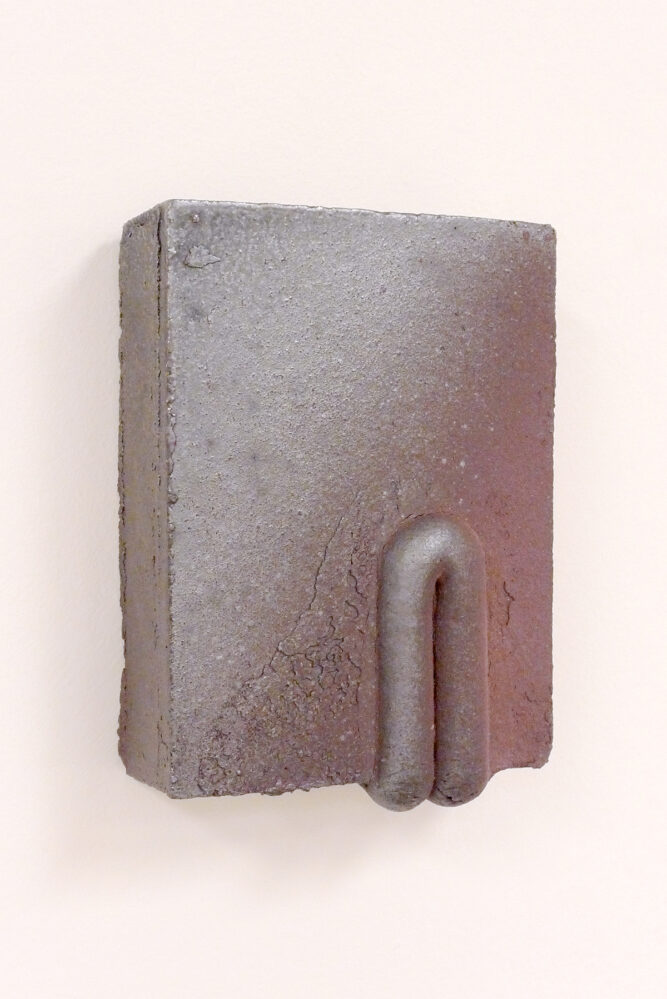




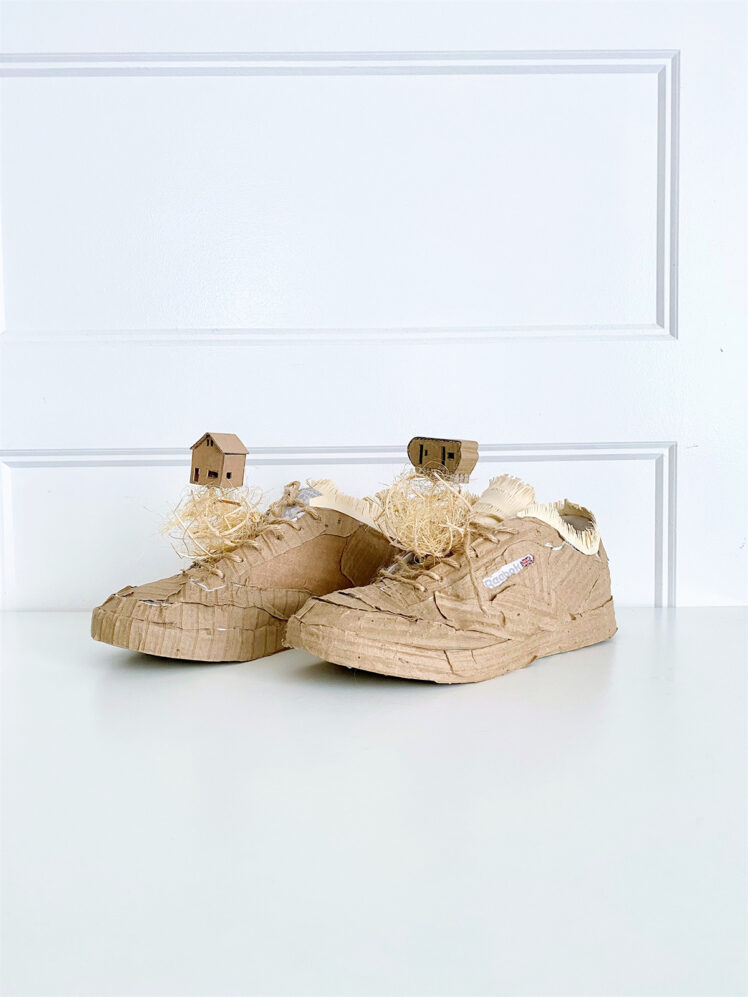




The CraftTexas series provides a unique opportunity for Texas artists to have their work viewed by a nationally recognized juror and to display their work in an exhibition that strives to broaden the understanding of contemporary craft. Payan Estrada, who was raised in Texas, selected his favorite works from a pool of more than 250 applicants. In his juror’s statement, he commented: “What coalesced from spending time with all the entries and methodically pulling selections is a somber exhibition that addresses a history and lineage in craft thought, while at the same time challenging some of the preconceived definitions, histories, and cannons that have commonly been upheld through craft. Throughout the exhibition, one will encounter more nuanced and poetic approaches to identity politics, personal histories, and communal experiences.”
Read Payan Estrada’s full Juror Statement here.
CraftTexas 2022 Artists
Olaniyi Rasheed Akindiya
Eliza Hang Yee Au
Vincent Burke
Alejandra Carrillo-Estrada
Angela Corson
Erin Cunningham
Juan Escobedo
Cynthia Evans
Karla Garcia
René Garza
Nela Garzon
Ian Gerson
Timothy Gonchoroff
Roberto Jackson Harrington
Brandon Harris
René Lee Henry
Shang-Yi Hua
Qing Liu
Sarah Nance
Guadalupe Navarro
Tiffany Angel Nesbit
Abigail Ogle
Steve Parker
Lauren Peterson
Kamila Szczesna
Chet Urban
Dongyi Wu
COVID Tax Tip 2022-165: Grandparents and Others With Eligible Dependents Shouldn’t Miss Out On the 2021 Child Tax Credit
COVID Tax Tip 2022-165: Grandparents and others with eligible dependents shouldn’t miss out on the 2021 child tax credit
Internal Revenue Service (IRS) sent this bulletin at 10/27/2022 10:39 AM EDT
|
|||
|
|||
Useful Links:News EssentialsThe Newsroom TopicsIRS Resources
|
Issue Number: COVID Tax Tip 2022-165Grandparents and others with eligible dependents shouldn’t miss out on the 2021 child tax credit Grandparents, foster parents or people caring for siblings or other relatives should check their eligibility to receive the 2021 child tax credit. People who claim at least one child as their dependent may not realize they could be eligible to benefit from the child tax credit. Eligible taxpayers who received advance child tax credit payments last year should file a 2021 tax return to receive the second half of the credit. Eligible taxpayers who did not receive advance child tax credit payments last year can claim the full credit by filing a 2021 tax return. People should review the eligibility rules to make sure they still qualify for the credit. The Interactive Tax Assistant can help people who aren’t sure. Taxpayers who haven’t qualified in the past should also check because they may now be able to claim the credit. The only way to receive the credit is to file a 2021 federal tax return. What is the child tax credit expansion? The child tax credit expansion applies to tax year 2021 only. Who qualifies for the child tax credit? To be a qualifying child for the 2021 tax year, the child must fit certain criteria. What are the eligibility factors?
Parents and guardians with higher incomes may be eligible to claim a partial credit. IRS Free File available until November 17 to help more people receive credits Taxpayers who earned more than $73,000 in 2021 and are comfortable preparing their own taxes can use Free File Fillable Forms. This electronic version of paper IRS tax forms is also used to file tax returns online. More information: Share this tip on social media — #IRSTaxTip: Grandparents and others with eligible dependents shouldn’t miss out on the 2021 child tax credit. http://ow.ly/wmAT50LkzrB
Thank you for subscribing to IRS Tax Tips, an IRS e-mail service. For more information on federal taxes please visit IRS.gov. This message was distributed automatically from the IRS Tax Tips mailing list. Please Do Not Reply To This Message. |
||
The Biden-Harris Administration is Taking Action on Junk Fees that Hurt Americans’ Pocketbooks and the Economy
By: Brian Deese, Neale Mahoney, Tim Wu
Last month, at a meeting of the White House Competition Council, President Biden called on all agencies to reduce or eliminate hidden fees, charges, and add-ons for everything from banking services to cable and internet bills to airline and concert tickets.
These so called “junk fees” are not just an irritant – they can weaken market competition, raise costs for consumers and businesses, and hit the most vulnerable Americans the hardest.
Today, the Consumer Financial Protection Bureau (CFPB) took new actions to effectively eliminate billions in banking fees – building on other Biden-Harris Administration actions that are already saving consumers billions more.
On the occasion of today’s announcement, this blog provides context on what junk fees are, why they are a concern, and what the Biden-Harris Administration is doing to address them.
Defining “junk” fees
There is nothing wrong with a firm charging reasonable add-on fees for additional products or services. In the interests of customization, firms should be free to charge more to add mushrooms to your pizza or to upgrade you to a hotel room with an ocean view. However, in recent years we’ve seen a proliferation of “junk fees” – a category of fees that serve a different purpose. They can be defined as fees designed either to confuse or deceive consumers or to take advantage of lock-in or other forms of situational market power.[1]
Academic research and agency experience suggest the following fees and fee practices fall within this category:
- Mandatory fees that often hide the full price. Some sellers publish a low price and then add mandatory fees later, at the “back-end” of the buying process or when a consumer tries to terminate the service. As the research shows, by hiding the full price, this practice can lead consumers to pay more than they would otherwise, and it also makes it hard for consumers to comparison shop. An example is the “service fees” added to the cost of a ticket to a concert or sporting event.
- Surprise fees that consumers learn about after purchase. Surprise fees that consumers do not expect – and which may not be mandatory – similarly make it hard to comparison shop and can burden household finances. Surprise hospital bills from out-of-network doctors at in-network hospitals and airline “family seating fees” are prominent examples.
- Exploitative or predatory fees. Excessive fees that target consumers who have limited alternative options – because they are locked into a product or service, or are otherwise economically vulnerable – can likewise impose a financial burden. As the CFPB explains, a sign of exploitative fees is that they “far exceed the marginal cost of the service they purport to cover.” Bank overdraft fees, which greatly exceed the bank’s cost of credit, and surprise “termination fees” are leading examples.
- Fraudulent fees. Some fees involve outright fraud or misrepresentations on the part of the seller. An example is advertising a “no fee” bank account that in practice carries significant fees.
The economic issues with “junk fees”
Markets work when firms compete on an even playing field – displaying prices to consumers in a fair and transparent manner. Mandatory hidden fees risk obscuring the full price, making it harder for consumers to comparison shop – to choose their preferred product and the best deal. These fees can also create an uneven playing field for businesses, making firms that price in a fair and transparent manner seem more expensive than their rivals.
Surprise termination and cancellation fees can harm free and fair competition by increasing switching costs – locking consumers into sub-standard products. Larger switching costs also make it harder for new entrants and more innovative firms to win over market share – reducing market dynamism.
Actions that limit or disallow junk fees have the potential to create more efficient markets by requiring firms to compete on the merits by offering a lower (actual) price or a better product or service. In cases where the junk fee is unjustified, banning the practice outright can reduce firms’ incentives to engage in “exploitative innovation” – developing new junk fees rather than improving the actual quality of the product.
GAO Report, K-12 Education: Department of Education Should Provide Information on Equity and Safety in School Dress Codes
Fast Facts
GAO-23-105348Published: Oct 25, 2022. Publicly Released: Oct 25, 2022.
Nearly all public school districts require students to adhere to dress codes and often cite safety as the reason. But there are concerns about inequity in dress code rules and enforcement.
For example, school dress codes more frequently restrict items typically worn by girls. And rules about hair and head coverings can disproportionately impact Black students and those of certain religions and cultures.
Schools that enforce strict dress codes enroll more Black or Hispanic students and are more likely to remove students from class — which can be detrimental to their development and learning.
Our recommendations address this and other issues.
What GAO Found
While school districts often cite safety as the reason for having a dress code, many dress codes include elements that may make the school environment less equitable and safe for students. For example, an estimated 60 percent of dress codes have rules involving measuring students’ bodies and clothing—which may involve adults touching students. Consequently, students, particularly girls, may feel less safe at school, according to a range of stakeholders GAO interviewed. According to GAO’s nationally generalizable review of public school dress codes, districts more frequently restrict items typically worn by girls—such as skirts, tank tops, and leggings—than those typically worn by boys—such as muscle shirts. Most dress codes also contain rules about students’ hair, hair styles, and head coverings, which may disproportionately impact Black students and those of certain religions and cultures, according to researchers and district officials. Department of Education (Education) officials told GAO they are considering options to provide helpful resources to stakeholders and the public, but as of September 2022, Education had not provided information on dress codes. Providing such information would align with the agency’s goal to enhance equity and safety in schools.
Items Commonly Prohibited by School Dress Codes
Schools that report enforcing strict dress codes predominantly enroll Black and Hispanic students and are more likely to remove students from class. GAO’s analysis of national data found that more than four in five predominantly Black schools and nearly two-thirds of predominantly Hispanic schools enforce a strict dress code, compared to about one-third of predominantly White schools. In addition, schools that enforce strict dress codes are associated with statistically significant higher rates of discipline that removes students from the classroom (e.g., suspensions). Further, an estimated 44 percent of dress codes outlined “informal” removal policies, such as removing a student from class without documenting it as a suspension. Education has recently noted challenges related to informal removals in guidance documents but has no information on the prevalence or impact of this emerging issue. Without information on the full range of ways children are disciplined—including informal removals and non-exclusionary discipline—Education’s efforts to provide resources on the equitable enforcement of discipline will have critical gaps.
Why GAO Did This Study
In recent years, researchers, advocates, parents, and students have raised concerns about equity in school dress codes. Concerns have included the detrimental effects of removing students from the classroom for dress code violations.
A committee report accompanying H.R. 7614 included a provision for GAO to study dress code discipline. This report also addresses a request to study informal removals. This report examines (1) the characteristics of K-12 dress codes across school districts nationwide, and how Education supports the design of equitable and safe dress codes; (2) the enforcement of dress codes, and how Education supports equitable dress code enforcement.
To examine characteristics of dress codes, GAO analyzed a nationally representative sample of public school district dress codes. To assess the enforcement of dress codes and how Education supports school districts, GAO analyzed Education data; reviewed relevant studies on dress code discipline; and interviewed academic researchers and officials from national organizations, school districts, and Education.
Recommendations
GAO is making four recommendations, including that Education provide resources to help districts design equitable dress codes and collect and disseminate information on the prevalence and effects of informal removals and non-exclusionary discipline. Education described steps to implement all four recommendations.
Recommendations for Executive Action
| Agency Affected | Recommendation | Status |
|---|---|---|
| Department of Education | The Secretary of Education should provide resources to help districts and schools design equitable dress codes to promote a supportive and inclusive learning environment. (Recommendation 1) |
When we confirm what actions the agency has taken in response to this recommendation, we will provide updated information.
|
| Department of Education | The Secretary of Education should include dress code information in existing resources on safe and supportive schools. This information could include examples of dress codes that safeguard students’ privacy and body autonomy. (Recommendation 2) |
When we confirm what actions the agency has taken in response to this recommendation, we will provide updated information.
|
| Department of Education | The Secretary of Education should provide resources for states, school districts, and schools on the equitable enforcement of discipline, including dress code discipline. These resources should include information that helps states, school districts, and schools address potential disparities and disproportionality in dress code enforcement, as appropriate. (Recommendation 3) |
When we confirm what actions the agency has taken in response to this recommendation, we will provide updated information.
|
| Department of Education | The Secretary of Education should collect information on the prevalence and effects of informal removals and non-exclusionary discipline and disseminate this information to states, school districts, and schools. (Recommendation 4) |
When we confirm what actions the agency has taken in response to this recommendation, we will provide updated information.
|
Full Report
GAO Contacts
Pew Research Center, October, 2022, “Midterm Voting Intentions Are Divided, Economic Gloom Persists”
How Pew Research Did This
Pew Research Center conducted this study to understand the public’s views on the upcoming election, the importance of various issues, and the state of the national economy. For this analysis, we surveyed 5,098 adults, including 3,993 registered voters, from Oct. 10-16, 2022. Everyone who took part in this survey is a member of the Center’s American Trends Panel (ATP), an online survey panel that is recruited through national, random sampling of residential addresses. This way nearly all U.S. adults have a chance of selection. The survey is weighted to be representative of the U.S. adult population by gender, race, ethnicity, partisan affiliation, education and other categories. Read more about the ATP’s methodology. Here are the questions used for the report and its methodology.
Midterm Voting Intentions Are Divided, Economic Gloom Persists
Inflation continues to dominate Americans’ economic concerns
With less than three weeks to go until the midterm elections, registered voters’ preferences are nearly evenly divided: 41% say they favor the Democratic candidates in their districts, while a nearly identical percentage (40%) support Republican candidates; 18% are not sure how they will vote or favor candidates other than Republicans or Democrats. And those supporting GOP candidates are somewhat more engaged this election than their Democratic counterparts: They are more likely to have thought “a lot” about the election and to say the outcome “really matters.”
As has been the case all year, the economy is clearly the top issue for voters; fully 79% say it will be very important to their voting decisions – the highest share among 18 issues included on the survey. The public continues to take a dim view of current economic conditions. Just 17% of U.S. adults say the economy is in excellent or good shape, little changed from the 13% who said this in July.
Voters’ preferences vary widely depending upon the issues they prioritize. Among the wide majority rating the economy as very important, more support Republican candidates than Democratic candidates by double digits (47% to 34%). The GOP’s advantages among the narrower majorities of voters who view violent crime and immigration as very important are even wider (17 points and 29 points, respectively).
By contrast, registered voters who say abortion is very important favor Democrats over Republicans by nearly two-to-one (55% to 29%) and Democrats hold a wide lead among voters who prioritize health care (51% to 27%).
A sizable majority of voters (70%) say the “future of democracy in the country” is very important. Democrats hold a narrow lead among these voters: 46% support Democratic candidates, while 40% back Republican candidates.
There has been little change in voters’ priorities in recent months. The share who rate abortion as very important is unchanged since August, after rising sharply following the U.S. Supreme Court’s ruling that overturned Roe v. Wade.
The new national survey by Pew Research Center was conducted among 5,o98 adults, including 3,993 registered voters, from Oct. 10 to 16, 2022, on the Center’s nationally representative American Trends Panel.
Association of Sleep Duration at Age 50, 60, and 70 Years With Risk of Multimorbidity in the UK: 25-year Follow-up of Whitehall II Cohort Study
OPEN ACCESS, PEER-REVIEWED, RESEARCH ARTICLE
Conclusions
In this study, we observed short sleep duration to be associated with risk of chronic disease and subsequent multimorbidity but not with progression to death. There was no robust evidence of an increased risk of chronic disease among those with long sleep duration at age 50. Our findings suggest an association between short sleep duration and multimorbidity.
Author summary
Why was this study done?
- The prevalence of multimorbidity is on the rise as reflected in over half of older adults having at least 2 chronic diseases in high-income countries, making multimorbidity a major challenge for public health.
- Both short and long sleep duration has been shown to be associated with individual chronic diseases, but their associations with multimorbidity and subsequent mortality risk remain unclear.
What did the researchers do and find?
- We used data on more than 7,000 men and women from the Whitehall II cohort study to extract sleep duration at age 50, 60, and 70 and examined its association with incident multimorbidity over 25 years of follow-up. Role of sleep duration at age 50 in transitions from a healthy state to a first chronic disease, multimorbidity, and mortality was also examined using a multistate model.
- We found a robust association of sleep duration ≤5 hours at age 50, 60, and 70 (separate analyses) with higher risk of incident multimorbidity, while the association with sleep duration ≥9 hours was observed only when measured at age 60 and 70.
- Analysis of transitions in health states showed short sleep duration at age 50 to be associated with 20% increased risk of a first chronic disease, and with a similar increased risk of subsequent multimorbidity, but within this framework there was no clear evidence of associations with mortality.
- There was no robust association between sleep duration ≥9 hours at age 50 and risk of 1 chronic disease or multimorbidity. However, in those with a chronic condition there was some evidence of higher risk of multimorbidity.
What do these findings mean?
- Our comprehensive analyses of the association of sleep duration with multimorbidity and the natural course of chronic disease show short sleep duration to be associated with the onset of chronic disease and multimorbidity but not with subsequent mortality in those with chronic disease(s).
- There was no clear evidence for an association between long sleep duration at age 50 and risk of chronic disease. Rather the increased risk of multimorbidity associated with long sleep duration at older ages and in those with existing disease might reflect the need for longer sleep in those with underlying chronic conditions.
Academic Editor: Sanjay Basu, Harvard Medical School, UNITED STATES
Received: March 23, 2022; Accepted: September 13, 2022; Published: October 18, 2022
Copyright: © 2022 Sabia et al. This is an open access article distributed under the terms of the Creative Commons Attribution License, which permits unrestricted use, distribution, and reproduction in any medium, provided the original author and source are credited.
Data Availability: Data cannot be made publicly available because of ethics and IRB restrictions. However, the data are available to bona fine researchers at small fee – to cover data management costs – via a data sharing portal allowing access to undertake analyses within a secure portal, https://portal.dementiasplatform.uk/. For general data sharing enquiries, please contact whitehall2@ucl.ac.uk.