By Catherine Doren
June 30, 2022
The significant declines in population in some central counties of large metropolitan areas last year were due largely to a loss of population in one specific group — younger adults in their early 20s to mid-30s.
Previously released population estimates for counties showed core counties of many large metro areas experienced large declines in their population from July 1, 2020-2021. Estimates by population characteristics released today show us why.
The Census release tells us that changes in age structure were a major contributor to population declines in central counties of some of the nation’s most populous metro areas, including New York-Newark-Jersey City, San Francisco-Oakland-Berkeley and Boston-Cambridge-Newton.
Yet, relative to the U.S. population, the counties with especially large declines continued to have a large proportion of younger working-age adults in 2021 even after these population losses.
A population pyramid of New York County, NY (Manhattan), shows the size of the population by age (five-year age groups from 0 to 84, and the age group 85 and older) and sex (male, female).
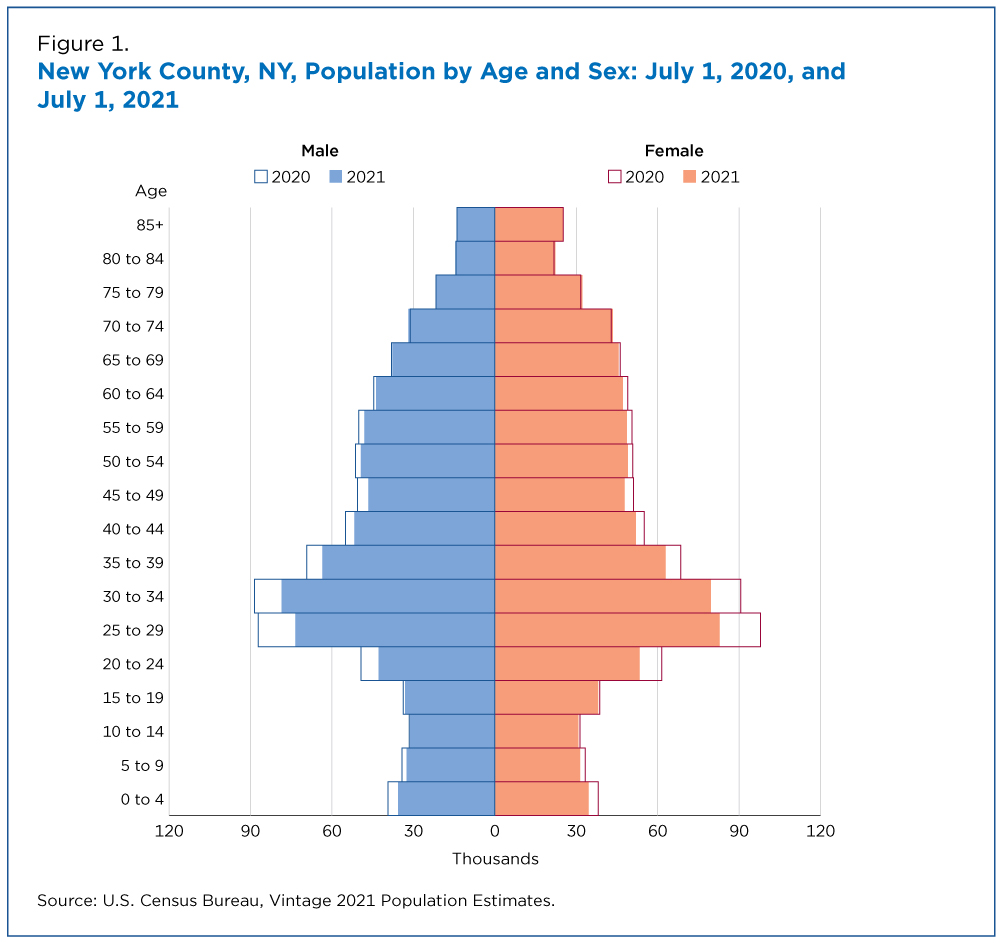
In July 2020, the population of both males and females in their 20s and 30s was considerably larger than other age groups (Figure 1).
By July 2021, although this age group was still large in the grand scheme of the population, its male and female peaks in New York County show the most marked loss of all age groups.
For example, New York County’s population declined by 6.6% from July 1, 2020-2021, but the population ages 20-34 declined by 13.6% — twice the county’s rate.

San Francisco County in California (Figure 2) and Suffolk County in Massachusetts (Figure 3) experienced similar patterns of population change.
In San Francisco County, the percent loss in that same population group ages 20-34 was even larger, at 15.5%, compared to less than one-half that rate, 6.3%, for the county’s total population.
Suffolk County, which contains Boston, had a smaller total population loss of about 3%, but the 20-34 age group had a similarly pronounced decline of 5.7%.
Leave a Reply
You must be logged in to post a comment.